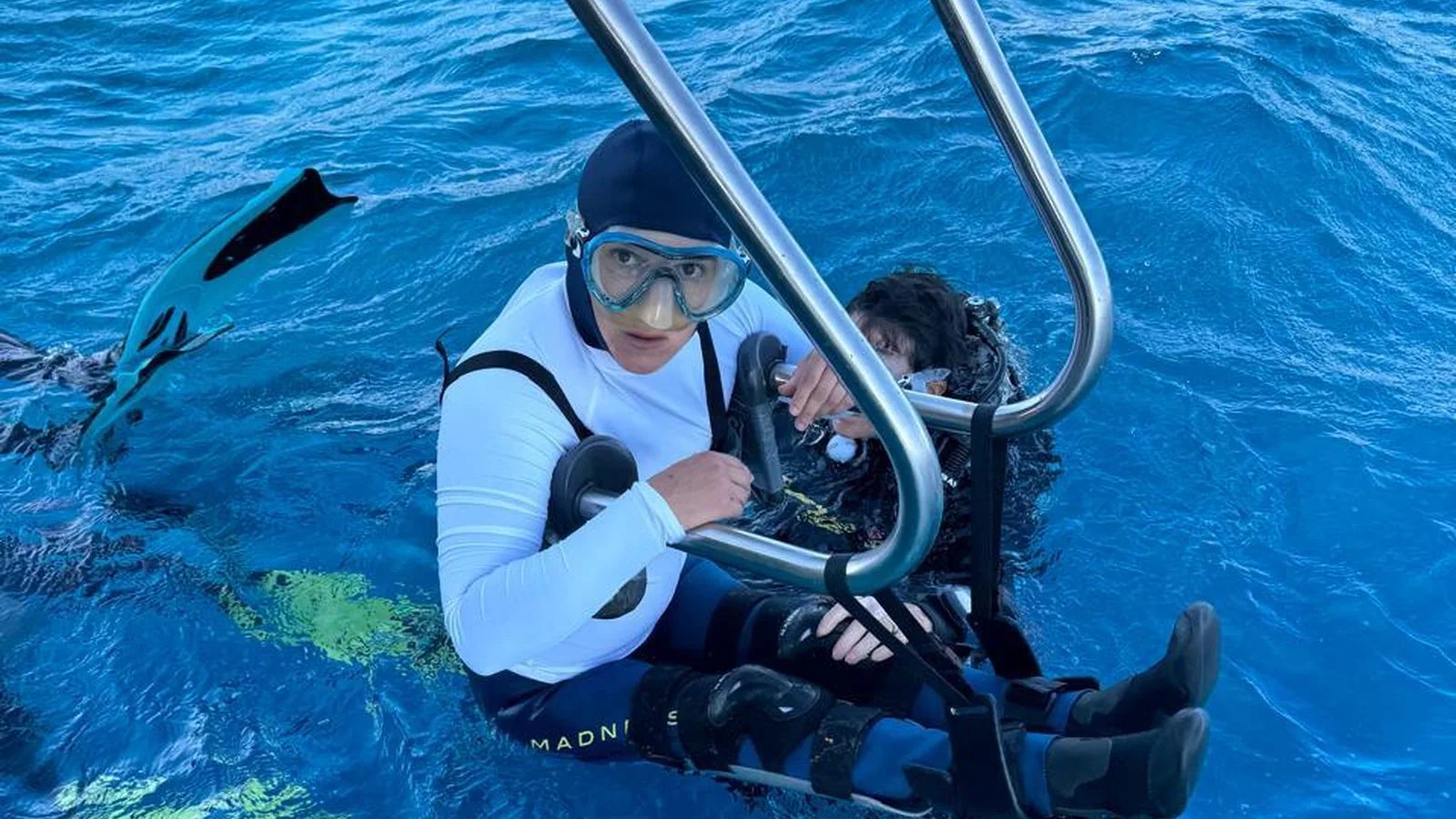
On land, gravity decides a lot. Underwater, it lets go. For many people with disabilities, that single fact changes everything: the moment you become weightless, the crutches, the chair, the brace and the effort of moving against gravity all stay behind on the boat. In their place is a quiet, three-dimensional freedom — drifting over a reef, eye-to-eye with a turtle, breathing slowly, moving with a fingertip. This is the promise of adaptive and inclusive scuba diving, and it is one of the things Aquarius cares about most. Diving, done right, really is for everyone. This guide is the honest version of how that works in the Red Sea: what adaptive diving is, who can dive, the safety basics, and how to plan a trip that's built around you.
Underwater, the wheelchair stays on the boat
Ask experienced adaptive divers what the appeal is, and most of them say a version of the same thing: down there, I'm just a diver. Below the surface, the body that needs a wheelchair or crutches on land is held by the water, and movement that costs effort up top becomes effortless glide. Diving is one of the very few activities where the playing field doesn't just get levelled — it gets removed.
The engine behind that feeling is neutral buoyancy: the weightless state where you neither float up nor sink, but hang suspended in the water column, moved by little more than your breath. It's the first skill every diver learns, and it's the heart of why diving is so liberating for people with limited mobility — for a while, the water carries what the body usually has to. We're honest about what that is, though: a genuine experience of freedom and capability, not a medical treatment or a cure. The value is the experience itself — belonging, calm, achievement, and the simple joy of a beautiful reef.
What is adaptive diving?
Adaptive diving means teaching and guiding scuba diving in a way that adapts to the diver, instead of expecting every diver to meet one fixed standard in one fixed way. It's a mindset as much as a method: focus on what a person can do, then build the dive around that.
In practice, adaptive diving can involve:
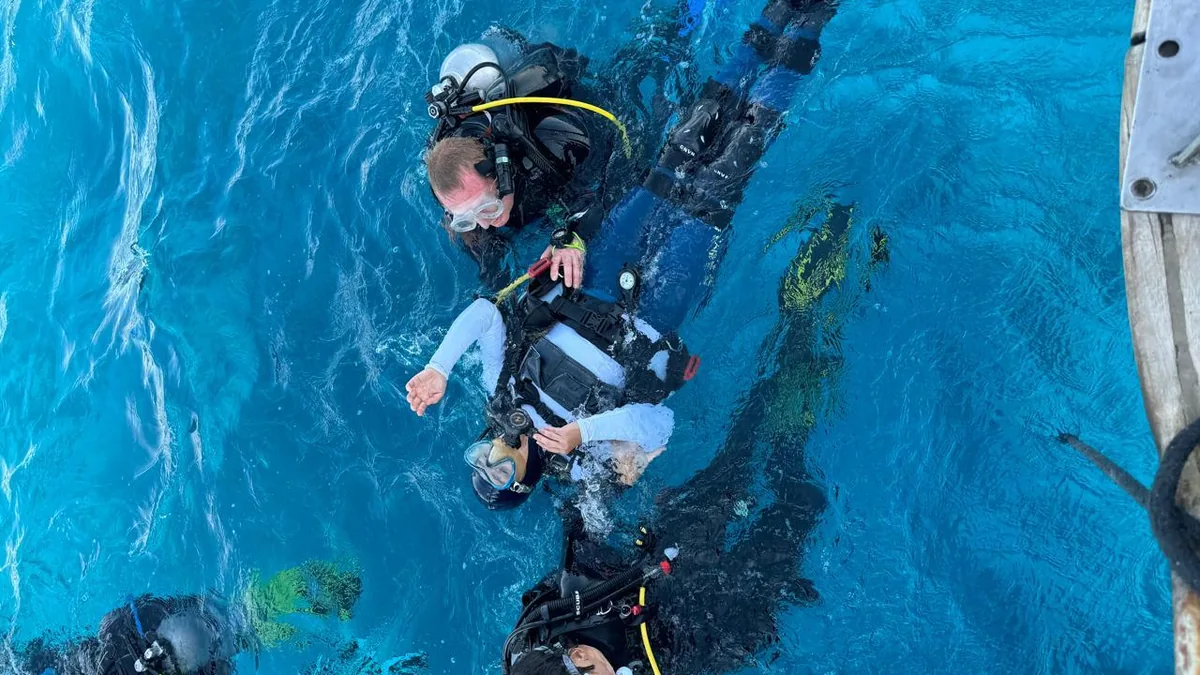
- Adapted skills and pacing — the same core diving skills, taught in a different order, broken into smaller steps, or with more time and repetition. A diver who can't reach a valve, for instance, learns another safe way to manage it; a diver who can't kick uses their arms, the current, or simply hovers and watches the reef come to them.
- Modified or additional equipment — adjustments and aids matched to the individual diver, from how gear is configured and donned to small fixes that make a regulator, mask or fins work for that person.
- Higher support ratios — one-to-one teaching, or two or more trained buddies, so there's always a capable, ready pair of hands.
- Trained support buddies — divers specifically trained to assist with entries, exits, transfers and in-water support.
Importantly, this isn't improvised. There are established, recognised frameworks for adaptive diving worldwide. The Handicapped Scuba Association (HSA) has run performance-based adaptive certification since the early 1980s, with a multilevel system that matches a diver's certification to the buddy support they need.[1] The International Association for Handicapped Divers (IAHD), founded in 1993 in the Netherlands, runs ISO-certified entry-level and instructor programmes for divers with disabilities.[2] And PADI — the world's largest diver-training organisation — offers an Adaptive Support Diver specialty (for divers who want to support a buddy with a disability) and an Adaptive Techniques specialty (a professional-level course teaching dive leaders to adapt skills and assess accessibility), built on the principle of focusing on what a diver can do.[3]
Who can dive?
This is the question almost everyone asks first, and the honest answer is: a far wider range of people than most assume — but always with individual assessment. Adaptive programmes around the world train and certify divers with conditions including limited mobility, amputations, paraplegia and quadriplegia, spinal-cord injury, visual impairment and hearing impairment, among many others.[1]
What matters isn't a diagnosis on a list — it's how a particular person, with their own strengths, maps onto a safe and enjoyable dive. That's exactly why every adaptive diver is assessed one-to-one. Two people with the same condition can dive very differently, and that's completely normal; the plan is built for the person, not the label.
If you've never breathed underwater before, the gentlest way to find out how it feels is a supervised first experience in shallow, calm water — the same place every new diver starts. Our guide to diving for first-timers and new divers walks through what a first dive is really like, and a relaxed try-dive or snorkelling session in Hurghada is a low-pressure way to test the water, literally, before committing to anything more.
How it works at Aquarius
Over the years, welcoming divers with disabilities has quietly become part of who we are. To be straight with you: we don’t hold a formal adaptive-diving certificate — but we are among the very few centres on the Red Sea genuinely equipped and experienced to do this, and we can assist all kinds of disabilities. Our approach is always the same: start with the person, plan carefully, and never rush. Here’s what that looks like in practice.
It starts with a conversation
Before anything else, we want to understand you — what you'd love to experience, your situation, your diving history (if any), and anything that will help us prepare. The more we know in advance, the calmer and smoother your day will be, because the right team and the right setup are ready before you arrive.
An accessible base — and a boat built for it
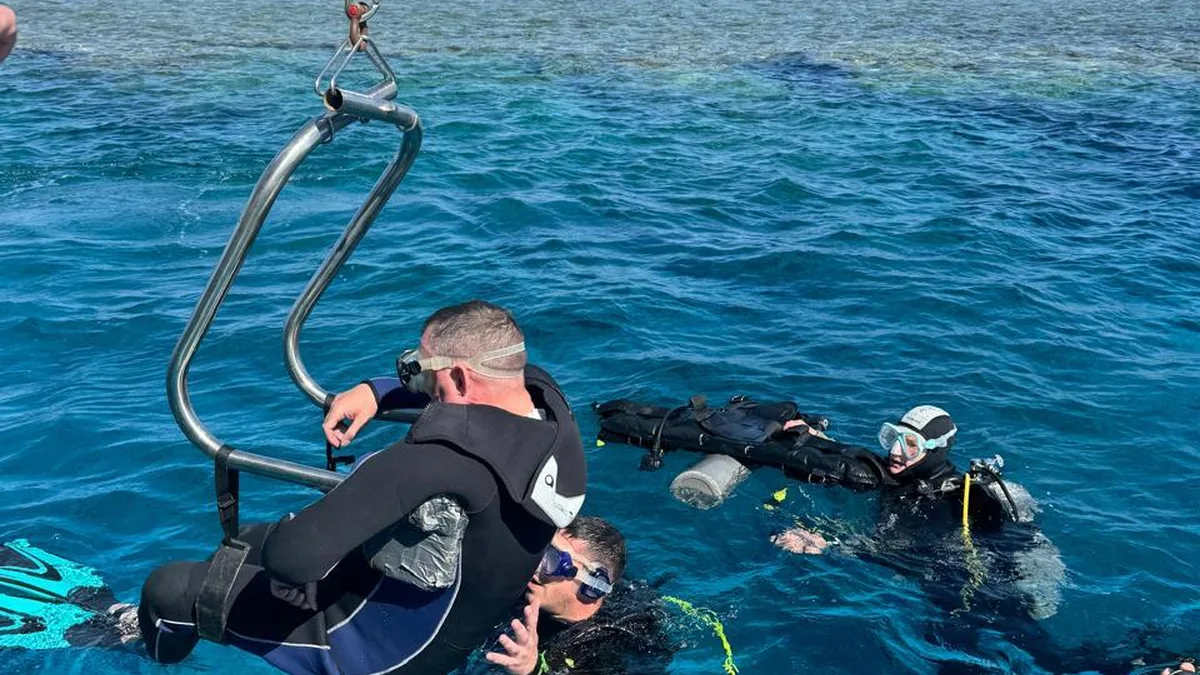
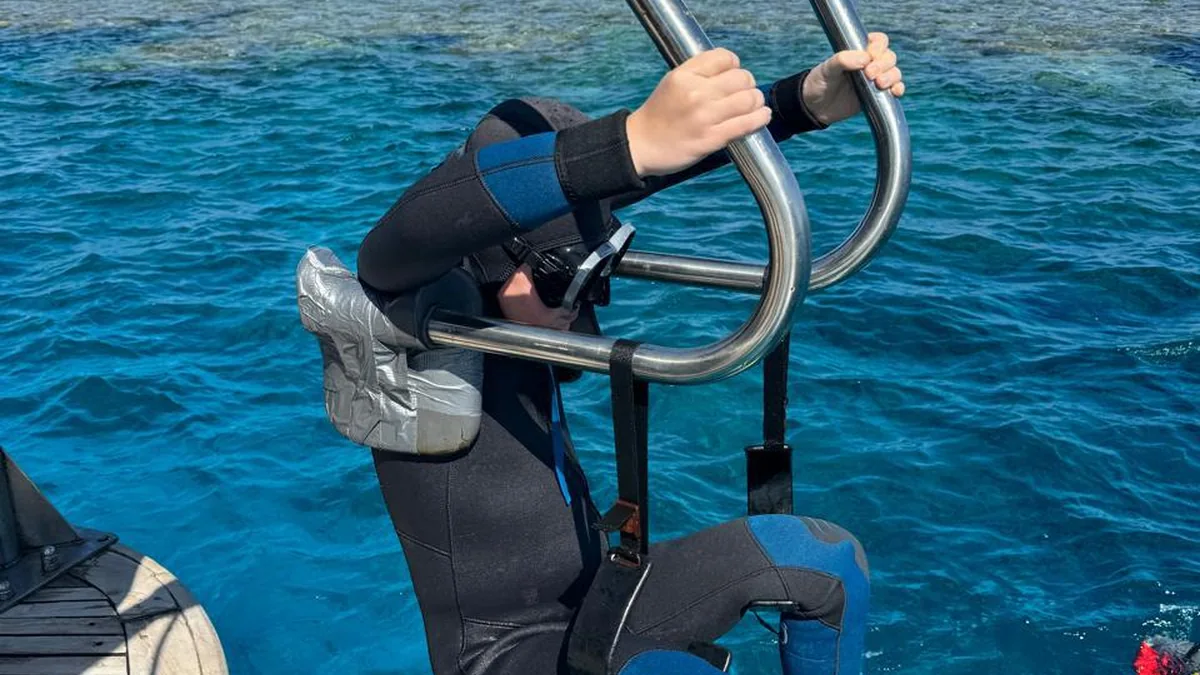
Our Hurghada home is the Marriott Beach Resort — a fully accessible facility with easy access to the water — and the hotel keeps accessible rooms ready for guests who need them, so the trip works from the bedroom to the reef, not just on the dive. Out on the water, our dive boat Aquarius 9 is set up specifically for adaptive diving: it carries a manual lift to move divers gently in and out of the water, and an accessible, equipped toilet on board. These are exactly the details that make a dive day comfortable rather than stressful, and we have thought them through.
Calm, shallow, patient teaching
First sessions happen in shallow, sheltered water where it's warm, clear and unintimidating. Skills are introduced gently and at your pace, with as much time and repetition as you want. There's no clock and no pressure — the goal is comfort and confidence first, everything else second.
One-to-one and higher support ratios
Adaptive dives are run with the support each diver needs — often one experienced guide to one diver, and additional trained buddies where that's the right call. You are never left to manage alone; there's always a ready, capable pair of hands.
Adapted technique and equipment
We adapt skills, pacing and equipment to suit the individual diver, and we plan entries, exits and in-water support around your needs. Companions and carers are part of the plan too, not an afterthought.
Getting started, medical and what to bring
Adaptive diving is carefully planned, but getting started is simpler than people fear. A few practical points:
The medical side
Like every diver, you'll complete a standard diver medical questionnaire (the RSTC medical form). Here's the key thing people don't always realise: a "yes" answer doesn't automatically disqualify you — it simply flags a condition that a doctor should review first.[4] So if you have a relevant medical condition, the usual step is to get clearance from your doctor before diving. This is routine, it applies to anyone with relevant medical history — not just divers with disabilities — and it's there to keep your dive safe. We make no medical promises; what we do is plan thoroughly and individually within that safety framework. If you already have a recent clearance, bring it. If you're unsure, talk to us early and we'll help you sort it out.
What to bring
- Any medical clearance or documentation you already have, plus your usual medications.
- A logbook and certification card if you're already a certified diver.
- Swimwear, a towel and reef-safe sunscreen — boats provide diving gear, but pack your own personal comfort items.
- Any personal aids you use day-to-day, so we can plan transfers and surface support around them.
- Your questions. Nothing is too small to ask — the more we talk beforehand, the better the day.
Start early
The single best thing you can do is contact us well before your trip. Adaptive dives are arranged individually, and a little planning ahead means we can confirm the medical side, prepare the right equipment and team, choose the most suitable site, and remove any surprises — so all you have to do on the day is enjoy it.
Why the Red Sea is a great place for it
If you're going to try adaptive diving, the Egyptian Red Sea is one of the most welcoming places in the world to do it — and not just for the famous marine life. The practical conditions are about as friendly as diving gets:
- Warm, comfortable water. The Red Sea is warm for much of the year, which means relaxed, comfortable dives and less fatigue — a real advantage when comfort matters.
- Calm, clear, shallow reefs. Many sites are sheltered, gentle and shallow, with superb visibility. That's an ideal low-stress environment to learn in and to explore.
- Shore and boat options. There's a choice of easy shore-entry sites and boat dives, so the entry method can be matched to the diver.
- Seven bases to choose from. Aquarius operates across Hurghada, Sharm el-Sheikh, Makadi Bay and Sahl Hasheesh — a spread of calm bays and reefs to suit different needs and trips.
For the bigger picture of what diving here involves — seasons, water temperatures, marine life and how it all fits together — our complete guide to scuba diving the Red Sea is a good companion read. And if an adaptive diver wants to go on to a full certification, the PADI Open Water course in the Red Sea is the standard path — taken, like everything else, at the pace and in the way that suits the individual.
Bringing family, friends and carers
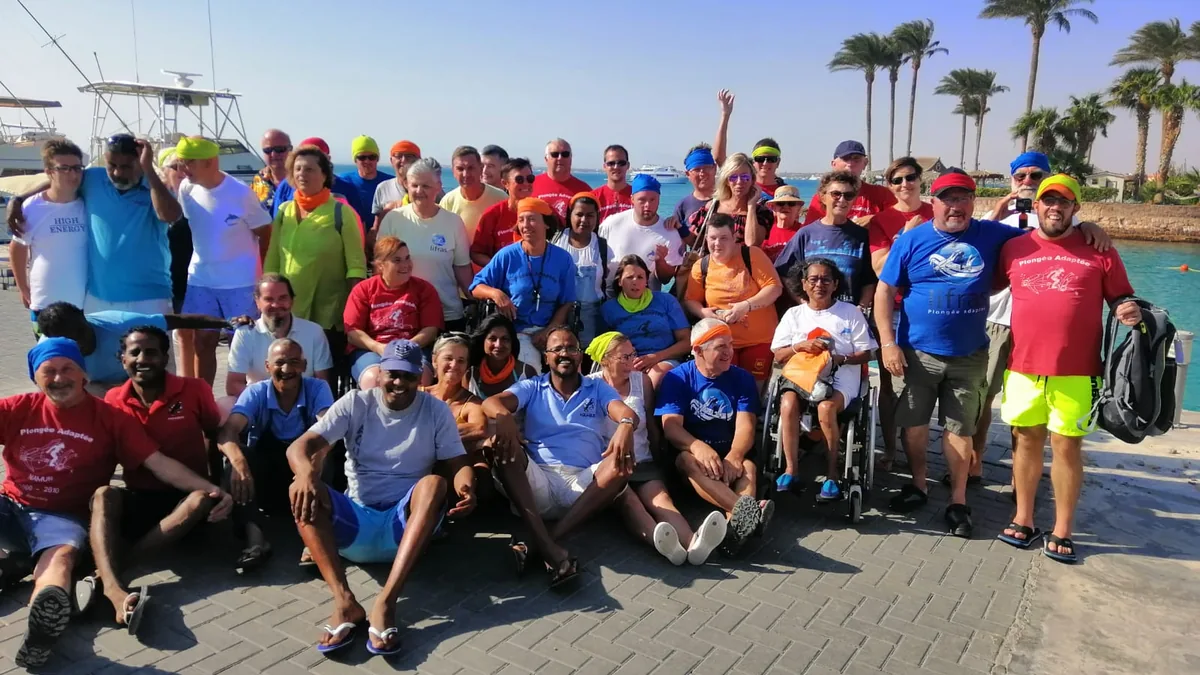
Diving is a shared experience, and an inclusive trip means the people around you belong too. Companions, carers, family and friends are genuinely welcome — in the water, or simply along for the day.
Many adaptive divers prefer to dive with a familiar support buddy, and that's encouraged; trust in the water is worth a lot. Friends and family who want to learn the supporting role themselves can — that's exactly what the PADI Adaptive Support Diver specialty is designed for.[3] And companions who don't dive at all can still come on the boat, snorkel the shallows, or just enjoy being part of the trip. We're happy to build the day around the people you trust.
Plan your adaptive dive
Adaptive and inclusive diving isn't a special favour — it's how diving should be: shaped to the person, focused on what they can do, and centred on the simple, universal joy of being weightless on a beautiful reef. People with disabilities dive the Red Sea safely and happily, and we'd love to help you be one of them.
Because every adaptive dive is planned individually, the best next step is a conversation. Tell us about yourself, who's coming with you, and what you'd love to experience — first dive, a course, or a relaxed day on the reef — and we'll design a safe, comfortable plan at your pace. Get in touch to plan your trip, and let's make the water yours.
Frequently asked questions
Can I scuba dive with a disability?
In many cases, yes. People with a wide range of disabilities — including limited mobility, amputations, paraplegia, and visual or hearing impairment — dive safely every day using adaptive techniques. There is no single yes-or-no answer, because every diver is assessed individually. The right way to find out is a friendly conversation about your situation, followed, where a medical condition is involved, by clearance from a doctor. The starting question is never 'what's wrong' but 'what would you like to do, and how can we make it work'.
What is adaptive diving?
Adaptive diving means teaching and guiding scuba diving in a way that adapts to the diver, rather than expecting the diver to fit a single standard. It can involve adapted skills and pacing, modified or extra equipment, higher instructor-to-diver ratios, trained support buddies, and patient one-to-one teaching. Recognised frameworks for it include the Handicapped Scuba Association (HSA), the International Association for Handicapped Divers (IAHD), and PADI's Adaptive Techniques and Adaptive Support Diver specialties.
Do I need a medical certificate to do adaptive diving?
Like all divers, you complete a standard diver medical questionnaire (the RSTC medical form). A positive answer does not automatically rule out diving — it simply means a doctor should review it first. So if you have a medical condition, you'll usually need a doctor's sign-off before getting in the water. This is normal, it applies to everyone with relevant medical history, and it is there to keep your dive safe. Bring any clearance you already have, and talk to us early so there are no surprises.
Can my carer, family or friends join the dive?
Yes. Companions, carers, family and friends are very welcome, in or out of the water. Many adaptive divers dive with a familiar support buddy, and we're happy to build the day around the people you trust. Non-diving companions can come along on the boat, snorkel, or simply enjoy the trip. Diving is a shared experience, and an inclusive trip means everyone belongs.
Do you have adapted equipment for divers with disabilities?
Beyond adapting equipment and technique to each diver, our setup is genuinely accessible. Our Hurghada base at the Marriott Beach Resort has easy access to the water and accessible hotel rooms, and our dive boat Aquarius 9 has a manual lift to move divers gently in and out of the water, plus an accessible, equipped toilet on board. Tell us about your needs in advance and we will have the right setup and the right team ready before you arrive.
Why is the Red Sea good for adaptive diving?
The Egyptian Red Sea is warm, calm and exceptionally clear, with easy, shallow reefs close to shore and a choice of gentle shore-entry and boat dives across Hurghada, Sharm el-Sheikh, Makadi Bay and Sahl Hasheesh. Warm water means comfort and longer, more relaxed dives; calm shallow sites mean a gentle, low-stress environment to learn and explore. It is one of the most welcoming places in the world to take a first adaptive dive.