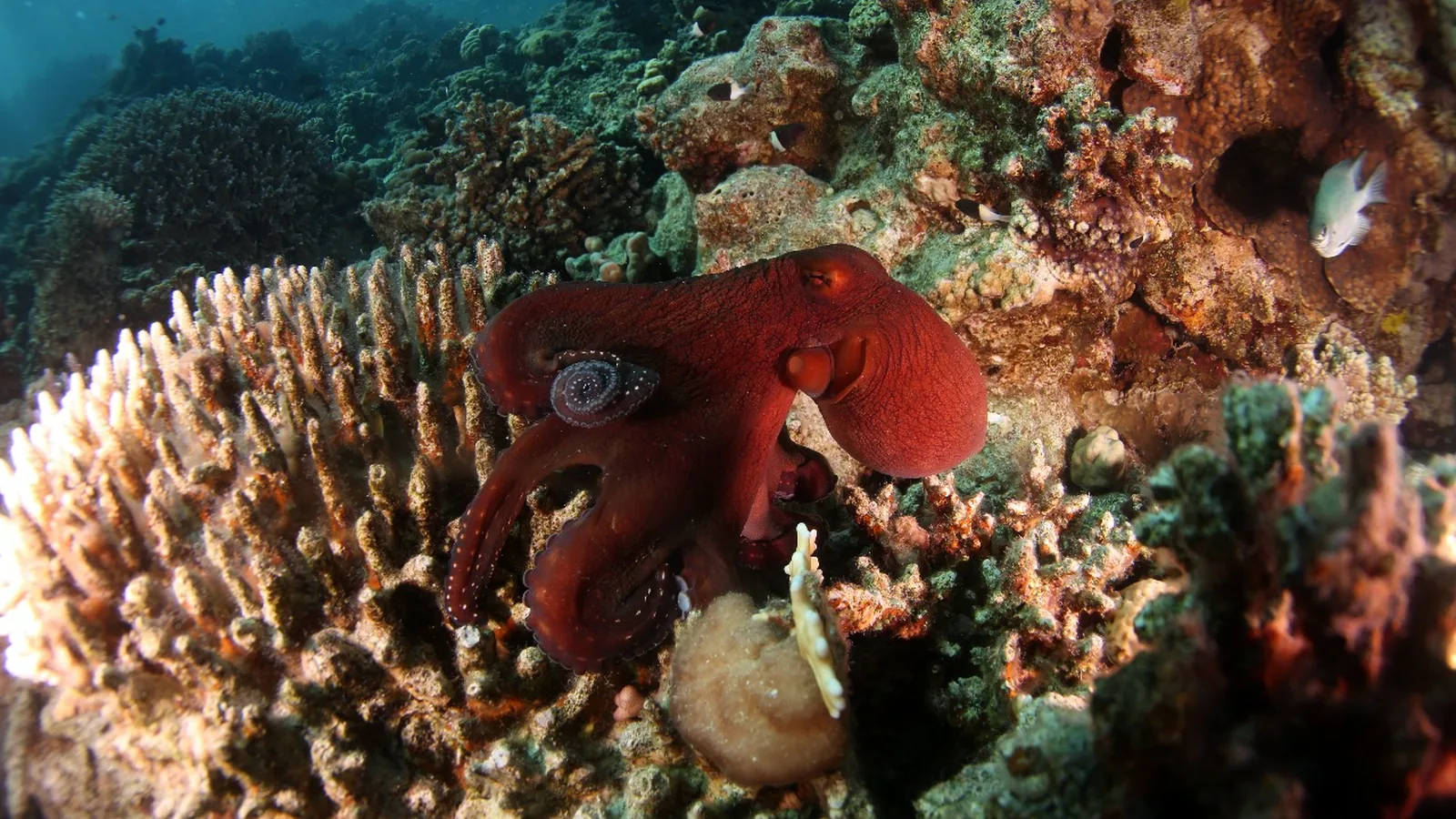
Drop onto a Red Sea reef and the first thing you notice is colour. Hard coral gardens, soft corals waving in the current, clouds of orange anthias hanging over the slope, a turtle cropping the reef like it has nowhere to be. While much of the tropical ocean has been bleaching white and losing its corals to heat, the reefs off Egypt are still, by global standards, astonishingly alive. That is not luck. The northern Red Sea is home to some of the most heat-tolerant corals on the planet — and scientists now think this stretch of coast may be one of the few reef regions left standing as the climate warms. It is a genuinely hopeful story, and a fragile one with a serious catch. This is the honest version: the science, the threats, and the conservation work that decides whether the refuge survives.
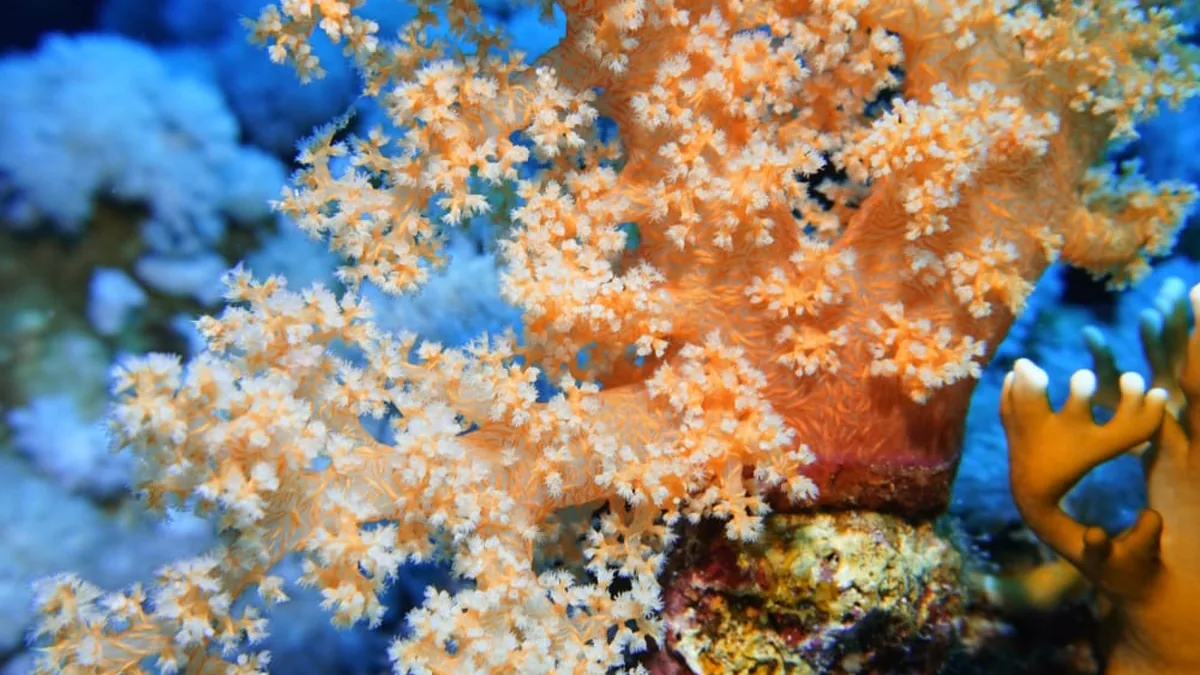
Why the Red Sea is different
Corals are not just animals; they are a partnership. The coral animal builds the reef, but it shares its tissue with tiny algae called zooxanthellae that photosynthesise and feed it. That partnership is what gives a healthy reef its colour and most of its energy — and it is exactly what breaks down when the water gets too hot. Under heat stress the coral expels its algae, loses its colour and its main food source, and turns ghostly white. That is coral bleaching. A bleached coral is not dead yet, but it is starving, and if the heat lasts too long it dies.
Most reef corals live alarmingly close to their limit. Across much of the tropics, a summer just 1 °C or so warmer than usual, held for a few weeks, is enough to trigger mass bleaching. That is why coral scientists talk in "degree heating weeks" — a measure of how much heat, for how long. Repeated mass-bleaching events have devastated reefs from the Great Barrier Reef to the Caribbean over the past decade.
The northern Red Sea breaks this pattern. Here the average summer maximum is only around 26-27 °C, yet the corals do not bleach until the water is far hotter — laboratory work points to a bleaching threshold of roughly 32 °C or above. That is a gap of around 5-6 °C between where these corals live and where they bleach. For comparison, most reefs in the world have almost no margin at all. It is this enormous thermal buffer that has earned the northern Red Sea — and Egypt's reefs in particular — the description of a thermal refuge of global importance.
What scientists found
The refuge idea is not a hunch — it has been mapped and tested across the northern Red Sea, with Egyptian marine scientists at the forefront. A landmark study led by the Egyptian coral biologist Eslam Osman (Al-Azhar University, Cairo) mapped thermal refugia throughout the northern Red Sea and ran heat-stress trials on key reef-builders off Hurghada. The result was clear: corals here live comfortably within their heat tolerance, while their cousins further south — and reefs in much of the world — are already being pushed past theirs (Osman et al. 2018).
Study after study since has reached the same conclusion. Northern Red Sea corals can sit several degrees above their normal summer maximum — up to around 32 °C — and still hold the partnership with their symbiotic algae together, acclimatising rather than bleaching. In the lab, researchers have heated these corals well beyond anything they meet in the wild and watched them switch on a fast stress response and bounce back, where most reefs would simply die. Heat that would devastate the Great Barrier Reef leaves them essentially unscathed — which is why scientists describe this stretch of coast as a thermal refuge of global importance.
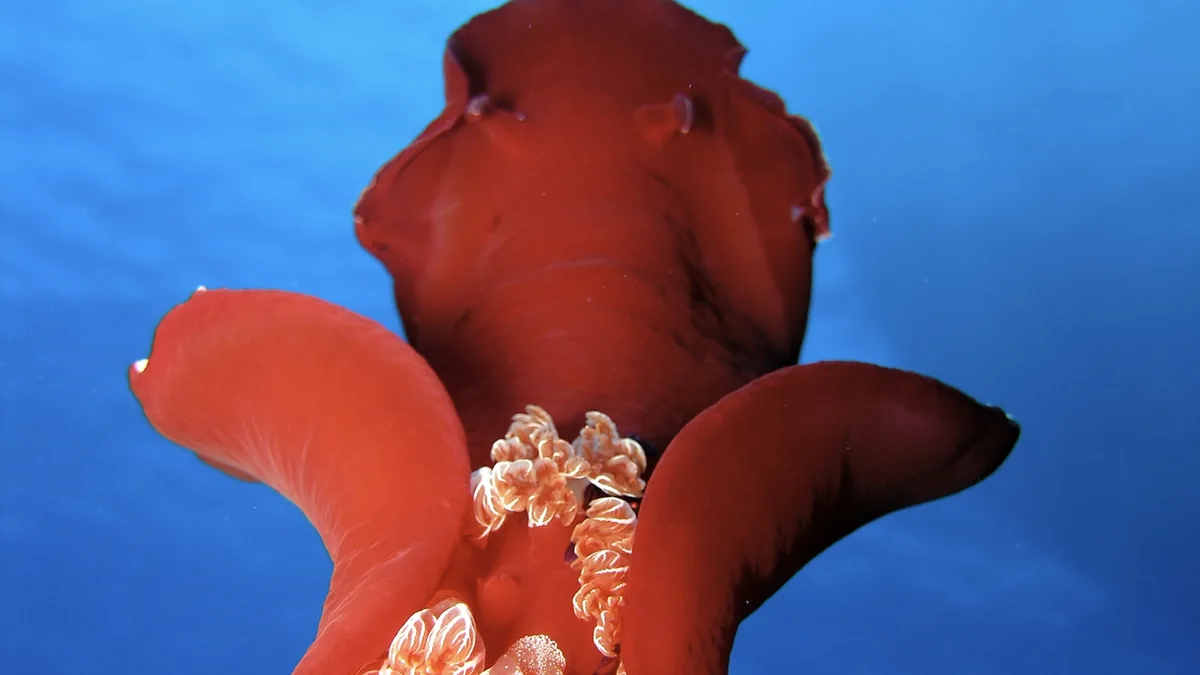
One detail makes the finding even more remarkable. These corals appear to carry more heat tolerance than their current home actually demands — they stay healthy well above the temperatures they normally meet, as if pre-loaded for a warmer world. That oddity is the clue to where the tolerance came from.
The thermal bottleneck — where the tolerance came from
The leading explanation is a beautiful piece of deep history. During the last ice age, with sea levels far lower, the Red Sea was largely cut off and too salty for most corals; today's reefs had to recolonise it from the Indian Ocean after the ice age ended, around ten thousand years ago. To get in, coral larvae had to pass through the narrow, shallow southern gateway — the strait of Bab el-Mandab — and through the hot southern Red Sea beyond it, where summer water can reach 30-32 °C.
That scorching gateway acted like a filter, or "bottleneck": only corals that could already shrug off high temperatures survived the crossing. Those heat-hardened survivors then spread northward into the progressively cooler waters of the northern Red Sea — carrying with them a heat tolerance calibrated to the hot south, far in excess of the gentler temperatures they would settle into. Ten thousand years later, that inherited tolerance is exactly the buffer that may now help these reefs ride out global warming. It is, in a real sense, an accident of geography and ice-age history — and a precious one. (Researchers still debate the finer detail — whether some corals also rode out the ice age in pockets within the Red Sea — but the heat-selecting role of that southern gateway is the leading account of why the north runs so cool relative to its corals' limits.)
A refuge, not a fortress
Here is the catch, and it matters too much to gloss over. Heat-tolerant does not mean heat-proof. The Red Sea refuge is real, but it is conditional, and 2024 made that painfully clear.
Over the summer of 2024, the Red Sea — like much of the global ocean — was hit by the most intense marine heatwave on record. For the first time ever documented, significant bleaching reached the northern Egyptian Red Sea, including the reefs around Hurghada. HEPCA's Bleach Watch Egypt — Egypt's volunteer reef-monitoring programme — recorded an overall average bleaching rate of about 28% across monitored sites that September, with heat stress that summer reaching roughly 30 °C-weeks — on the order of eight times the level that triggers mass bleaching on most reefs. The damage was worst in the south (more than half the coral bleached at some sites); the northern reefs around Hurghada came off lightest, with bleaching in the single figures to high teens. And then the reassuring part: as the water cooled, the great majority of corals recovered, and Egyptian monitoring through 2025 put recovery on monitored reefs at roughly 70-85%, depending on site and species.
That episode is the whole story in miniature. These corals are extraordinarily resilient — but not immune. Push the heat high enough, for long enough, and even they bleach. And every coral biologist who works here says the same thing about what tips the balance: local stressors. A reef weakened by pollution, sediment, sewage nutrients or physical damage has fewer reserves to spend on surviving a heatwave. As Egypt's own reef scientists and HEPCA put it, the single most useful thing anyone can do is shield these corals from local pressures — above all pollution and physical damage — so they reach each heatwave in the best possible shape.
The threats are the familiar ones, and they are within human control in a way the global climate is not:
- Coastal development and sewage. Rapid building along the coast, and treated or untreated wastewater reaching the sea, load the water with nutrients and sediment that smother and stress corals.
- Overfishing. Stripping out grazing fish lets algae overgrow corals and unbalances the whole reef system.
- Oil and shipping. The Red Sea is one of the world's busiest tanker routes; spills and chronic pollution are an ever-present risk.
- Careless tourism. Anchors dropped on coral, fins kicking the reef, hands and feet touching or standing on coral, and harmful sunscreens — small individual harms that add up fast on a popular reef.
The logic is simple and urgent: the northern Red Sea may be one of the last great coral refuges on Earth, which is precisely why it is worth protecting locally. Climate action has to happen globally. But whether this particular refuge keeps its head start is decided, dive by dive and decision by decision, right here on the coast.
Local conservation work
For the operators, NGOs and divers who use these reefs every day, their health is not an abstract cause — it is a working environment, a livelihood, and the reason most visitors come. Two strands of practical conservation along the Egyptian coast matter most.
Reef clean-up dives
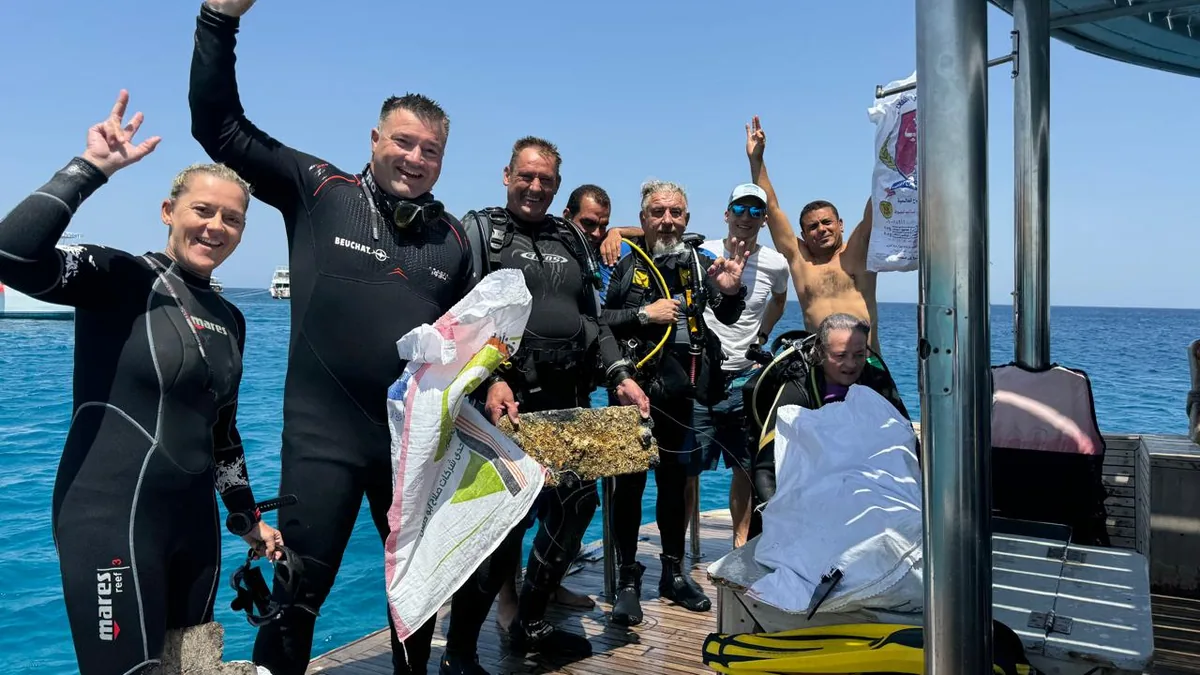
The simplest, most direct thing divers can do for a reef is take rubbish off it. Reef and shoreline clean-ups are run regularly along the Egyptian Red Sea coast — by individual dive centres, by HEPCA (the Hurghada Environmental Protection and Conservation Association), and as part of global days of action such as Earth Day and World Oceans Day. Divers carefully remove litter, lost fishing line, discarded nets and other debris from the reef and the seabed — the kind of waste that snags, smothers and entangles coral and marine life. Done properly, a clean-up is itself a model of low-impact diving: good buoyancy, gentle hands, nothing touched that shouldn’t be. Many operators welcome certified divers who want to take part, and it is one of the most satisfying dives you can do.
Coral restoration in Hurghada
Beyond keeping the reef clean, coral restoration is under way in Hurghada. The nursery in these photos is part of the Coral Propagation & Reef Rehabilitation Project founded by Ahmed Gabr — the Egyptian diver who holds the Guinness World Record for the deepest scuba dive (332.35 m, set in the Red Sea in 2014) — and sponsored by National Bank of Egypt. Its method is the established standard for reef rehabilitation: damaged or broken corals are rescued, and small healthy fragments are grown on frames in a sheltered nursery until they are strong enough to be transplanted back onto the reef, where they keep growing and, over time, help repair damaged areas and seed new coral. Restoration is not a substitute for protecting wild reefs, but it gives a battered patch of reef a real head start.
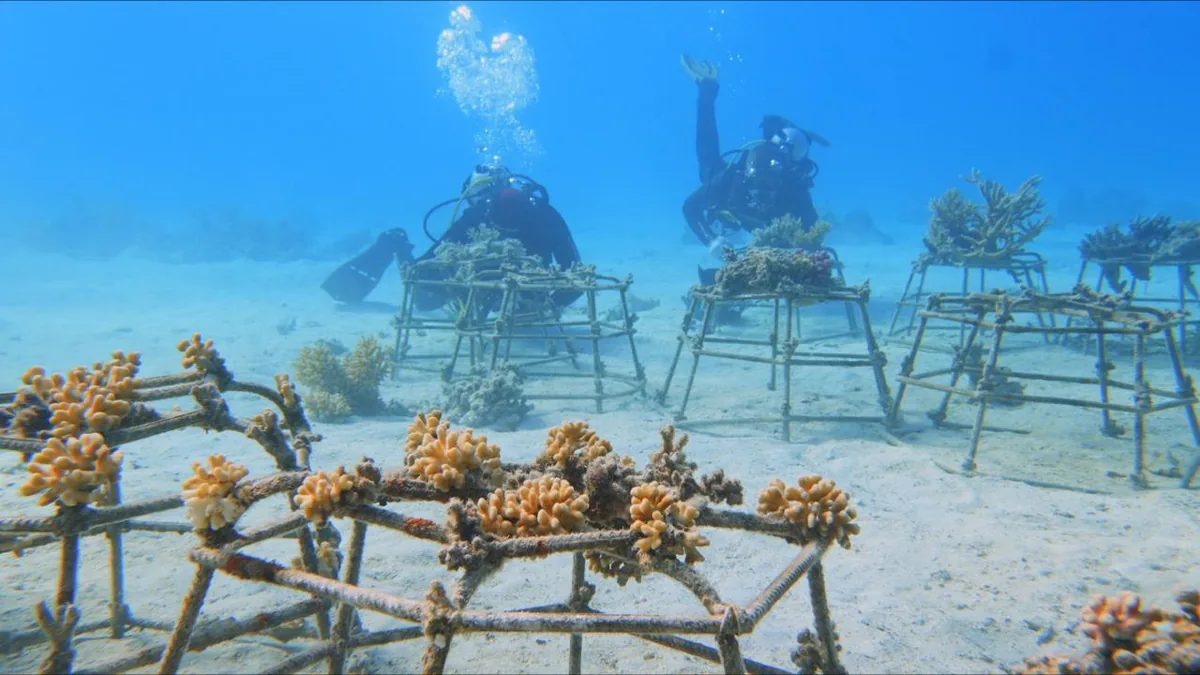
The specifics vary from operator to operator — how often clean-ups run, whether visitors can join one, and how restoration work is organised. The most reliable way to find out, and to take part, is to ask the dive centre you are travelling with what conservation activities they support and whether any are scheduled during your trip.
How divers and snorkelers can help
You do not need to be a scientist or join a project to protect this refuge. The single biggest factor in whether a popular reef stays healthy is how the thousands of people who visit it behave. A few habits make all the difference:
- Master your buoyancy. The most reef-friendly skill there is. Hover, don't crash; keep your fins up and away from the coral; never use the reef to steady yourself. If your buoyancy is rusty, a refresher or an Advanced course pays the reef back many times over.
- Never touch, stand on or take anything. Coral is a living animal and a single touch can damage years of growth or spread disease. Look, photograph, leave it exactly as you found it — no shells, no "souvenirs."
- Wear reef-safe sunscreen — or cover up. Skip sunscreens containing oxybenzone and octinoxate (the chemicals linked to coral bleaching and banned at several reef destinations) and choose a mineral, non-nano zinc-oxide formula. Better still, wear a rash vest and let clothing do the work.
- Don't feed the fish, and watch your gear. Feeding unbalances the reef; dangling gauges and cameras scrape coral. Streamline everything and keep your hands to yourself.
- Join a clean-up. If you are certified, spend one dive of your trip taking rubbish off the reef instead of just looking at it. Ask your dive centre whether one is scheduled.
- Choose eco-minded operators. Dive with centres that use mooring buoys instead of anchors, brief guests on reef etiquette, keep group sizes sensible, and put the reef first. Where you spend your money is a vote for how the reef is treated.
None of this lessens the experience — it deepens it. Diving a reef well, lightly and respectfully, is the difference between being a visitor and being a guest. And it is the everyday version of the same thing the scientists are asking for: protect this refuge locally, so it can do its globally rare job of outlasting the warming sea.
Questions divers ask
Are Red Sea corals really heat-resistant?
Yes, unusually so. Corals in the northern Red Sea (including Egypt's reefs around Hurghada, Ras Mohammed and Sharm el-Sheikh) are among the most thermally tolerant on Earth. Their average summer maximum is only about 26-27 °C, yet controlled laboratory studies have shown they can withstand temperatures up to roughly 32 °C — about 5 °C above their normal summer high — without bleaching, and recover from short and long-term heat stress (Osman et al. 2018). That wide gap between where they live and where they bleach is why scientists describe the region as a potential thermal refuge.
Will the Red Sea reefs survive climate change?
They have a better chance than most, but there is no guarantee. The northern Red Sea is one of the few reef regions projected to stay below its bleaching threshold for longer than most others this century. But it is a refuge, not a fortress: in the record marine heatwave of 2024, even these supercorals bleached for the first time on record, though most recovered as the water cooled. Local stressors — pollution, coastal development, overfishing and reef damage — erode the very resilience that makes the refuge possible. Protecting the reefs locally is what keeps the global refuge alive.
What is the Red Sea thermal bottleneck hypothesis?
It is the leading explanation for why northern Red Sea corals are so heat-tolerant. After the last ice age, corals had to recolonise the Red Sea from the Indian Ocean, with larvae entering through the hot southern strait of Bab el-Mandab. Only heat-adapted corals could survive that warm gateway. The survivors then spread north into the cooler northern Red Sea, carrying heat tolerance far in excess of the temperatures they now experience — leaving them pre-adapted to warming.
Can I join a reef clean-up dive in the Red Sea?
Often, yes. Reef clean-up dives — where certified divers help remove litter, lost fishing line and other debris from the reef — are run regularly in the Egyptian Red Sea, both by individual dive centres and through NGO-led days of action such as those organised with HEPCA on Earth Day and World Oceans Day. Many operators welcome certified divers who want to take part; the simplest way to join one is to ask the dive centre you are diving with whether a clean-up is scheduled during your trip.
What is reef-safe sunscreen and why does it matter?
Reef-safe sunscreen is sunscreen made without the chemical UV filters oxybenzone and octinoxate, which research has linked to coral bleaching and which several reef destinations have banned. Mineral sunscreens using non-nano zinc oxide or titanium dioxide sit on the skin as a physical barrier and have not been associated with the same harm. Wearing reef-safe sunscreen — and covering up with a rash vest instead — is one of the simplest ways every snorkeler and diver can help protect the reef.
Where can I dive these Red Sea coral reefs?
The main Egyptian Red Sea hubs — Hurghada, Sharm el-Sheikh, Makadi Bay and Sahl Hasheesh — all sit on the northern Red Sea reef system of hard and soft corals, coral gardens, walls and pinnacles. Daily diving and snorkeling trips run year-round, with reef life from anthias and butterflyfish to turtles, rays and the occasional pelagic. It is one of the best places in the world to see a healthy coral reef up close.
Dive these reefs
The Red Sea coral refuge is not a place behind glass — it is a living reef you can swim over this year, and one of the genuine reasons to dive Egypt rather than somewhere reefs are already in steep decline. Along the northern Egyptian coast you can drift coral gardens, hang on a wall in the blue, meet turtles and reef fish, and see for yourself what a thriving reef still looks like. To understand the seasons and conditions first, the guide to the best time to dive the Red Sea is the place to start, and the complete guide to scuba diving the Red Sea covers everything else. To meet the residents, browse the marine life encyclopedia.
Ready to dive a living coral reef? Aquarius is a PADI 5-Star centre that has been diving these reefs for decades and runs its trips to leave the reef as healthy as it found it. Plan and book your Red Sea trip and tell the team what you're hoping to see — and if you'd like to join a reef clean-up while you're here, just say so.