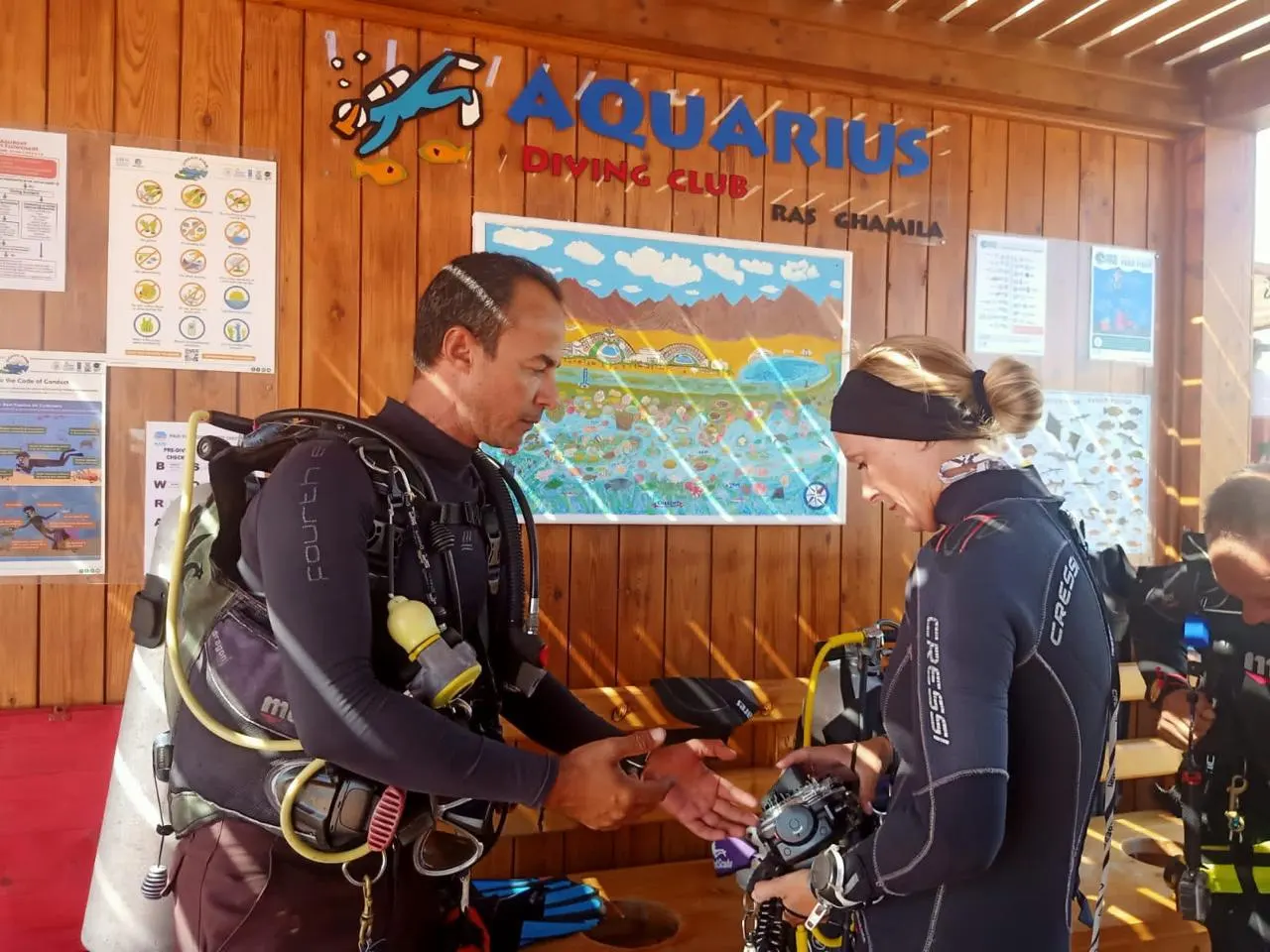
Salt water will destroy scuba gear if you let it. After 15 years of watching other people's kit rot prematurely and occasionally paying for my own mistakes, here's the simple routine that keeps regulators smooth, BCDs bladder-dry, wetsuits supple, and computers working. Nothing complicated — but most divers skip one or two steps and pay for it within a year.
Why salt water is brutal on dive gear
Sea water contains roughly 35 grams of dissolved salt per litre, plus chlorides, sulphates, and trace minerals. When salt water dries on equipment, the dissolved salts crystallise into microscopic crystals that have several specific destructive effects:
Corrosion of metal parts. Salt accelerates oxidation of brass, stainless steel, and aluminium components. The first stages — surface discolouration, sticky valve operation, slight performance degradation — are reversible. Past a certain threshold, internal pitting becomes permanent and components must be replaced. Regulator first stages, BCD inflator buttons, and tank valves are the primary victims.
Degradation of rubber and silicone. Salt residue dries out rubber components — O-rings, regulator hoses, mask straps. Dry rubber cracks. Cracked O-rings leak. Cracked hoses fail catastrophically. Most rubber failures are gradual until the moment they aren't.
Damage to fabrics and neoprene. Wetsuit neoprene retains salt in the cell structure, accelerating breakdown. BCD bladders and harness webbing absorb salt that wicks into seams and zippers. Salt damage to fabric is mostly cosmetic until it becomes structural.
Sand abrasion. Salt water carries sand and grit. Combined with the salt's drying effect, this acts as a low-grade abrasive on every moving part. Inflator buttons, regulator purge valves, and zip teeth wear out faster on Red Sea dive trips than on freshwater training dives because of this combination.
The Red Sea is particularly tough on gear because its salinity is unusually high (~40 g/L versus the ocean average of 35 g/L) and water temperatures combined with high air temperatures accelerate evaporation, concentrating residue. Gear that survives ten years of Mediterranean diving might need replacement after five years of hard Red Sea use.
The solutions are simple but most divers do them poorly. The rest of this article covers what actually works versus the half-measures that allow gradual damage.
The post-dive rinse
Salt water leaves crystals when it dries. Crystals are abrasive, and they wick into every seal, spring and moving part. The single highest-value maintenance thing you do is a proper freshwater rinse on the same day as the dive — before salt has time to crystallise.
Correct rinse order
- Don't just dunk. Dunking in a rinse tank with 50 other divers' kit contaminates your regulator and doesn't actually flush anything.
- Keep regulator dust cap ON. Never let fresh water enter the first stage through the yoke/DIN fitting.
- Run fresh water through the second stage while pressing purge to flush salt from the diaphragm area.
- BCD: inflate partially, rinse exterior, then rinse the inside bladder (next section).
- Rinse wetsuit inside-out so fresh water penetrates the linings.
- Rinse mask, fins, computer, torches thoroughly in fresh water.
- Hang everything out of direct sunlight to dry. UV destroys neoprene and plastics faster than salt.
Regulator care and servicing
Rule 1: Never let fresh water into a de-pressurised first stage
If you rinse a regulator without the dust cap on, without pressure on the first stage, water gets past the filter and into the internal chambers. Once inside, it won't evaporate — corrosion starts within hours. Either rinse with the regulator attached to a pressurised tank, OR make 100% sure the dust cap is dry and tight before any water touches the inlet.
Rule 2: Annual service is not optional
Regulator diaphragms and seats degrade even with perfect care. If you dive regularly, annual service is the right call. Keep your receipts — a regulator without a service history sells for 40% less.
BCD care — what nobody does properly
Every BCD I've seen fail early failed because the bladder interior was neglected:
- After rinsing exterior, deflate fully, then fill the bladder about 1/3 with fresh water through the oral inflator.
- Slosh — roll the BCD, invert it, shake gently.
- Empty through the oral inflator (hold upside down, press deflate).
- Repeat if water comes out discoloured or smelly.
- Inflate 1/4 full with fresh air and hang to dry.
Do this every 4-5 dive days and your BCD will outlast two of them that weren't rinsed.
Wetsuit and booties
- Rinse inside-out after every dive. Sweat + salt is more corrosive than salt alone.
- Hang on a wide plastic hanger (never wire — it permanently marks neoprene).
- Dry out of direct sunlight. UV breaks down neoprene rapidly.
- Use wetsuit shampoo every 10-20 dives.
- Store hung, not folded.
- Booties: stuff with newspaper for 24h after trips to pull moisture out.
Dive computer and electronics
- Rinse thoroughly — salt in the pressure sensor port causes inaccurate readings.
- Change user-replaceable batteries yearly — old batteries leak.
- Update firmware when released.
- Never leave in direct sunlight during surface intervals.
Need gear servicing?
All seven Aquarius bases have on-site service centres with manufacturer-trained technicians.
Contact Us →Mask, fins and snorkel
- Mask: rinse, dry, store in a rigid case. Never leave in the sun.
- New mask: treat lenses with toothpaste or defogging compound before first use.
- Fins: rinse, hang by the heel strap, never stand on the blades.
Cylinders and tank valves
- Annual visual inspection (VIP) required in most jurisdictions.
- Hydrostatic test every 5 years (steel) or every 3-5 years (aluminium).
- Never drain fully in salt environment — leave 10-20 bar to prevent moisture ingress.
DIY repairs you can actually do
- BCD inflator jam: usually salt crystals. Partial disassembly, rinse, lubricate with silicone grease (never petroleum-based).
- Wetsuit tear: Aquaseal or equivalent neoprene cement. 24h cure.
- Leaky computer battery compartment: new O-ring + silicone grease, careful torque.
- Mask strap replacement: trivial, any dive shop sells universal sizes.
What NOT to DIY
Regulator internals, BCD inflator LP hoses, cylinder valves. These need manufacturer-trained service.
Travel and storage between trips
The biggest gear damage often happens between trips, not during them. Salt that wasn't fully rinsed continues to corrode equipment in storage. Compressed neoprene develops permanent creases. Hoses develop kinks. Below are the practical rules.
Storage location
Cool, dry, dark. Direct sunlight degrades neoprene and fades printed materials. Damp environments encourage mould on wetsuits and BCDs. Hot environments (a roof storage area in summer, a car boot) accelerate rubber breakdown. Most divers' garages are okay if dry; loft spaces are too hot in summer.
Wetsuits
Hang on a thick plastic hanger (never wire — it creates a permanent crease at the shoulders). Hang inside out for a day after the trip to dry the inside, then turn right-side-out for long-term storage. Don't fold or compress wetsuits in luggage for long periods — pack them flat or rolled, never tightly folded.
BCDs
Empty completely (squeeze bladder, dump-valve open). Lightly inflate before storing — keeps the bladder from sticking to itself. Store on a hanger or laid flat. If hung, support the BCD weight from the harness, not the inflator hose.
Regulators
Coil hoses gently — large loops, no tight kinks. Store in a padded bag or hanging from the first stage with hoses dangling. Fit dust caps when removing from a tank. The first stage's port-side dust cap (the one with rubber seal) prevents moisture entering the high-pressure chamber.
Tanks/cylinders
Most personal tanks travel home with maybe 30-50 bar of pressure rather than empty. This keeps the valve seal under positive pressure, preventing moisture ingress. Stand cylinders upright in storage; never lay them with the valve down (water in valve = corrosion).
Travel: hand luggage vs checked baggage
Mask, regulator first stage, dive computer go in hand luggage every time. They're expensive, fragile, and can be replaced from rental gear if the rest of your kit is delayed. Wetsuit, BCD, fins, second-stage hoses can go in checked luggage with reasonable safety. Tank cylinders cannot be transported by air with any pressure — most divers rent locally rather than ship cylinders.
What NOT to do
- Don't use WD-40 on anything. It attacks O-rings and rubber.
- Don't use petroleum grease on O-rings. Silicone only.
- Don't store gear wet, folded, compressed or in direct sunlight.
- Don't dive with a regulator that's "mostly fine."
Field repairs you'll actually need
Some equipment failures happen on dive trips far from a service centre. Knowing how to do field repairs keeps your trip going. These are the realistic ones — repairs that real divers actually need and can perform.
Mask strap snap
Mask straps break unexpectedly, usually on a giant stride entry. Carry a spare strap (a few grams of weight, takes 30 seconds to swap). If you don't have a spare, a rubber band loop or a hair tie can hold a mask in place for the rest of a dive.
Fin strap snap
Same problem, same solution. A spare fin strap kit (front-buckle and back-strap) is a worthwhile carry-along. The Aquarius shop sells these for under £15.
Regulator second stage free-flow
If your octopus or primary starts free-flowing on the surface, point the mouthpiece down and shake gently — sometimes a stuck poppet releases. If it persists, you need to switch to your alternate air source and end the dive. Field repair beyond this is not safe.
BCD inflator stuck open
Disconnect the LP hose from the inflator immediately (push the disconnect collar back, the hose pops off). This stops the BCD inflating uncontrollably. You can then surface using oral inflation or weight-belt drop in a real emergency. End the dive. Field repair: rinse the inflator under fresh water, exercise the button repeatedly. If it still sticks, you need a service.
Mask seal leak
If your mask leaks unexpectedly, check whether it's a seal issue or hair caught between mask and skin. Hair under the seal is the most common cause and is fixable underwater (clear mask, smooth hair down, replace mask). If it's actual seal degradation, you need a new mask — silicone seals don't repair.
Wetsuit zipper failure
Most wetsuit zippers fail at the slider, not the teeth. A small pair of pliers will adjust a slider's gripping pressure. If the zipper teeth themselves are damaged, you need a replacement zipper installed by a shop. Trip-saver: superglue (carefully applied) can hold a teeth gap closed for the duration of a trip.
Dive computer battery dead
Most modern dive computers warn you 5-20 dives before battery death. If a computer fails on a trip, dive on a buddy's computer with conservative depth/time profiles, or rent a replacement from the dive shop. Most divers carry a spare battery for self-replaceable models.
Service schedule checklist
- Every dive: Rinse all gear (bladder rinse on BCD every 4-5 dives).
- Every 10-20 dives: Wetsuit shampoo wash.
- Annually: Regulator service, computer battery, BCD inflator clean.
- Every 2-5 years: Cylinder hydro test, replace BCD inflator hose.
For more Red Sea diving tips, see our guides to when to dive and PADI Open Water.
Frequently asked questions
How should I rinse my scuba regulator after a dive?
Keep the dust cap on the first stage at all times during rinsing. Rinse the second stage while pressing purge to flush salt from the diaphragm. Safest method: rinse while the regulator is attached to a pressurised cylinder. Do not dunk in a shared rinse tank.
How often should scuba regulators be serviced?
Most manufacturers specify annual servicing, though some modern models allow 2-year intervals. If you dive regularly, annual service is recommended regardless. Always keep service receipts — a regulator without service history loses around 40% of resale value.
How do I clean the inside of my BCD bladder?
After rinsing exterior, deflate fully, then fill the bladder about one-third with fresh water through the oral inflator. Slosh and invert. Empty through the oral inflator (hold upside down, press deflate). Repeat if discoloured. Inflate 1/4 full with fresh air before storing.
Can I use WD-40 on scuba gear?
No. WD-40 attacks rubber O-rings and seals and should never be used on scuba equipment. Use only silicone grease for O-rings. Never use petroleum-based lubricants near oxygen-service equipment — this creates fire and explosion risk at high pressure.