Some Red Sea sites are about depth, adrenaline and offshore currents. Gota Abu Ramada is the opposite — and that is exactly why divers love it. Shallow, calm and alive with fish from the moment you drop in, it has earned the nickname "The Aquarium". If the famous offshore wrecks and walls near Hurghada feel like a big commitment, this reef is the gentle, generous alternative that suits almost everyone.
The Aquarium — what makes it special
Plenty of dive sites get compared to an aquarium. Gota Abu Ramada earns the name for real. The draw here is not a single big animal or a dramatic piece of topography — it is the sheer volume and variety of fish, and the fact that they are all around you in bright, shallow, clear water. Drop onto the reef and you are immediately inside moving clouds of butterflyfish, bannerfish and sweetlips, with big schools of yellow goatfish drifting across the sand below.
Because the reef sits shallow and the water is usually calm, the light is excellent and the whole scene reads like a living display case. Divers surface from this one grinning rather than exhausted. It is the kind of site that turns a nervous first-timer into someone who wants to book the next trip — and gives experienced divers a low-stress dive where the camera does all the work.
What and where it is
Gota Abu Ramada is a reef lying south of Hurghada, out among the sheltered waters between the coast and the offshore islands. It takes the form of a medium, oval-shaped reef sitting on a broad, shallow, sandy seabed — a distinctive shape that helps make orientation easy once you are down.
The main body of the reef sits shallow, with a maximum of around 15 metres on the reef itself. Around it the sand fans out and slopes gently away, deepening toward roughly 40 metres at the outer perimeter. Most recreational diving happens on and around the shallow reef, so the depth you actually dive is dictated by your certification and the plan your guide sets, not by the site forcing you deep.
To the east and west of the main reef lie coral gardens — scatterings of small coral blocks resting on the sand, each one a mini-habitat in its own right. And on the west side, two tall coral pinnacles rise from the reef to about six metres from the surface. Swathed in orange anthias, they are the site's signature feature and a natural highlight to build a dive around.
Getting there and the day
Gota Abu Ramada is reached by boat from Hurghada, typically taking around an hour, although the exact crossing depends on where the boat departs, the vessel itself and the sea conditions on the day. It is usually run as part of a standard day-boat trip, most often combined with a second nearby reef so divers get two dives out of the outing.
A typical day looks familiar to anyone who has done Red Sea day-boat diving: an early start from the marina, a relaxed cruise out with a briefing along the way, two guided dives with a surface interval and a meal on board between them, then the ride back to port in the afternoon. Because the site is sheltered and shallow, it is also a popular choice when conditions are less settled and the more exposed offshore sites are uncomfortable.
The dive — reef, gardens, pinnacles
There is no single "correct" route at Gota Abu Ramada — the shallow, open layout means a guide can shape the dive around the conditions and the group. A common approach is to explore the coral gardens on one side, work along the main reef, and finish on the anthias-covered pinnacles where the light and the fish are at their best. Because everything is shallow, dives here tend to be long and unhurried, with plenty of no-stop time.
The coral gardens
The scattered coral blocks sitting on the sand to the east and west are perfect for slow, close-up exploration. Each block is its own small community — glassfish shimmering in the crevices, cleaner stations at work, and reef fish darting between the heads. The open sand between them is where sharp-eyed divers spot the camouflaged residents: crocodilefish stretched flat on the bottom, and stonefish sitting motionless and easy to overlook.
The main reef
The oval reef body is where the "aquarium" feeling peaks. Butterflyfish and bannerfish pass in loose formations, sweetlips hang in the shade of overhangs, and the big yellow goatfish schools sweep back and forth. Maintaining neutral buoyancy and hovering a comfortable distance off the reef gives the best view and keeps fragile coral safe.
The west-side pinnacles
The two coral towers rising to about six metres are the natural climax of the dive. As you approach, the orange cloud of anthias resolves into thousands of individual fish streaming over the coral, retreating and re-forming as you move. Rising into the shallows here means excellent light for photography and a long, safe finish to the dive — ideal for an extended safety stop with plenty to watch.
What you'll see
Gota Abu Ramada's appeal is its density and diversity of fish rather than one headline species, and the cast changes constantly as you move across the reef.
The clouds: Butterflyfish, bannerfish and sweetlips are everywhere, along with big schools of yellow goatfish over the sand. Barracuda and jackfish patrol the edges, and glassfish shimmer in the shaded pockets of the coral. This constant, layered fish life is the whole point of the site.
The camouflage experts: The sand and reef hold crocodilefish and stonefish, both masters of blending in. Spotting a crocodilefish stretched out on the bottom, or realising the "rock" you were about to steady yourself on is a stonefish, is part of the fun — and a firm reminder to keep hands and fins to yourself.
Reef regulars: Moray eels tuck into holes in the coral, and the pinnacles on the west side are wrapped in orange anthias in numbers that are hard to describe until you see them.
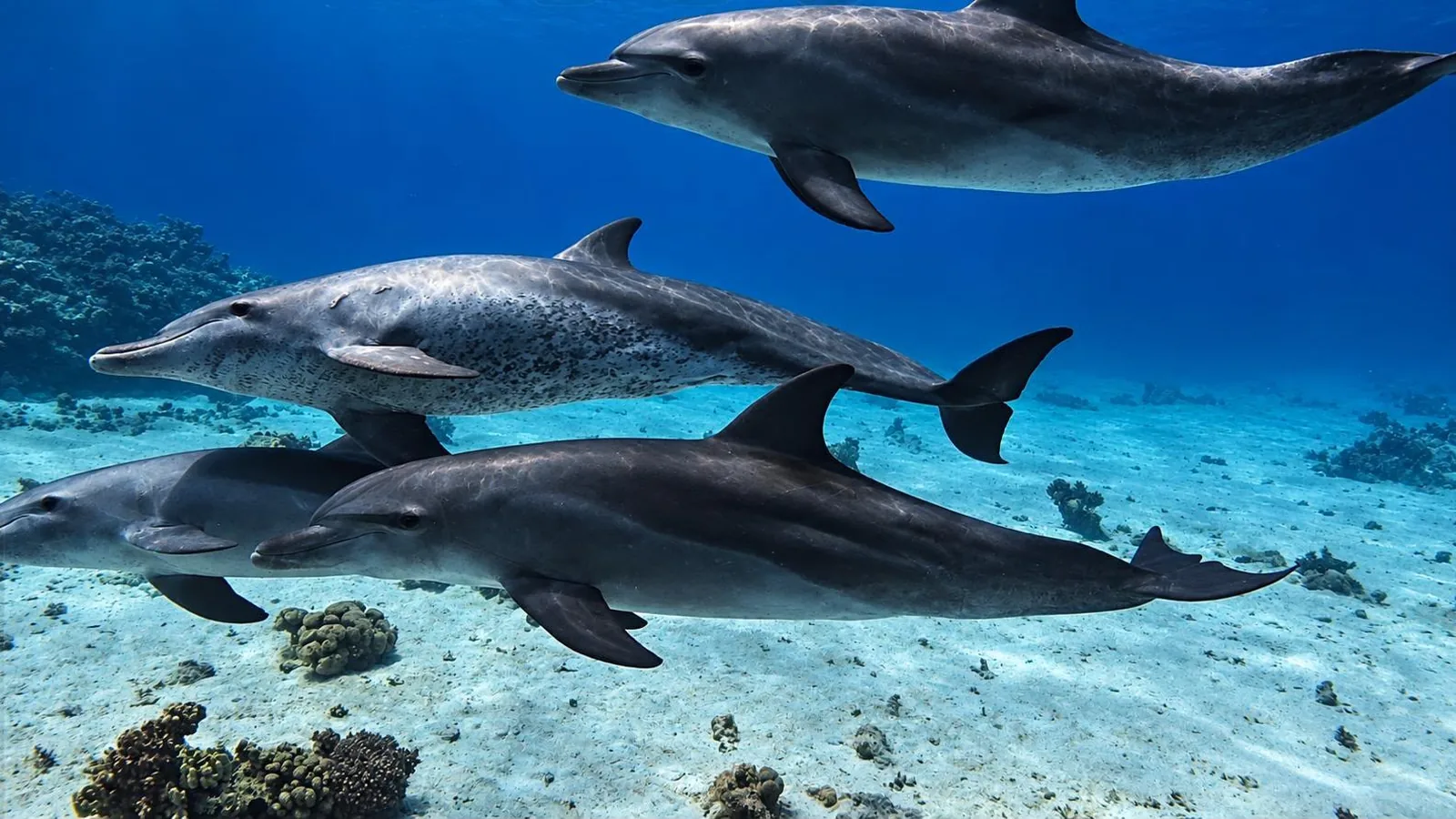
The occasional visitors: This is the Red Sea, so bigger animals do pass through. Turtles and dolphins are seen occasionally, and blue-spotted stingrays and eagle rays turn up now and then over the sand. None are guaranteed — they are the bonus that keeps regulars coming back — but the reef life alone is more than enough to fill a dive.
Who it's for
This is the honest counterpoint to the advanced offshore sites near Hurghada. Where a deep wreck or an exposed outer reef demands experience, air discipline and a tolerance for current, Gota Abu Ramada asks very little of a diver. It is shallow, sheltered and usually calm, which makes it genuinely welcoming rather than merely "doable".
That makes it an excellent choice for several kinds of diver:
- Newly certified divers looking for a confidence-building first boat dive after their course.
- People in training — the calm, shallow conditions are forgiving for practising skills and buoyancy.
- Nervous or returning divers who want an easy dive to shake off the rust before anything more demanding.
- Photographers of every level, drawn by the good light, dense fish life and relaxed pace.
- Mixed-ability groups and families where not everyone wants a deep, challenging dive.
Experienced divers are far from bored here either — a long, slow reef dive surrounded by fish is a pleasure at any certification level, and it pairs well with a more adventurous second dive elsewhere. If you are still deciding whether diving is for you, this is close to an ideal place to find out. Those thinking about their first breaths underwater can read more about starting out on the learn-to-dive pages.
Conditions and best time
The defining feature of Gota Abu Ramada is how calm and easy it usually is. Current tends to be light, the reef is well sheltered by its position among the inshore waters, and the shallow depths mean warm water and bright, comfortable diving. Visibility on these sheltered reefs is generally good, and the shallow profile lets natural light do its work.
The Red Sea is a year-round diving destination, and Gota Abu Ramada is diveable across the seasons. Because it is shallow, it is a particularly attractive option in the cooler months when depth adds a chill, and its sheltered nature makes it a reliable go-to on breezier days when exposed offshore sites are less pleasant. As always, the guide's local knowledge on the day is the best guide to where the conditions are finest.
Responsible diving
Two of Gota Abu Ramada's most interesting residents — crocodilefish and stonefish — are also the reason to dive it carefully. Both rest camouflaged on the reef and sand, and both carry venomous spines. A stonefish sting in particular is a serious matter that needs prompt medical attention. The good news is that avoiding trouble is simple: never touch, never rest a hand or knee on the bottom, and keep your fins clear of the sand and coral.
Good buoyancy protects the diver and the reef in equal measure. Hovering, watching and photographing without contact is not only safer — it keeps this fragile, fish-rich habitat thriving for the divers who come after you. Look, don't touch, and leave nothing behind but bubbles.
Practical tips and how to book
- Treat it as a photography dive. The shallow light and dense fish reward a slow, deliberate pace. Even a compact camera or phone housing does well here.
- Watch your hands and knees. The best sightings are the camouflaged ones on the bottom — which is exactly why you should never touch or settle on the seabed.
- Enjoy the long dive. With everything shallow, you'll likely have generous no-stop time. Slow down and let the reef come to you.
- Bring a light layer. Even in warm months a long, relaxed dive can cool you gradually — dress for comfort over a full, unhurried dive.
- Pair it up. Because it sits among several sheltered reefs, it combines naturally with a second dive for a full day out.
Gota Abu Ramada is run as part of standard day-boat diving from Hurghada, most often as one of two dives on the outing. Reputable operators carry small groups, brief the site properly and keep an experienced guide with each group — worth confirming when you book, especially if you or someone in your party is newer to diving.
Frequently asked questions
Why is Gota Abu Ramada called 'The Aquarium'?
The nickname comes from the sheer density and variety of fish on the reef. Divers are surrounded by clouds of butterflyfish, bannerfish, sweetlips and big schools of yellow goatfish in clear, shallow water, so the site feels like swimming inside a giant aquarium.
Is Gota Abu Ramada suitable for beginners?
Yes. The main reef sits in roughly 0 to 15 metres of water, the site is usually calm with little current, and it is well sheltered. That combination makes it one of the more welcoming Hurghada reefs for newly certified divers, first boat dives and training, as well as for relaxed underwater photography.
How deep is Gota Abu Ramada?
The main oval reef and its coral gardens sit in the shallows, with a maximum of about 15 metres on the reef itself. The surrounding sandy seabed slopes away deeper, reaching roughly 40 metres at the outer perimeter, so the depth you dive is set by your certification and dive plan.
How long is the boat ride to Gota Abu Ramada from Hurghada?
It is a reef south of Hurghada and typically takes around an hour by boat, though the exact time depends on the departure point, the vessel and sea conditions. It is usually run as part of a standard day-boat trip with two dives.
What will I see at Gota Abu Ramada?
Expect clouds of butterflyfish, bannerfish, sweetlips and large schools of yellow goatfish, plus barracuda, moray eels, jackfish and glassfish. On the west side two coral pinnacles rise to about 6 metres from the surface and swarm with orange anthias. Camouflaged crocodilefish and stonefish rest on the sand, and turtles, dolphins, blue-spotted stingrays and eagle rays are seen occasionally.
Are there dangerous animals at Gota Abu Ramada?
Nothing that threatens a careful diver, but the reef and sand hold well-camouflaged crocodilefish and stonefish, which have venomous spines. The rule is simple: look, do not touch, and stay off the seabed. Maintaining good buoyancy protects both the diver and the reef.