Sharm El Sheikh is where Red Sea diving became world-famous. The Straits of Tiran, Ras Mohammed National Park and the Thistlegorm wreck sit within a 90-minute boat ride of each other, forming a concentration of world-class dive sites hard to match anywhere on the planet. This is our 2026 ranking based on what we actually see diving here every week.
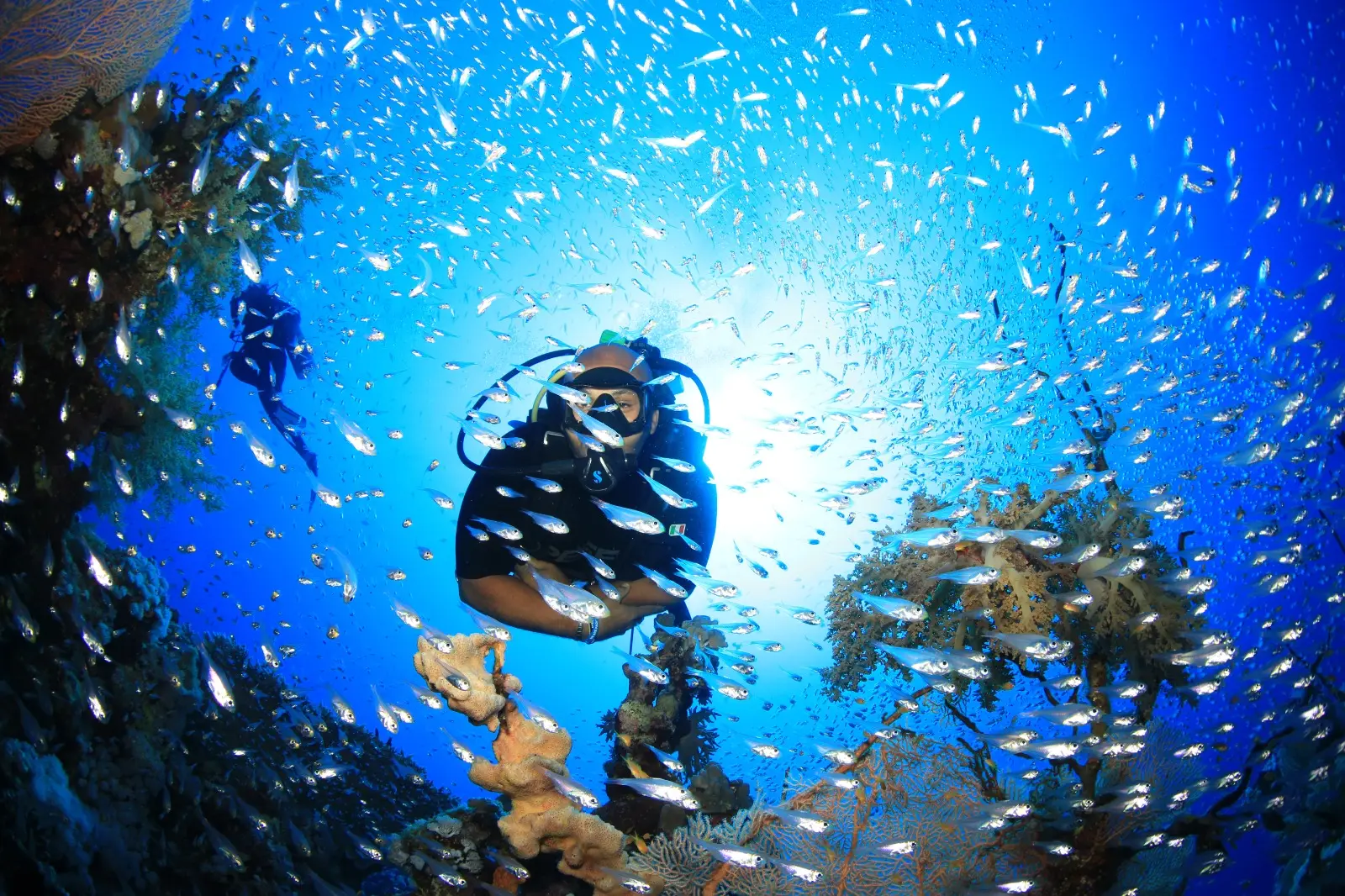
Overview — what makes Sharm diving distinctive
Sharm El Sheikh sits at the southern tip of the Sinai Peninsula, where three bodies of water meet: the Gulf of Aqaba, the Gulf of Suez, and the open Red Sea. This convergence drives nutrient-rich currents past the local reefs, supporting some of the densest marine life concentrations in Egypt. The Tiran reefs and Ras Mohammed National Park together form what most experienced divers consider the best concentrated diving in the country.
Three distinctive features define Sharm diving:
Pelagic action. Whale sharks, hammerhead schools, manta rays, oceanic whitetips, eagle rays — all are realistically possible from the Sharm boat dock. No other Egyptian dive hub combines this many target species in such a small area.
Wall diving. Sharm's reefs are bordered by deep water — past the immediate fringing reefs, the seabed drops to 700+ metres. This produces dramatic vertical walls covered in soft coral, with anthias clouds streaming in the perpetual current. Visually, Sharm walls are some of the most photogenic reef structures anywhere.
Variety in a small area. Within 60 minutes of Naama Bay you can dive a national park (Ras Mohammed), four offshore reefs (Tiran), the world's most famous wreck (Thistlegorm), an 1876 Victorian-era wreck (Dunraven), shore-accessible house reefs (Ras Ghamila), and reef gardens for training and recreation (the Gardens). Few dive destinations offer this much variety with this little transit.
The list below is our team's ranking of the best 10 sites. Some are full-day boat trips; some are half-day; one is shore-accessible. Your trip should mix several — pick 4-6 from this list across a week's diving.
1. Shark Reef & Yolanda Reef (Ras Mohammed)
Typically dived as a single drift, these two sites sit at #1 because nowhere else in the Red Sea reliably produces pelagic action on this scale. Shark Reef is a sheer vertical wall dropping past 700 metres, and the plateau between Shark and Yolanda hosts schooling barracuda, jacks, snappers, and a resident population of napoleon wrasse that will swim right up to your mask.
Yolanda Reef itself is famous for the cargo that scattered from the sunken Cypriot freighter Jolanda — bathtubs, toilets, and shipping containers still resting at 15-25 metres, now colonised by soft corals and lionfish.
Sharm's most famous dive site for good reason. Two separate reefs joined by a saddle — Shark Reef rises vertically from a 700m drop-off, Yolanda Reef descends to 18m where the cargo of the SS Yolanda (a Cypriot freighter sunk 1980) lies scattered: toilets, bathtubs, BMW chassis frames, broken porcelain. The combination of dramatic wall and bizarre cargo creates an unmistakable signature dive.
What you'll see: schooling barracuda forming a wall of fish at the corner where Shark Reef joins the saddle. Schooling jacks moving in tight formation. Tuna patrolling the deeper blue. Napoleon wrasse cleaning at depth. In peak season (September-November), the pelagic action is among the best in the Red Sea — comparable to Galapagos drift dives in intensity but warmer and more accessible.
Skill required: Advanced Open Water with experience in current. The drift along Shark Reef can be strong; positioning at the saddle requires confidence. Open Water divers can dive Yolanda Reef alone in calm conditions but miss the famous schooling.
Aquarius runs Shark/Yolanda from our Coral Sea Imperial marina as part of full-day Ras Mohammed trips. Pickup 7:30 AM, two dives, lunch on board, return mid-afternoon. National park fees apply (collected separately).
2. Jackson Reef (Straits of Tiran)
Northernmost of the four Straits of Tiran reefs and the most famous for hammerhead sightings — most commonly between June and August when they come up from the depths to clean on the north side.
The most northerly of the four Tiran reefs and the headline drift dive of Sharm. Walls drop vertically into deep water; the famous Lara wreck remains visible above the surface on the north tip. Hammerhead schools patrol the back wall in late summer (August-September-October), making Jackson the best Sharm site for shark sightings.
The "Jackson Drift" along the eastern wall is Sharm's fastest, most exhilarating drift dive — a high-speed conveyor along a soft-coral-encrusted wall. Photographers love it but only with experience; the speed makes camera work challenging.
Skill required: AOW minimum, comfortable in current. Strong swimmers can dive the back wall (deeper, hammerhead-targeted); less confident divers stay on the south side mooring dive in calm conditions. We have a complete Jackson Reef guide for the full breakdown.
3. Woodhouse Reef
Long cigar-shaped reef between Jackson and Thomas, almost always dived as a north-to-south drift. Famous for eagle rays, whitetip reef sharks cruising the sand valley, and spectacular soft coral walls.
Long, narrow reef between Jackson and Thomas. No surface anchorage — divers can only access this site as a drift dive with live boat pickup. The current along Woodhouse can change direction unpredictably, requiring guides who know the site well.
The wall is dramatic and the reef structure has interesting overhangs and small canyons. Pelagic species patrol the deeper edge — eagle rays, occasional reef sharks, schooling fusiliers.
Skill required: AOW with confidence in drift diving and current. Not appropriate for nervous divers — there's no "swim back to the boat" option here. Aquarius runs Woodhouse on Tiran day-trips when conditions are right; we don't dive it on rough days.
4. Thomas Reef
The smallest of the Tiran reefs but arguably the most beautiful. Features a famous canyon on the south side that drops from 28m to over 60m — strictly for advanced or tec-trained divers.
The third of the four Tiran reefs, running south from Jackson and Woodhouse (Gordon is the southernmost). A canyon descending from 25m to past 50m runs along the reef's south side — the topography here is some of the most dramatic in Sharm. Pinnacles rise from the canyon floor, with abundant soft coral cover and the chance of pelagic encounters.
Thomas Reef has a particular reputation for octopus and other reef-dwelling species in addition to the typical schooling fish. The mooring buoys on the south side allow gentler dives in calm conditions; the back wall delivers more dramatic drift action when current allows.
Skill required: AOW for the back wall and canyon; OWD acceptable for the moored south side in calm water.
5. Gordon Reef
Southernmost of the Tiran reefs and probably the most forgiving — shallower, less current, and a sandy plateau at 12 metres where whitetip reef sharks frequently rest during the day.
Distinctive triangular shape with the visible remains of the Loullia, a Panamanian freighter that ran aground in 1981, sitting above water on the south side. Calm anchorage on the south makes Gordon a reliable choice in any conditions — when wind cancels other Tiran sites, Gordon is often still divable.
The reef itself has excellent mid-depth coral cover and some of the most reliable hammerhead sightings of the four Tiran reefs in summer (August-October). The "amphitheatre" — a natural sandy plateau bowl on the southwest corner — gathers sweepers, fusiliers, and the occasional eagle ray. Less dramatic than Jackson but more reliable.
Skill required: OWD acceptable; AOW recommended for the back wall.
6. SS Thistlegorm Wreck
The world's most famous wreck dive and a day trip from Sharm. See our complete Thistlegorm guide.
Egypt's most famous wreck dive. WWII cargo ship sunk in 1941 carrying motorbikes, trucks, locomotives, rifles, and ammunition. Lies 16-32m on her starboard side. Penetration of cargo holds is possible (with care). One of the world's iconic dive sites.
From Sharm, the Thistlegorm is a long full-day trip — 5:30 AM pickup, 3-4 hours each way by boat, 2 dives on the wreck. Currents at the site can be strong; the dive is genuinely demanding. AOW certification with 15+ logged dives is the practical minimum, plus comfort in current and 30m depth.
We have a complete Thistlegorm guide with history, dive plans, and ethics. Booking ahead is essential — Aquarius Thistlegorm trips fill weeks in advance during peak season.
7. Far Garden & Middle Garden
Where most Open Water-level Sharm dives happen — sheltered coral walls on the Na'ama Bay side, accessible by speedboat in 15 minutes, with shallow plateaus topping out around 5 metres.
The "Gardens" sites are a string of bays north of Naama Bay — Far Garden at the north end, Middle Garden in the centre, Fiddle Garden between, and the smaller bays. The reef topography is gentler than Tiran or Ras Mohammed: shallow fringing reef descending in steps, with sandy "roads" cutting between coral structures.
This makes the Gardens excellent for training and casual recreational diving. Beginner divers, refresher divers, and Discover Scuba candidates use these sites regularly. Even experienced divers find the Gardens valuable for low-stress dives, photography of macro subjects, and the occasional surprise encounter — turtles, eagle rays, and rarely whale sharks pass through.
Skill required: All levels welcome. Open Water trainees often complete their certification dives here.
8. Ras Katy & Ras Umm Sid
Popular house-reef style sites near Sharm Bay. Beautiful soft coral walls with resident turtles, scorpionfish, and occasional barracuda schools.
Two adjacent sites with mixed topography — fringing reef, plateau, drop-off, and pelagic potential. Ras Umm Sid is one of the more exciting Sharm local sites due to its variable conditions: mild current can become fast unexpectedly, and the corner of the reef is where pelagic species sometimes pass.
Honeycomb caves, nooks, and crannies at the top of the Ras Umm Sid fringing reef (5-6m) make excellent macro photography areas. The drop-off below 15m holds soft corals and gorgonian fans. Whale shark and manta sightings happen rarely but reliably enough that locals always look at the corner when current picks up.
Skill required: OWD for the sheltered side; AOW for drift conditions.
9. SS Dunraven Wreck
An 1876 British steamship resting upside-down at 18-29 metres near the tip of Sinai. Inverted interior hosts one of the most photographed glassfish swarms in the Red Sea.
Victorian-era cargo ship sunk in 1876 — the second-most-famous Sharm wreck after the Thistlegorm. Lies upturned at 18-30m, more atmospheric than the Thistlegorm and considerably less crowded. The wooden structure has long since rotted away leaving the steel skeleton encrusted with soft corals and home to glassfish schools, lionfish, and the occasional moray.
Penetration is possible at multiple points but only with proper wreck training. The interior is silty, dark, and confusing. Most divers (including us) recommend external exploration only on first visits.
Skill required: AOW. The Dunraven is a more demanding wreck dive than the Thistlegorm in some ways — the silt, the upside-down disorientation, and the smaller size mean buoyancy mistakes have more consequences.
10. Temple
Shore-accessible house reef with three coral pinnacles rising from a sandy plateau at 12-15 metres. Favourite for night dives and training.
Dive these sites with us
Aquarius runs daily trips from our Sharm base covering Ras Mohammed, Straits of Tiran and Thistlegorm day trips.
See Sharm Dive Trips →Several massive coral blocks rising from the sandy seabed to within metres of the surface, creating an "ancient temple" appearance underwater. The site sits in southern Naama Bay area and is dived as a mooring dive — usually a relaxed afternoon dive.
Octopus, free-swimming morays, Spanish dancers, and other reef life make Temple an excellent night dive destination. The depth profile (10-25m) and the clear navigation between the coral blocks make it forgiving for divers building experience.
Skill required: OWD. Excellent first-week-of-trip dive for divers building toward more challenging sites later in the trip.
Honourable mentions
Sharm has more than 10 dive sites worth visiting. Quick mentions of others worth exploring:
- Ras Nasrani: Northern local site near the airport. Mild current, good macro, occasional pelagic glimpses.
- Anemone City: Part of Ras Mohammed park. Hundreds of anemones with resident clownfish — photographer's paradise.
- Eel Garden: Sandy plateau in Ras Mohammed with garden eels, often combined with Shark/Yolanda.
- Ras Ghamila: Aquarius's house reef, shore-accessible. Full guide here.
- Million Hope: Modern wreck (1996), accessible by speedboat, requires AOW + 15 dives.
- Tower: Dramatic U-shaped vertical wall, drift dive.
- Shark Bay: Beach-accessible shore dive, ideal for refreshers.
When to dive Sharm El Sheikh
- March-May: Water warming (22-25°C), whale shark season begins southward.
- June-August: Peak season. Hammerhead sightings at Jackson peak. Busiest crowds.
- September-November: Our recommendation. Ideal temps, Ras Mohammed pelagic action peaks.
- December-February: Cooler water (5mm wetsuit), occasional rough surface but reefs quieter.
For a full monthly breakdown see Best Time to Dive the Red Sea.
How to plan your week
If you have a week of diving (typical Aquarius package: 5-6 dive days), here's how we'd structure it for a first-time visitor with AOW certification:
Day 1 — Arrival + Ras Ghamila check-out: Single shore dive at our house reef. Re-acclimatize to diving, equipment check, water-temperature adjustment. No pressure, no boat trip on day one.
Day 2 — Local Sharm sites: Half-day boat to one of the Gardens or Ras Umm Sid. Two dives. Builds boat-diving rhythm without the fatigue of a full-day Tiran trip.
Day 3 — Tiran Day: Full-day boat. Two dives at two of the four Tiran reefs (typically Jackson or Gordon, plus one other). Experience the dramatic walls and pelagic action.
Day 4 — Ras Mohammed Day: Full-day boat to the national park. Two dives — one at Shark/Yolanda, one at Anemone City or Eel Garden. The park entry fee makes this trip slightly more expensive but the diving is among the best in Egypt.
Day 5 — Rest day or Special trip: Either a recovery day for non-diving exploration of Sharm/Old Town/Ras Mohammed land tour, OR a special trip — Thistlegorm (5:30 AM start, full-day, demanding) or Dahab Blue Hole + Canyon land trip (7:30 AM, full-day, two shore dives).
Day 6 — Repeat favourite: By now you know which sites you want to return to. Most divers want a second day at Ras Mohammed or Tiran. Some want the Thistlegorm. Some want a relaxed shore-diving day at Ras Ghamila with a night dive.
Day 7 — No diving (mandatory pre-flight): 18-24 hours surface time required before flying. Enjoy Sharm above water — Old Market, Ras Mohammed land tour, beaches.
This is a starting point. Adjust based on your interests, certification level, and budget. Aquarius dive packages (5-day, 8-day, 10-day) include flexibility to substitute special trips for daily dives.
Frequently asked questions
What is the best dive site in Sharm El Sheikh?
Shark Reef and Yolanda Reef at Ras Mohammed National Park are consistently ranked the best dive sites in Sharm El Sheikh — both are advanced-level sites featuring steep walls, schooling pelagic fish, and the Yolanda wreck cargo at 15-25 metres.
Can beginners dive in Sharm El Sheikh?
Yes — sites like Near Garden, Far Garden and Ras Katy suit Open Water divers with their sheltered walls, mild currents and shallow depths. However Ras Mohammed and the Straits of Tiran sites require Advanced Open Water due to strong currents and depths over 25 metres.
How deep is Shark Reef at Ras Mohammed?
Shark Reef drops as a sheer wall from the surface to over 700 metres. The recreational dive profile typically runs from 5m down to 30m along the wall, with the plateau at 18-25m being where most pelagic action happens.
What is the best time to dive Sharm El Sheikh?
September to November offers the best balance — water 26-28°C, visibility often 30m+, and pelagic action at Ras Mohammed peaks with schooling barracuda, jacks and resident hammerheads.