There is no single "best" dive centre on the Red Sea, and any guide that hands you a ranked list of named businesses is mostly selling you something. Here is the honest, useful version instead: a criteria-led guide to choosing a Red Sea dive centre — the things that genuinely separate a great operation from a risky one — and how those criteria play out region by region across Egypt. Read it, ask the questions, and you'll book with confidence wherever you go. If you'd like the wider picture of where and when to dive first, start with this complete guide to scuba diving the Red Sea.
Why the choice matters
Diving is overwhelmingly safe when it's run well — and the dive centre is the single biggest factor in how well your day is run. The same reef, on the same morning, can be a flawless, unforgettable dive with one operation and a stressful, cut-corners scramble with another. Three things hang on getting the choice right:
- Safety. Ratios, briefings, gear condition, emergency oxygen and a real plan are what keep an unlikely problem from becoming a serious one. This is non-negotiable and it's invisible in a price.
- Experience quality. A good guide reads the conditions, matches the site to your level, finds the marine life and gives you space to enjoy it. A rushed, overcrowded boat does the opposite.
- Value. The cheapest headline price is rarely the best value once you account for what's actually included, the size of the group you'll share a guide with, and whether the gear and boat are up to scratch.
The good news: you can assess all three before you ever get wet, with a short checklist and a couple of honest questions. That's the rest of this guide.
The criteria — how to judge a dive centre
These are the dimensions that matter, roughly in order of importance. None of them requires you to be an expert — each comes with what to look for and what to ask.
1. PADI / SSI credentials — what the badges actually mean
A centre's affiliation with a recognised training agency — most commonly PADI or SSI — is your baseline. It means the operation has agreed to teach to a global standard and is subject to that agency's quality and safety framework. Within PADI, the rating worth knowing is PADI 5-Star, awarded to centres that meet the agency's standards for service quality, the range of training they offer, customer satisfaction and environmental responsibility.[1] Two points are often confused:
- 5-Star is not a difficulty or luxury rating. It recognises the operation's professionalism — not how "advanced" or upmarket the diving is.
- "Dive Resort" vs "IDC." A PADI 5-Star Dive Resort excels at recreational diving and training for travelling divers. A PADI 5-Star IDC (Instructor Development Centre) meets all the same standards and trains new instructors — with at least one PADI Course Director on staff — which usually signals a deeper, more experienced teaching team.[2]
If a centre is SSI rather than PADI, the equivalent is just as valid. SSI (Scuba Schools International) uses its own tiers — a standard SSI Dive Centre, an Instructor Training Centre (the rough counterpart to a PADI IDC, i.e. it trains instructors), and a premium Diamond designation for its top-rated centres.[3] A centre affiliated with either agency — or, commonly in the Red Sea, both — is a sound starting point.
A credential is a strong filter, not a guarantee. Use it to build a shortlist, then verify everything else below. If you're booking a course, it helps to know what a quality course looks like too — see this guide to the PADI Open Water course in the Red Sea.
2. Safety culture — the most important thing you can't see in a brochure
This is where great centres and risky ones really diverge, and it's worth asking about directly. A centre with a genuine safety culture will be pleased to answer — wariness or vague answers are themselves a red flag. Look for:
- Sensible guide-to-diver ratios. Smaller groups per guide mean closer supervision and a calmer dive. Ask how many divers each guide takes, and whether beginners or refresher divers get extra attention.
- Thorough briefings. Before every dive you should hear a proper briefing: the site layout, planned depth and time, entry and exit, hand signals, and the lost-buddy procedure. A skipped or mumbled briefing tells you a lot.
- Well-maintained rental gear. Equipment should look clean and cared-for, with regulators and BCDs serviced on a schedule. It's fair to ask when the rental kit was last serviced.
- Emergency oxygen and first aid on the boat. Every dive boat should carry emergency O2 and a first-aid kit, with crew trained to use them — and a clear plan for reaching the nearest recompression chamber.
- Insurance. A professional operation carries liability insurance; a good centre also encourages you to hold your own dive accident/travel insurance.
- Check dives and refreshers. A responsible centre insists on a check dive or a refresher if you haven't dived in a while, rather than waving you straight onto a deep site. Treat that insistence as a good sign, not an inconvenience.
3. Instructor quality and languages spoken
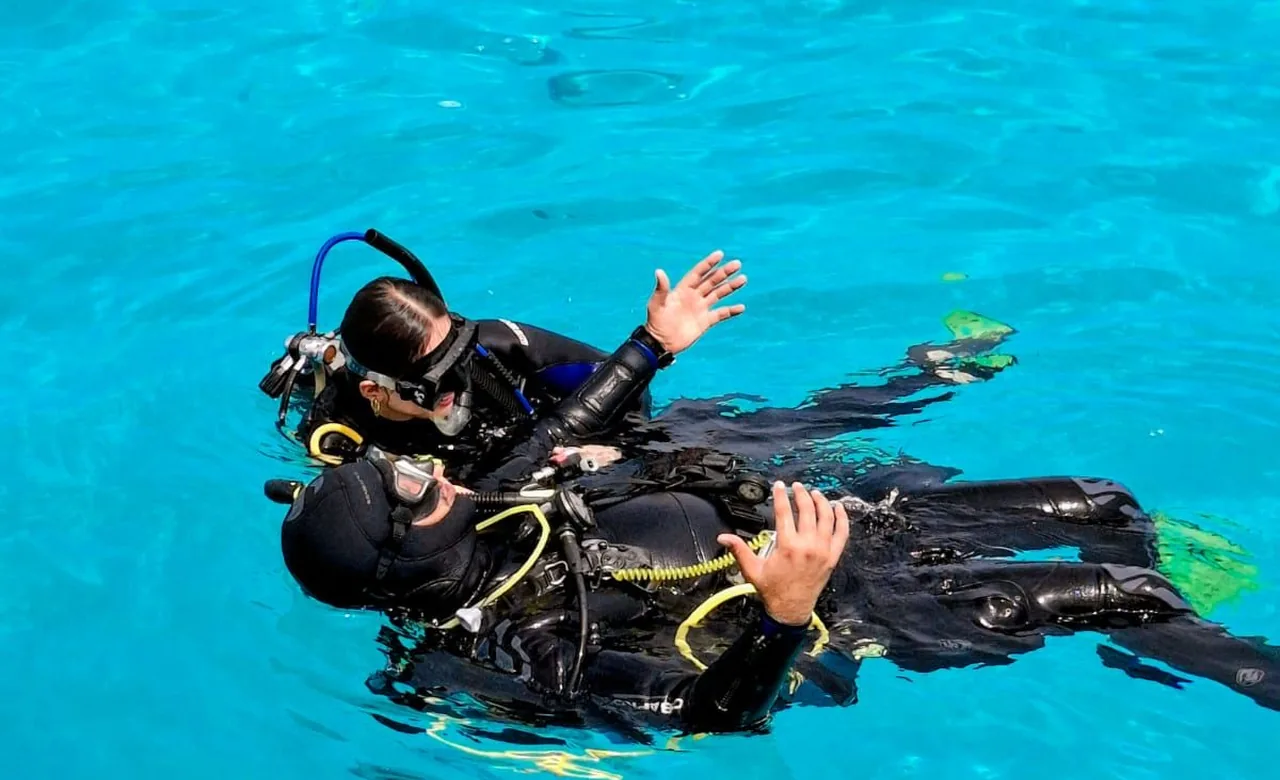
The person guiding or teaching you shapes the entire experience. Beyond their certification level, two things matter:
- Experience and manner. Experienced guides read conditions, pace the dive to the group, and stay calm and patient with nervous divers. Reviews are a good window into this (see below).
- A shared language. Safety and enjoyment both depend on clear communication — briefings, signals, reassurance. For non-English-speaking divers this is a real factor: a centre that teaches and guides in your language is not a luxury, it's safer and far more comfortable. If you're not a native English speaker, ask up front which languages the instructors actually speak.
4. Fleet and boats — day boats vs liveaboards, and comfort
Where you'll spend your surface time matters more than people expect. The two broad formats:
- Day boats return to port each evening — the standard for most Red Sea resort diving, and ideal if you want to combine diving with a hotel stay, family time or rest days.
- Liveaboards are multi-day trips sleeping on the boat, reaching remote offshore sites. They're a different kind of holiday — worth it for serious itineraries, less so for a relaxed first trip.
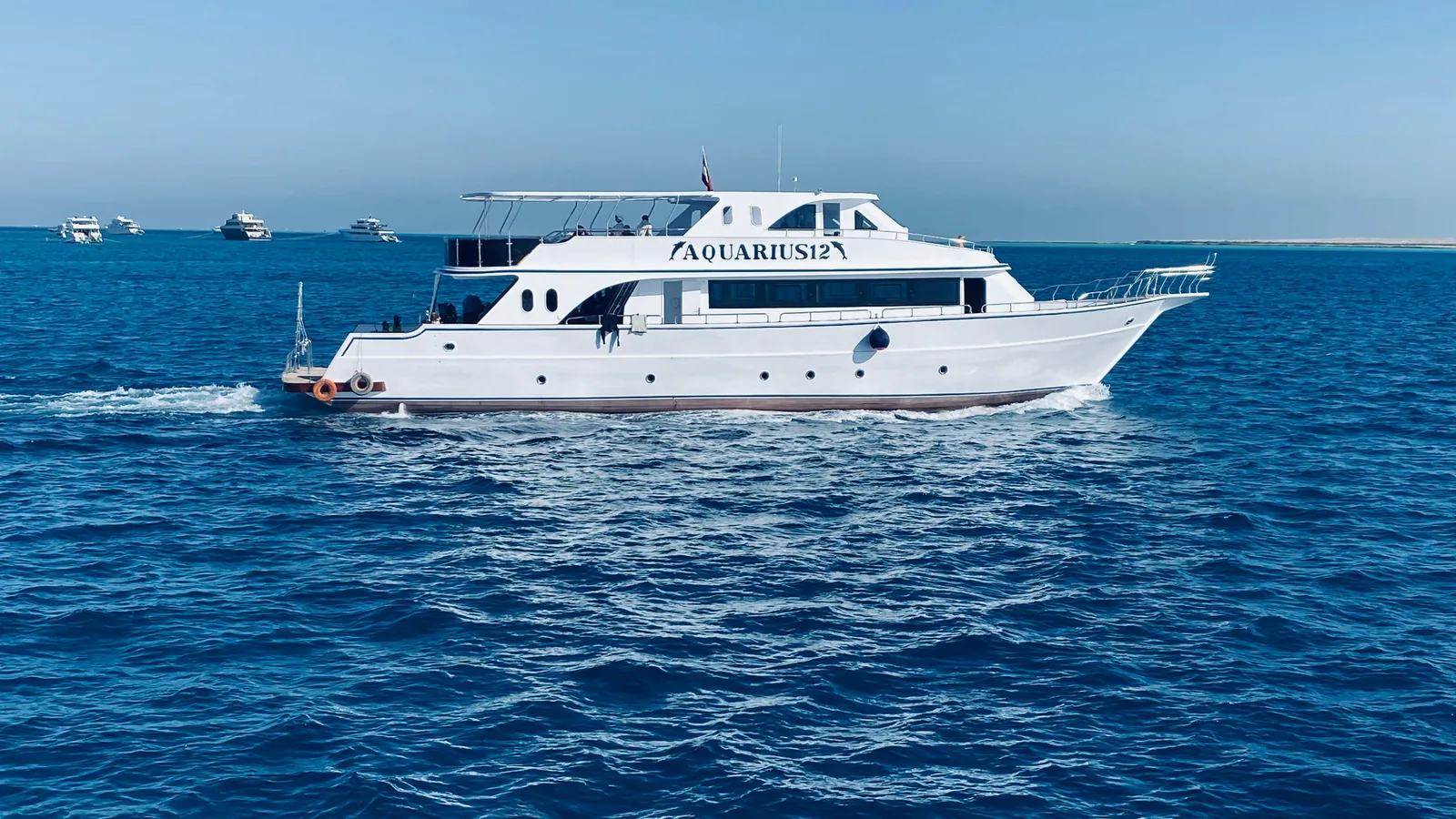
For day diving, look at the boat itself: enough shade and seating for the group, clean toilets, a sensible kitting-up area and easy water entry/exit (a proper ladder or platform). If anyone in your party has limited mobility, ask specifically about boat access — some boats are far easier to get on and off than others. A cramped, overloaded boat is uncomfortable before you even dive.
5. Group sizes and personal attention
Closely tied to both safety and enjoyment. Smaller groups mean your guide can actually watch you, respond if you need help, and show you more underwater. Big "cattle-boat" operations spread one guide across a large group and rush the turnaround. Ask how many divers share a guide and how many the boat carries in total — and be a little wary of any operation that can't give you a straight answer.
6. Reviews and reputation — and how to read them
Independent reviews on Google and TripAdvisor are one of your best tools — if you read them well:
- Look for volume and consistency over time, not just a high average. A long track record of steady, recent reviews beats a handful of glowing ones.
- Read the substance, not the stars. Reviews that mention specific guides, safety, briefings, equipment and how problems were handled are far more telling than "amazing, 5 stars!"
- Watch how the centre responds to criticism. Professional, constructive replies are a good sign; defensive or absent ones less so.
- Red flags: repeated complaints about pushy upselling, hidden charges, overcrowded boats, gear in poor condition, or dismissive responses to safety concerns. A cluster of brand-new five-star reviews appearing all at once can also be worth a second look.

7. Accessibility and inclusivity
The Red Sea's warm, clear, calm water makes it one of the friendliest places in the world for adaptive and inclusive diving — but the centre has to be set up for it. If you or someone in your party has a disability or limited mobility, look for an operation with genuine adaptive experience: instructors trained for it, suitable boat access, and a willingness to plan the day around you. When you enquire, describe your situation honestly and ask how they've supported divers like you before. For the full picture, see this guide to adaptive and inclusive diving in the Red Sea.
8. Transparent pricing — what should be included
Honest pricing is itself a sign of a well-run centre. You shouldn't have to guess what you're paying for. A clear quote should tell you whether these are included or charged extra:
- Tanks, weights and a guide — the basics of a dive day.
- Hotel transfer — pickup and drop-off, included or not.
- Rental equipment — priced clearly if you need it, not assumed.
- Lunch and drinks — many centres include soft drinks on the boat and price lunch as a stated option.
- Marine-park, port or environmental fees — disclosed up front where they apply.
The red flag isn't the existence of extras — it's extras that only surface at the end. Compare the all-in price between centres, not the headline figure. And when you book, get the inclusions in writing. A companion guide on how to book Red Sea diving covers the booking-channel side of value in detail.
9. Conservation and responsible diving
A centre's attitude to the reef is a good proxy for its attitude generally. Look for operations that brief on no-touch, good-buoyancy diving, don't chase or harass marine life, manage anchoring responsibly, and take part in clean-ups or marine-park rules. Beyond being the right thing to do, it usually goes hand in hand with the same care that shows up in safety and service.
Region by region — applying the criteria
The criteria above don't change from place to place — but what each region offers does, and that should shape where you point them. Here's how the Egyptian Red Sea breaks down.
| Region | Best for | Signature diving |
|---|---|---|
| Hurghada | All levels, first-timers, courses, variety | Reefs, islands and famous wrecks; easy logistics |
| Sharm El Sheikh | Reef and wall lovers, marine-park diving | Ras Mohammed & the Strait of Tiran |
| Makadi Bay | Relaxed holidays, families, beginners | Calm house & boat reefs; day trips to wider sites |
| Sahl Hasheesh | Quiet resort diving, easy pace | Sheltered reefs; day boats to Hurghada-region sites |
| Marsa Alam | Remote southern reefs, wildlife seekers | Elphinstone, dugongs and seagrass bays, less crowded |
| Dahab | Laid-back, shore diving, technical & freediving | The Blue Hole & the Canyon |
Hurghada
Hurghada is the central hub of Egyptian Red Sea diving and, for most visitors, the easiest place to start. It offers the widest spread of options — sheltered house reefs, offshore island reefs and several of the region's celebrated wrecks — all within reach of an efficient day-boat scene. That breadth makes it especially strong for first-timers, courses and mixed-ability groups: there's an appropriate site for every level on almost any day. Because it's the busiest hub, the full quality range exists here, from excellent to mediocre, so the criteria above matter most — lean hard on credentials, ratios and reviews. See daily diving in Hurghada for how a typical day is run.
Sharm El Sheikh
On the Sinai side, Sharm El Sheikh is built around two world-class areas: Ras Mohammed National Park (about 20 km south of town, roughly a 30-minute boat ride), with its dramatic drop-off walls and big fish life — the celebrated Shark & Yolanda drift dive is here — and the Strait of Tiran reefs to the north. The diving leans toward stunning reefs, sheer walls and drift dives, and because much of it is inside a marine park, expect park fees and a more regulated environment — worth confirming in your price. It's a superb choice for divers who love reef and wall diving; just check that your centre runs day boats out to Ras Mohammed and Tiran (rather than only the closer local reefs) and matches sites to your experience.
Makadi Bay
A short drive south of Hurghada, Makadi Bay is a quieter, resort-focused area with calm, accessible reefs and an easy, unhurried pace. It's a strong pick for beginners, families and anyone who wants a hotel-and-diving holiday without the bustle — while day boats still reach the wider Hurghada-region sites when you want more. Apply the same checklist; the relaxed setting doesn't change what good looks like.
Sahl Hasheesh
Sahl Hasheesh is a sheltered resort bay, also just south of Hurghada, with calm conditions well suited to easy, relaxed diving and early dives in a course. Like Makadi, it pairs gentle local reefs with day-boat access to the broader regional sites. The combination of calm water and quiet boats makes it comfortable for nervous beginners — again, judge the centre on the criteria, not the postcard.
A note on Marsa Alam & Dahab
Two further regions are worth knowing even though they sit outside the central hubs:
- Marsa Alam (far south) is for divers chasing more remote, less-crowded reefs and wildlife — famous offshore sites such as Elphinstone, and shallow seagrass bays (Abu Dabbab is the best known) where dugongs and turtles graze.[4] It rewards travellers willing to go further for quieter water.
- Dahab (Sinai) is a relaxed Bedouin town renowned for shore diving and the iconic Blue Hole and Canyon — a magnet for technical divers and freedivers as well as recreational ones.[4] One caveat: the Blue Hole's signature feature, the deep "Arch" tunnel, sits well below recreational limits and has a notorious safety record, so the genuine diving there is strictly for appropriately trained, technically certified and guided divers. The shallower reef and the Canyon are enjoyable at recreational level — another reason a careful, well-credentialled centre matters here.
Wherever you land, the lesson is the same: choose the region for the diving you want, then choose the centre on the quality checklist.
Putting the checklist to work
Once you have a shortlist of two or three centres that pass the credential filter, run the rest of the checklist on each before you commit. A simple way to do it:
- Confirm the credential. Check the affiliation and rating yourself — a PADI 5-Star or the SSI equivalent — rather than taking a website badge at face value; the agencies' own dive-centre locators let you verify it.
- Read the reviews properly. Look for a long, steady track record and reviews that mention guides, safety, briefings and how problems were handled — not just a high star average.
- Send the questions below and compare the replies. The clarity, speed and honesty of the answers — on ratios, what's included, accessibility and the emergency plan — tell you as much as the answers themselves.
- Match the centre to the diving. Confirm it actually runs the sites you came for (for example day boats out to Ras Mohammed and Tiran from Sharm) and that it tailors dives to your certification level.
- Get the inclusions in writing. A reputable operation will happily confirm the all-in price and what's covered before you pay.
A centre that scores well across all of these — and welcomes the scrutiny — is one you can book with confidence. New to diving? A new divers guide is a good next read before you choose.
Run the checklist on Aquarius
Putting these questions to a centre is the best test there is. Ask Aquarius anything on this list — credentials, ratios, what's included, accessibility — and send your dates and certification level to plan your Red Sea diving.
Plan my dives →Questions to ask before you book
Copy these into your enquiry, whichever centre and region you're considering. How a centre answers tells you almost everything:
- Are you a PADI or SSI centre, and what's your rating (e.g. PADI 5-Star)?
- How many divers does each guide take, and how many does the boat carry?
- Do you carry emergency oxygen and first aid on every boat, and what's your emergency plan?
- How often is your rental equipment serviced?
- Do you require a check or refresher dive if I haven't dived recently?
- Which languages do your instructors and guides speak?
- What exactly is included in the price — tanks, weights, guide, transfer, drinks, lunch — and are there marine-park or other fees?
- Are your boats and entry/exit suitable if someone has limited mobility, and do you have adaptive-diving experience?
- Can you tailor the dives to my certification level and what I want to see?
- What's your cancellation policy, and can I get the inclusions confirmed in writing?
A great centre will welcome every one of these. If the answers are clear, confident and honest, you've found a good operation — book with confidence. For the next step, see how to book Red Sea diving for getting the best price and flexibility once you've chosen.
Price vs quality — getting real value
The cheapest quote is rarely the best value underwater, and the most expensive is not automatically the safest or best taught. Here is how to weigh price against the quality criteria above so you pay a fair rate without cutting corners. For detailed 2026 market ranges by trip and course, see the Red Sea diving prices guide.
Is cheap Red Sea diving safe?
Price on its own is not the danger — what an unusually low price often trims is. To reach a rock-bottom rate a centre may cut the things you cannot see from the dock: more divers with each guide, longer service intervals on rental gear, a skipped check dive for divers returning after a break, smaller boats without spare oxygen or a proper first-aid kit, or operating without full liability insurance. A fair local price can be perfectly safe; a quote far below the going rate is worth questioning. Ask exactly what is included and how the centre handles safety before judging on price alone.
How much should a good dive day cost in the Red Sea?
As a rough 2026 guide, a guided two-dive boat day from an established Red Sea centre typically runs about €40–80, with most centres around €55–70 — usually including tanks, weights, a guide, the boat and hotel transfer, with soft drinks on board. Booking several days as a package lowers the per-dive rate, often toward €25–35 a dive. Sharm El Sheikh centres frequently quote in pounds, around £55–70 a day. Equipment rental, lunch, Nitrox and any marine-park fees are normally extras worth budgeting for. Treat these as market ranges, not fixed prices — they shift with season, region and what is bundled in.
Does paying more mean better diving?
Not automatically. A higher price is only worth it when it buys genuine quality — small groups, well-serviced equipment, experienced multilingual instructors, a comfortable well-equipped boat and everything stated up front — rather than brand markup or gloss. Equally, the cheapest headline is rarely the best value once the extras are added. The reliable test is to compare the all-in price against the quality criteria above, and pay for substance rather than shine.
How do I get the best value without cutting corners?
Run the same checklist on every centre, then compare the total price rather than the headline — a slightly higher rate that includes gear, transfer and fees often beats a cheap number plus surprises at the desk. Ask precisely what is and is not included, confirm the guide-to-diver ratio and that safety equipment is on the boat, and if you are diving more than a day or two, ask for the package rate, which lowers the per-dive cost. Value in diving is quality per euro spent, not the lowest figure you can find.
Sources & references
- PADI — About PADI Dive Centers and Resorts (business levels and what PADI 5-Star recognition covers).
- PADI Pros — What is a PADI 5-Star Dive Center? (Dive Resort vs IDC Center distinction and instructor-level training).
- SSI (Scuba Schools International) — SSI centre recognition (Dive Centre, Instructor Training Centre and Diamond centre tiers).
- Lonely Planet — Best places for diving in Egypt's Red Sea (regional characteristics: Marsa Alam offshore reefs & dugongs; Dahab shore diving & the Blue Hole).
This is a criteria-led guide to help you choose well; it does not rank or endorse specific competing dive centres. Credential definitions follow PADI's published standards. Verified June 2026.