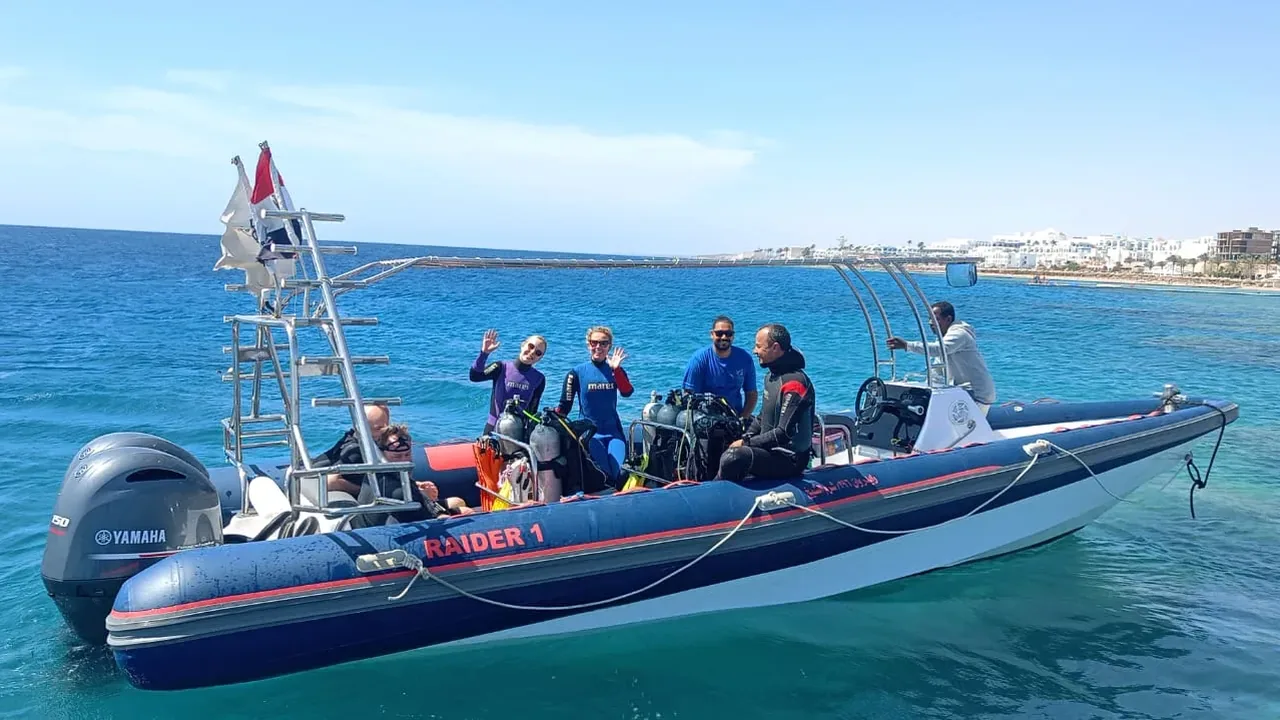
"How much does it actually cost to dive the Red Sea?" is one of the most common questions divers ask when planning a trip. So here it is, in plain numbers — typical 2026 market ranges for day diving, PADI courses, snorkelling trips, equipment and liveaboards across Egyptian Red Sea dive centres (Hurghada, Marsa Alam, Sharm El Sheikh, Dahab and the resort bays in between). Two things to keep in mind throughout: prices are usually quoted in euros (€), with some Sharm and UK-facing centres quoting in pounds (£); and because real prices shift with the centre, the season and what's included, the only way to know your exact figure is a direct quote from whichever operator you choose. Treat everything here as a reliable budgeting guide, not a fixed quote — and as a yardstick for spotting when a price is suspiciously low.
How Red Sea diving prices work
Before the tables, three quick principles that explain almost every number you'll see:
- Currency. Red Sea diving is most often quoted in euros (€), and many centres also accept US dollars; some Sharm El Sheikh and UK-facing operators quote in pounds sterling (£). The ranges below are given mainly in euros, with a pounds note where it's common — compare like-for-like inclusions, not just the currency on the headline.
- Packages beat single days. The per-dive cost falls the more days you book — a single day's diving might be €60–70, but the per-dive rate on a multi-day package commonly drops toward ~€25–30.
- The headline price isn't always the all-in price. A boat day usually includes tanks, weights, guide, boat and (at most reputable centres) free hotel transfer, with soft drinks on board. Equipment rental, lunch, Nitrox, marine-park fees and some special/wreck trips are typically extras — worth budgeting for. They're covered below.
Why the cheapest dive can be the most expensive — what a low price really cuts
Let's be honest up front: cheap isn't always bad, and the most expensive operator isn't automatically the safest. But scuba diving is an equipment-dependent activity in open water, and a price that's far below everyone else's almost never comes from clever efficiency — it comes from cutting things you don't see until something goes wrong. Diving's leading safety body, DAN (Divers Alert Network), puts it plainly: "price is not always indicative of quality." Here's the false-economy logic, then exactly what a rock-bottom price tends to leave out.
The false-economy logic, in one line
The few euros you save on a budget day trip are trivial next to the cost of a diving accident. A single recompression-chamber treatment for decompression sickness typically runs into the thousands, and if you need a boat or helicopter evacuation to reach that chamber, real-world cases have run into the tens of thousands — figures that dwarf any saving on the dive itself. A well-run operator's price reflects the supervision, serviced equipment and emergency cover that make such an event far less likely in the first place — and your own dive insurance (e.g. DAN) cheaper still. That's the trade you're actually making.
What a low price usually cuts
- Smaller groups, real supervision. Across the diving world a guide-to-diver ratio of about 4:1 is the widely-accepted ideal maximum for guided recreational diving — small enough that the guide can see everyone, react fast and stop a small problem becoming a big one. Budget trips make their margin on volume: crowd more divers onto one boat and one guide, and supervision thins out exactly when it matters. Overcrowding also means more time queuing to kit up and less briefing time per diver.
- Serviced, in-date equipment. Regulators and BCDs should be professionally serviced about every year or every 100 dives; tanks need an annual visual inspection plus periodic hydrostatic (pressure) testing. Skipping or stretching servicing is an invisible saving — until a regulator free-flows, a low-pressure inflator sticks or a worn O-ring fails on a dive. Reliable life-support gear costs money to maintain; a suspiciously cheap operator is a place that maintenance can quietly disappear.
- Emergency preparedness. DAN's advice is unambiguous: no dive boat should leave the dock without emergency oxygen — enough to give a continuous flow to an injured diver until professional medical care takes over — plus a stocked first-aid kit, working radio/GPS and signalling, and a written emergency action plan (who calls whom, where the nearest recompression chamber is, how to arrange evacuation). These cost money and training to keep ready, and they're the first things a corner-cutting operation lets lapse.
- Licence, insurance and certified staff. In Egypt, a legitimate operator is licensed by the CDWS (Chamber of Diving & Watersports) — the body set up by the Ministry of Tourism in 2007 that accredits dive centres to international standards (ISO 24803 / EN 14467) — carries proper insurance, and employs certified professionals (PADI, SSI and the like). Dive with an unlicensed, uninsured operator and a cheaper headline price can leave you exposed if anything goes wrong.
- Proper briefings, check dives and buddy checks. A thorough dive briefing, a check dive to confirm your weighting and skills, and a pre-dive buddy equipment check all take time — and time is the thing a high-volume budget operation is squeezing. Rushed or skipped, they remove the very steps that catch problems before you descend.
- Hidden costs that erase the "saving". A bargain headline can quietly exclude what others include: equipment rental, marine-park / national-park fees (Egypt's protected sites such as Ras Mohammed charge a per-visitor entry fee), hotel transfers, port and fuel surcharges, even lunch and drinks. Add them back and the "cheap" trip often isn't. An honest, all-in price is itself a quality signal.
- The reef pays too. Overcrowded boats with no proper no-touch / buoyancy briefing do real damage to fragile coral. A responsible operator's smaller groups and environmental briefing protect the reef you came to see — and that's part of what a fair price funds.
How to vet ANY dive operator before you book
You don't need to be an expert to spot a good operation — you just need to ask. Use this quick checklist for any centre, anywhere:
- Licence & certification — are they CDWS-licensed and affiliated with a recognised agency (PADI/SSI), with certified instructors and guides?
- Group size & ratios — how many divers per guide? Look for small groups (around 4:1 or better), not a packed boat.
- Serviced equipment — how often is rental gear serviced and tanks inspected/tested? A confident, specific answer is a good sign.
- Emergency cover — is there onboard oxygen, a first-aid kit, and a written emergency plan that names the nearest recompression chamber? Working radio/GPS?
- Insurance — is the operator insured, and do they recommend you carry your own dive accident insurance?
- Transparent, all-in pricing — does the quote spell out exactly what's included (and what isn't), with no surprise extras?
- Free hotel transfer & a real person to talk to — can you reach a human who answers your questions without dodging? Per DAN, an operator who's reluctant to discuss safety is a red flag.
Day & boat diving prices
This is the core of most trips: guided fun diving from a day boat (or from shore where the house reef allows). Two dives a day is the norm. The single biggest lever on your budget is the per-dive cost, which drops sharply on multi-day packages. The table below shows typical 2026 ranges across Red Sea centres — exact figures vary by operator, season and what's bundled in.
| Service | Typical Red Sea range | Notes |
|---|---|---|
| 1 day boat diving (2 dives) | ~€40–80 | Most centres ~€55–70; usually includes tanks, weights, guide, boat & transfer. |
| Single dive / extra dive | ~€25–50 | Per-dive add-on; shore dives often at the lower end. |
| Multi-day package (per dive) | ~€25–35 / dive | The more days, the lower the per-dive rate — the main saving. |
| Night / early-morning dive | +€10–25 | Supplement on top of the day rate. |
| Refresher / scuba review | ~€45–80 | One or two dives to shake off the rust after a break. |
| Same in pounds (Sharm / UK-facing) | ~£55–70 / day | Some centres quote in £ rather than €. |
Ranges compiled from published 2026 price lists across several Egyptian Red Sea centres (Hurghada, Marsa Alam, Sharm El Sheikh, Dahab). Exact prices and exactly what's included vary by operator and season.
PADI course prices
From your very first breath underwater to professional-track training, here's what scuba courses typically cost across Red Sea centres. Equipment is normally included during your course; certification materials are often charged separately and vary by course and agency. Treat these as market ranges — exact prices differ by centre, season and how many training dives are bundled.
| Course | Typical Red Sea range | Notes |
|---|---|---|
| Discover Scuba Diving (try dive) | ~€50–85 | No experience needed; shorter pool/house-reef intros can be cheaper. |
| Scuba Diver Course | ~€155–230 | A shorter, limited certification — a stepping stone to Open Water. |
| Open Water Diver Course | ~€280–380 | 3–4 days; the standard entry-level licence. Materials often extra. |
| Advanced Open Water Course | ~€165–300 | ~2 days / 5 dives; deeper limits and new skills. |
| Rescue Diver | ~€235–400 | Often paired with a first-aid course. |
| Emergency First Response (EFR / first aid) | ~€55–150 | CPR & first aid; a Rescue prerequisite. |
| Same in pounds (Sharm / UK-facing) | Open Water ~£300–350 | Some centres quote courses in £. |
Specialties & Nitrox
Most single specialties (Peak Performance Buoyancy, Drift, Boat Diver, Underwater Photography) typically sit around €60–105 across Red Sea centres, with some quoted near £120 where pounds are used. Bigger or multi-dive specialties (Deep, Wreck) cost more, and a single Adventure Dive is a low-cost way to sample one. The Enriched Air (Nitrox) course has a wide spread — roughly €60–150 depending on the centre.
| Specialty | Typical Red Sea range | Notes |
|---|---|---|
| Adventure Dive (single) | ~€25–40 | One taster dive toward a specialty or Advanced. |
| Enriched Air (Nitrox) Course | ~€60–150 | Wide spread by centre; sometimes includes dives. |
| Single specialty (Buoyancy / Drift / etc.) | ~€60–105 | Two-dive specialties typically at the higher end. |
| Deep Diver Specialty | ~€90–200 | Four dives; price depends on dives included. |
| Wreck Diver Specialty | ~€150–250 | Higher where it includes named-wreck dives. |
Specialty availability and exact pricing vary widely by centre — ask for the current list when you enquire.
If you're starting from zero, this PADI Open Water course guide walks through exactly what the certification involves, and the new divers page is a good place to begin.
Snorkelling, family & non-diver trips
Travelling with non-divers or a family? Plenty of options cost little — here's the menu. Snorkellers can usually join a dive boat for a small fee, and there are dedicated dolphin, island and watersports day trips too. These vary hugely between bargain-aggregator listings and quality small-group trips, so treat the ranges as a guide.
| Trip | Typical Red Sea range | Notes |
|---|---|---|
| Snorkeller joining a dive boat | ~€15–45 | Lower at the resort bays; higher where quoted in £. |
| Dolphin House / dolphin day trip | ~€25–45 | Full day; usually includes lunch & transfer. |
| Island day trip (e.g. Orange Bay) | ~€20–40 | Budget listings can be lower; check what's included. |
| Two-island / island-hopping day | ~€40–70 | Longer day, more stops. |
| Watersports (banana / donut ride) | ~€15–40 | Often add-ons at island stops. |
| Park / marine-protected-area fee | ~€5–25 | Per person at protected sites (e.g. Ras Mohammed, Blue Hole); usually cash. |
Private trips (private speedboat, private island half-day) are also available, typically from around €180 upwards — ask for a tailored quote. Prices vary widely by operator, season and inclusions.
Equipment rental & add-ons
Tanks and weights are normally included with your dives. Full rental kit is optional — handy if you're not travelling with your own gear. You can usually rent the complete set or individual items. The figures below are typical Red Sea ranges.
| Item | Typical Red Sea range | Notes |
|---|---|---|
| Full set of dive equipment | ~€15–35 / day | ~£30/day where quoted in pounds; some price per dive (~€15). |
| Mask & snorkel | ~€3–6 | Per item, per day. |
| Fins | ~€4–6 | Per item, per day. |
| Wetsuit | ~€5–11 | Per item, per day. |
| BCD jacket | ~€7–11 | Per item, per day. |
| Regulator | ~€8–12 | Per item, per day. |
| Dive computer | ~€8–11 | Per item, per day. |
Common add-ons
- Nitrox (Enriched Air): typically about €4–8 per tank, or a few euros more where quoted in pounds; some centres sell multi-tank blocks. (A handful bundle Nitrox into the day rate.)
- Lunch on board: included on many full-day and liveaboard trips; on standard daily-diving days it's sometimes a small paid add-on of around €7 per day.
- Wreck & special-trip supplements: dives to famous or far-off sites carry a supplement. Smaller named wrecks are commonly around €20–60, while flagship trips to icons like the SS Thistlegorm or distant sites run higher (often €75–125 / £80–125) because of the extra boat time and fuel.
- Marine-park fees: protected sites (e.g. Ras Mohammed, the Blue Hole) charge a per-person entry fee, typically ~€5–25, usually paid in cash.
- Hotel transfer: included free at most reputable centres — pickup and drop-off at your hotel. (Worth confirming, as some budget operators charge for it.)
- Card fee & tips: a small ~2% bank fee often applies to card payments, and tipping the guide/crew (~€5–10 a day) is customary.
Liveaboards & dive safaris
If you want to reach the Red Sea's remote and famous sites — the northern wrecks, the Brothers, Daedalus, Elphinstone, the deep south — a liveaboard (multi-day dive safari aboard a boat) is the classic way to do it, with several dives a day and no daily commute. It's a different budget category from day diving.
| Service | Typical Red Sea range | Notes |
|---|---|---|
| Liveaboard, per day | ~€200–280 / day | Varies a lot by boat, cabin and route; full board included. |
| Typical week (7 nights) | ~€1,400–2,400 pp | Per person, double occupancy; luxury yachts cost more. |
| Port / park / fuel fees | ~€150–300 / week | Local fees often paid on board, on top of the fare. |
| Airport transfers | ~€25 each way | Common surcharge, especially for southern routes. |
Liveaboard pricing is the widest-ranging category here — it depends heavily on the vessel's standard, the cabin and the itinerary/season. Treat these as broad brackets and get a per-trip quote.
Packages & combos: how the savings work
Beyond single days, the best value usually comes from bundling. Across Red Sea centres the pattern is consistent, even if the exact figures differ:
- Multi-day dive packages lower the per-dive cost the more days you book — typically from around €30 a dive on a single day toward ~€25 on a longer block.
- Course + extra dives — adding a few fun dives to a course is usually cheaper than booking them separately afterwards.
- Course-to-course pathways (e.g. Open Water straight into Advanced) are often bundled at a lower combined price than two standalone courses.
- Bring your own gear and skip the rental, and add Nitrox only if you'll use it — small per-day savings that add up over a week.
What's typically included
It's easy to compare headline numbers and miss what's actually in them. At a reputable Red Sea operator, a standard day's boat diving typically includes:
- Tanks & weights — almost always included.
- A guide and the dive boat.
- Free hotel transfer at most centres — pickup and drop-off (worth confirming).
- Soft drinks on board.
- Lunch — included on many full-day and liveaboard trips; sometimes a small paid add-on (~€7/day) on standard daily-diving days.
Commonly extra: full equipment rental (~€15–35/day), Nitrox, certification materials on courses, wreck supplements, marine-park fees, and certain special or private trips. The key point is whether an operator lists these openly: a clear, all-in quote lets you budget the real figure with confidence, while a bare "from" headline can hide them.
What affects the price
If you're comparing quotes or wondering why one figure differs from another, it usually comes down to these factors:
- Region & currency — figures are usually in euros, sometimes in pounds (common at Sharm and UK-facing centres); remote southern areas can cost more to reach.
- Package length — more days = lower cost per dive.
- Course vs fun diving — courses include instruction; certification materials are often separate.
- Equipment — bring your own and skip the rental, or add the full set per dive/day.
- Nitrox, lunch & park fees — small per-tank / per-day / per-site add-ons.
- Special trips — famous wrecks (e.g. the Thistlegorm) and private or far-off boats carry supplements for the extra boat time and fuel.
- Season — demand and availability shift through the year; book ahead for peak months. (See this best time to dive guide.)
- What's included — the biggest hidden variable: two "same price" quotes can differ a lot once gear, transfers, lunch and fees are added.
Which Red Sea area — does price really differ?
People often ask which part of the Red Sea is "cheapest." In practice, like-for-like diving and courses are broadly comparable across the main Egyptian hubs — Hurghada, the resort bays, Sharm El Sheikh, Marsa Alam and Dahab. The figures can read differently mainly because of currency (euros vs pounds) and how far a centre has to travel to reach its sites, not because one place is a different "tier." Your choice should come down to the reefs and wrecks you want, the vibe and your hotel location more than a big price gap.
If you're weighing two areas up, this Sharm vs Hurghada comparison goes deeper on the diving itself, and the complete Red Sea diving guide is the big-picture starting point.
Is it worth booking direct?
For value, often yes — and it's usually the most reliable way to get the exact price for your plan. Booking platforms (Viator, GetYourGuide and the like) add a commission of typically 20–30% to the operator, which is either priced in or absorbed; booking the centre directly removes that and gives the operator room for keener pricing, group rates and flexible changes. The full economics are broken down in this how to book Red Sea diving guide. The short version: use platforms to discover and vet an operator, then book direct for the best price and a real person on the other end.
Because the prices above are indicative and move a little with season and inclusions, the surest way to know your figure is to get a quick direct quote — it's free and there's no obligation.
Get your exact 2026 price
Every figure on this page is a budgeting guide. For the exact current price for your dates, level and party, head to the reservation page for your chosen Aquarius centre — the Dive Concierge will build your plan and the price with you, or you can send your details for a clear all-in quote:
- Hurghada reservation — the largest base; daily diving to dozens of reefs and wrecks.
- Sharm El Sheikh reservation — Ras Mohammed, Tiran & the Thistlegorm (£).
- Makadi Bay reservation — quieter resort area, day boats to the Hurghada-region sites.
- Sahl Hasheesh reservation — easy shore diving and day boats.
Tell us your dates, your certification level and how many divers are in your party, and we'll give you a clear, all-in price — no platform mark-up, no surprises.
Get your exact Red Sea diving price
Free, no-obligation quote. Send us your dates and level and we'll plan it — and price it — with you.
Get my quote →Frequently asked questions
How much does diving cost in the Red Sea in 2026?
As a market guide for 2026 across Egyptian Red Sea dive centres: a day of boat diving (two dives) typically runs about €40–80, with multi-day packages working out cheaper per dive (often ~€25–30 a dive). A PADI Open Water course is typically about €280–380, and a Discover Scuba taster usually starts from around €50–85. Prices are most often quoted in euros; some Sharm and UK-facing centres quote in pounds. These are typical ranges — exact prices vary by centre, season and inclusions, so confirm the current figure with the operator before you book.
Why are some Red Sea dive prices so cheap?
A price far below everyone else's usually isn't a clever bargain — it's the result of cutting costs you can't see. Common corners are larger groups with fewer guides (a quality operator keeps roughly 4 divers per guide or better), stretched equipment servicing (regulators and BCDs should be serviced about yearly or every 100 dives, tanks inspected and pressure-tested), reduced emergency cover (onboard oxygen, first-aid, a written emergency plan), and sometimes operating without proper CDWS licensing or insurance. There are often hidden extras too — gear rental, marine-park fees, transfers — that close the gap once you add them up. As DAN notes, "price is not always indicative of quality." The most reliable operators quote an honest, all-in figure that reflects what's actually included.
Is it safe to dive with a budget operator?
It can be — if the budget operator still meets the non-negotiables. Cheap doesn't automatically mean unsafe, but you should check the same things every time: is the operator CDWS-licensed and insured with certified PADI/SSI staff; are groups small with good guide ratios; is rental equipment regularly serviced; is there emergency oxygen, a first-aid kit and a written emergency action plan (including the nearest recompression chamber) on board; and is the price transparent and all-in? If an operator is reluctant to answer those questions, treat it as a red flag and book elsewhere. A trustworthy centre will be glad to talk you through exactly how it handles each one.
How much is a PADI Open Water course in Egypt?
As a market guide for 2026, a PADI Open Water Diver course in the Egyptian Red Sea typically costs about €280–380 (some UK-facing or Sharm centres quote roughly £300–350). The course usually takes 3–4 days and includes theory, confined-water training and open-water dives. Certification materials are often charged separately, while equipment is normally included on the course itself. Exact prices vary by centre and season.
What is included in the price of a Red Sea dive trip?
At a well-run Red Sea operator, a day's boat diving typically includes your tanks, weights, a guide, the boat and free hotel transfer (pickup and drop-off), with soft drinks on board. Lunch is included on many full-day and liveaboard trips; on standard daily-diving days it's sometimes a small paid add-on of around €7 per day. Full equipment rental is usually optional, at roughly €15–35 per day. Nitrox, wreck supplements, marine-park fees and some special trips are typically extra. With a transparent operator these are listed openly, not hidden — so check that any quote spells them out.
Is it cheaper to book a diving package or pay per day?
Multi-day packages are almost always cheaper per dive than booking single days. A single day's boat diving might be around €60–70, while the per-dive rate on a multi-day package commonly falls toward €25–30. Many centres also offer course-plus-dive combos that cut the cost per dive further. If you plan several days of diving, ask about the package or combo rate when you request your quote.
Prices shown are typical 2026 market ranges across Egyptian Red Sea dive centres, given mainly in euros (€) with pounds (£) noted where common. Figures are compiled from published operator price lists and dive-travel cost guides; exact prices vary with the centre, season, inclusions and availability and change over time — always confirm the current price directly with the operator before booking. Last updated June 2026.