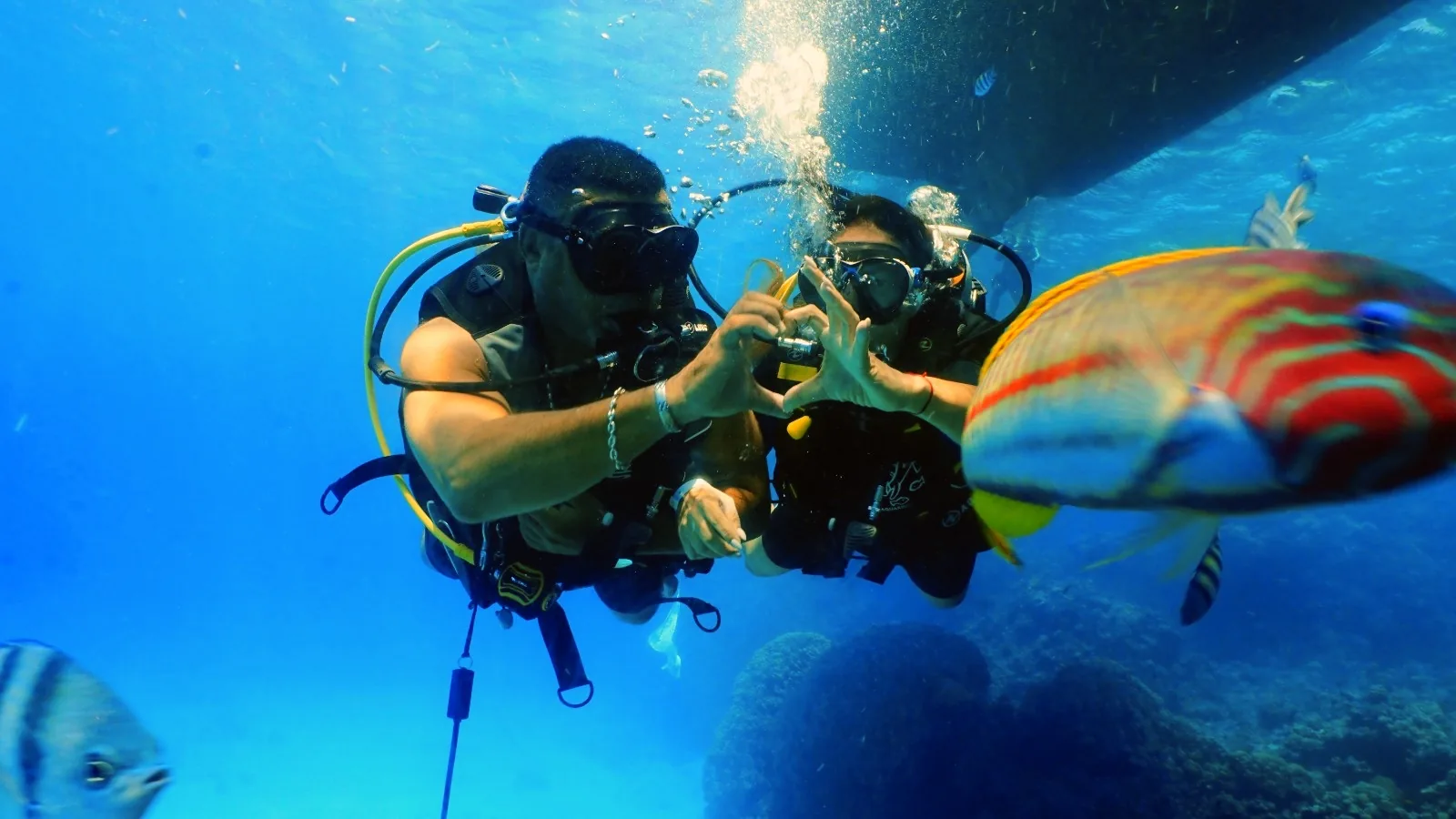
Walk into a dive shop for the first time and the wall of masks, jackets, hoses and gauges reads like a four-figure shopping list. It isn't — not to get started, anyway. A new diver only needs to own a small handful of personal items to get in the water: the mask on your face, the snorkel in your mouth, the fins on your feet. Everything bigger, heavier and pricier can be rented until diving turns from a holiday novelty into a habit. This guide walks through every piece of kit — what it does, what to buy first, what to leave on the rental rack, and what it all costs in 2026 — using the warm, forgiving Red Sea as the running example. Brand new to the sport? The complete guide to scuba diving the Red Sea is the place to start.
The short version
Gear splits neatly into two camps. The small, personal-fit, in-your-mouth items — mask, snorkel and fins — are worth owning from day one, for fit and for hygiene. The big "life-support" items — buoyancy jacket, regulator, cylinder and weights — are heavy to fly with, need professional servicing on a schedule, and sit ready on the rack at practically every dive centre, so they are the sensible things to rent while you work out how often you will really dive.
You can finish a beginner course and spend a week on a Red Sea day boat owning nothing more than that mask, snorkel and fins. Everything below is simply the why — and what to add, in what order, as the sport sticks.
One note on the numbers here: they are broad 2026 planning ranges, not quotes. Real prices swing widely by brand, model, retailer and country, and the euro and pound figures are approximate conversions — always check what's on the shelf locally.
What's in a full scuba kit — and what each piece does
A complete open-water rig is around ten items. Knowing what each one actually does makes it far easier to decide what's worth owning and what to leave on the dive centre's rack.
The personal basics
- Mask — holds an air space in front of your eyes so they can focus; in direct contact with water the human eye can't form a sharp image at all. Fit is everything — a mask that leaks or digs into your face can quietly ruin an otherwise perfect dive.
- Snorkel — lets you breathe at the surface without lifting your head or drawing down your cylinder air during surface swims and while waiting to descend.
- Fins — turn leg power into efficient propulsion so you can move, hold position and handle a gentle current without exhausting yourself.
Exposure protection
- Wetsuit (or exposure suit) — keeps you warm and shields your skin from sun, stings and scrapes. Water strips heat from the body far faster than air, and getting cold is one of the most common reasons a dive ends early. Thickness is matched to the water: thin "shorties" and rash vests in warm seas, up to 5–7 mm suits with hoods where it's cold.
The life-support system
- BCD (buoyancy control device / jacket) — an inflatable jacket that holds the cylinder on your back and lets you fine-tune buoyancy by adding or releasing air, so you can hover mid-water, float at the surface and descend in control.
- Regulator — the breathing system. A first stage clamps onto the cylinder and drops the very high tank pressure to an intermediate pressure; a second stage (the mouthpiece) delivers air on demand each time you breathe.
- Alternate air source (octopus) — a spare, brightly coloured second stage on the same regulator so a buddy can breathe from your air supply in an out-of-air emergency.
- Cylinder (tank) — holds the high-pressure breathing gas (usually air or enriched-air nitrox). Heavy, bulky, filled locally and legally impossible to fly with when full.
- Weights and weight belt — lead worn on a belt or slotted into the BCD to offset the natural buoyancy of your body and wetsuit so you can descend. The amount needed depends heavily on suit thickness and water saltiness.
Instruments and safety
- Dive computer — continuously tracks depth and time and calculates how long you can safely stay before needing to slow your ascent, replacing printed dive tables. Most modern courses are taught around one.
- Surface marker buoy (SMB / DSMB) — an inflatable tube sent up to the surface at the end of a dive to show boats where divers are and to help your own boat find you, which matters a great deal in current or on a drift dive.
What to buy first: your personal kit
Picture your first rental mask flooding on the safety stop because it was moulded for someone else's face — five minutes spent blowing water out of your nose instead of watching the reef slide past. That's the case for owning the fit-critical trio before anything else. It's near-universal advice from dive professionals, and many dive shops ask students to own their mask, snorkel and fins before the certification course even begins.[1] Three reasons this trio comes first:
- Fit is personal. A mask that seals well on one face leaks on another, and fins that suit one diver cramp another. These are the items where comfort makes or breaks the experience, so it pays to try several and buy the ones that fit you — this guide to choosing a dive mask walks through how to test the seal.
- Hygiene. A rental mask and snorkel have been on many other faces and in many other mouths. Owning your own is more pleasant and more hygienic.
- They're the cheapest part. A decent mask, snorkel and fins together are a small fraction of a full kit, so there is little downside to owning them early.
Rough 2026 ranges: a good mask runs around £25–130 (€30–150), a simple snorkel £15–45 (€15–50), and fins £40–170 (€45–200); bought together, budget roughly £120–250 (€140–290). Warm-water divers often add soft boots (£20–55 / €25–65) if their fins are the open-heel, strap type. Second-hand kit can trim 30–50% off the bill — though a mask, where the seal is everything, is worth buying new.
What to rent — at least at first
The "big four" — BCD, regulator, cylinder and weights — plus the wetsuit are the classic rental items, and there's no shame in renting them for years. They're heavy and awkward to fly with, expensive to buy, need servicing on a schedule (more on that below), and every dive centre stocks them. Renting also lets you try different styles before your money is locked into one.
- Cylinder and weights — realistically these are almost always rented or included, wherever you dive. A cylinder must be filled locally and can't fly with you; lead weights are heavy and cheap to hire.
- BCD and regulator — the most expensive items to buy, so the most valuable to rent while you learn what you like. Renting also means someone else keeps them serviced.
- Wetsuit — commonly rented at first, though because a suit touches your skin and thermal comfort is so important, many divers buy their own reasonably early.
The sensible order to buy as you progress
Buying everything in one go is how divers end up with kit they'd choose differently a year later. A phased approach spreads the cost over a season or two and — just as importantly — means you buy the right gear once you actually know your preferences.
Phase 1 (your first ~10 dives): the personal kit
Mask, snorkel, fins and, if needed, boots. Ballpark total around £150–400 (€180–470). Rent everything else.
Phase 2 (roughly 10–30 dives): comfort and safety
A personal dive computer (entry-level wrist units from about £150–350 / €180–420 — this guide to dive computers explains the types and features), your own wetsuit matched to where you dive (from about £80 for a warm-water shorty up to £500 for a thick cold-water suit; roughly €90–600 — the Red Sea wetsuit guide covers thickness by season), and small safety items such as an SMB (£25–60 / €30–70). A computer and a suit are the items that most improve comfort and consistency once you dive regularly.
Phase 3 (30+ dives): the big-ticket items
Finally the BCD (around £250–700 / €300–850 for solid recreational models, more for premium) and the regulator set with alternate (around £350–900 / €400–1,100). Buy these last, once you are sure diving is a long-term hobby and you know what style of kit suits you.
Rent or buy? Doing the maths
The whole decision comes down to one number: how often you dive. Say a full rental package runs £25–50 (€30–60) a day and you manage eight dive days a year — that's a couple of hundred pounds or euros annually, and over roughly three years it creeps up toward the price of buying a BCD-and-regulator setup that then lasts many more. Dive far more than eight days a year and owning pays for itself fast; dive only on the odd holiday and renting stays cheaper, lighter and far less hassle.
Money isn't the only factor, though. Weigh up:
- How often (and where) you dive. Frequent local diving favours owning; occasional holidays favour renting.
- Travel. A full kit is heavy and bulky, and airlines charge for weight. Many travelling divers deliberately own only their small personal items and rent the bulky gear at the destination.
- Fit, comfort and hygiene. Your own mask, computer and suit make every dive more comfortable and predictable.
- Servicing costs. Owning means maintaining. Most regulator makers now call for a full overhaul every two years or so (or after a set number of dives) rather than annually, with an inspection in the off-year — and skipping that inspection can void the "free parts for life" cover many brands include. A regulator service commonly runs around £70–140 (€80–160) once the service kit is fitted, and more for a full set with two second stages and a gauge, so once you own the whole life-support rig, plan on a few hundred a year in upkeep. Simple care after salt-water diving stretches the gap between services, and heavy use in warm salt water — precisely the Red Sea's profile — is the case makers cite for servicing more often. It's not just a warranty box to tick: equipment trouble is one of the recurring contributing factors in the dive incidents safety bodies track — buoyancy, regulator and dive-computer problems among them — and much of it is preventable with correct setup and maintenance.[2]
Try diving before you buy the kit
The surest way to learn what gear you like is to dive. Aquarius provides all the equipment for your first dives and PADI courses — bring your swimsuit and a sense of adventure. Tell us your dates and certification level to get started.
Start diving →What's already included when you start
This is the part that surprises new divers: you can begin owning almost nothing.
- On a beginner course, dive centres typically provide the BCD, regulator, cylinder, weights, wetsuit and usually a dive computer as part of the course. Students are generally asked to bring their own mask, snorkel, fins (and boots), plus a swimsuit and towel.
- On a certified day-boat trip, the cylinder and weights are essentially always included and refilled between dives, and BCD, regulator and wetsuit rental are either included or available for a small daily fee. So even a fully certified diver can turn up with just a mask, snorkel and fins.
It's always worth confirming exactly what's included when booking, as packages differ between operators.
Warm-water and Red Sea notes
Gear needs change a lot with water temperature, and warm-water destinations like Egypt's Red Sea are about as forgiving as diving gets — which keeps both the kit and the cost down.
- Thinner suits. Red Sea water stays warm for much of the year — commonly 26–29°C in summer (nudging 30°C in the shallows at the August peak) and around 21–24°C in winter, a touch cooler at the northern sites and as you go deeper. In summer many divers are happy in a rash vest, shorty or 3 mm suit; in winter a 5 mm full suit is the usual pick, with a hood for anyone who feels the cold. Rule of thumb: dress for the coldest hour of your day, not the warmest.
- Less lead. A thinner wetsuit floats less, so warm-water divers generally need noticeably fewer weights than cold-water divers in thick suits or drysuits — lighter, simpler and easier on the back.
- Lighter kit overall. No thick suit, hood, gloves or heavy undergarments means a smaller, lighter bag — handy when you're flying to a dive holiday and want to pack only your personal items and rent the rest.
A realistic starter budget
Pulling the numbers together: a first personal kit — mask, snorkel and fins — sits at roughly £150–400 (€180–470). Add a computer, a warm-water suit and an SMB in your second season and you're a few hundred more in. A complete brand-new setup with BCD and regulator commonly lands anywhere from about £1,300 to £4,000 (€1,500–€4,700+) depending on how premium you go — and that's before a cylinder, which most divers never buy. Renting the big gear, by contrast, runs about £25–50 (€30–60) a day, and is often bundled into the dive package anyway.
For a beginner or occasional holiday diver, the honest answer is the unglamorous one: buy the small personal items you'll use on every trip, rent the big serviceable gear until you're diving often enough that owning it clearly pays off, and let the phased approach spread the cost while you work out what you actually like.
Frequently asked questions
What scuba gear do I need to start diving?
To start, you really only need your own mask, snorkel and fins — the personal-fit, in-your-mouth items. Dive centres provide the rest (buoyancy jacket, regulator, cylinder, weights and usually a wetsuit and computer) for courses and trips. Everything else can be added later as you dive more.
Should I buy or rent scuba gear?
Rent while you're new or dive only occasionally; buy once you dive often enough that rental fees add up. As a rough guide, three years of renting a full kit for the odd holiday can cost about the same as buying a good BCD-and-regulator setup that lasts for years. Also factor in travel (owned kit is heavy to fly with) and the ongoing servicing costs that come with ownership.
What dive gear should I buy first?
Buy your mask, snorkel and fins first. Fit is personal, they're the cheapest part of a full kit, and they're more hygienic to own than to rent from a shared pool. Many dive shops also ask students to own these for their certification course.
Do dive centres provide equipment?
Yes. On a beginner course the centre normally supplies the BCD, regulator, cylinder, weights, wetsuit and often a dive computer, with students bringing their own mask, snorkel and fins. On certified trips the cylinder and weights are almost always included, and the bigger gear can be rented — so you can dive owning very little. Always confirm what's included when you book.
How much does a full set of scuba gear cost?
A complete new setup usually falls somewhere around £1,300–£4,000 (€1,500–€4,700+) depending on brand and features, and that's typically without a cylinder, which most divers rent. A budget-friendly personal starter kit of mask, snorkel and fins is far less — roughly £150–400 (€180–470). Prices vary widely, and used gear can cut costs by 30–50%.
Do I need my own dive computer as a beginner?
Not to get started — most dive centres include one with course and rental gear. But a personal dive computer is one of the best early upgrades once you dive regularly, because it logs your dives and lets you follow the same familiar device every time. Reliable entry-level wrist models start at roughly £150–350 (€180–420).
What wetsuit thickness do I need for the Red Sea?
It depends on the season. In summer (water often 26–29°C) a rash vest, shorty or 3 mm suit is usually enough; in winter (around 21–24°C) most divers prefer a 5 mm full suit, adding a hood if they feel the cold. A thinner warm-water suit also means fewer weights and a lighter bag to travel with.
Sources & references
- PADI — Scuba diving equipment and buy-vs-rent guidance (what gear a new diver needs, why mask, snorkel and fins are the first personal purchases, and indicative 2026 gear costs).
- DAN (Divers Alert Network) — Diving equipment care, servicing and safety (regulator, BCD and cylinder maintenance, and equipment problems as a recurring contributing factor in the dive incidents DAN analyses).
Prices in this guide are approximate 2026 planning ranges in pounds and euros, converted from mixed-currency sources; they are not quotes and vary by brand, model and retailer. Verified August 2026.