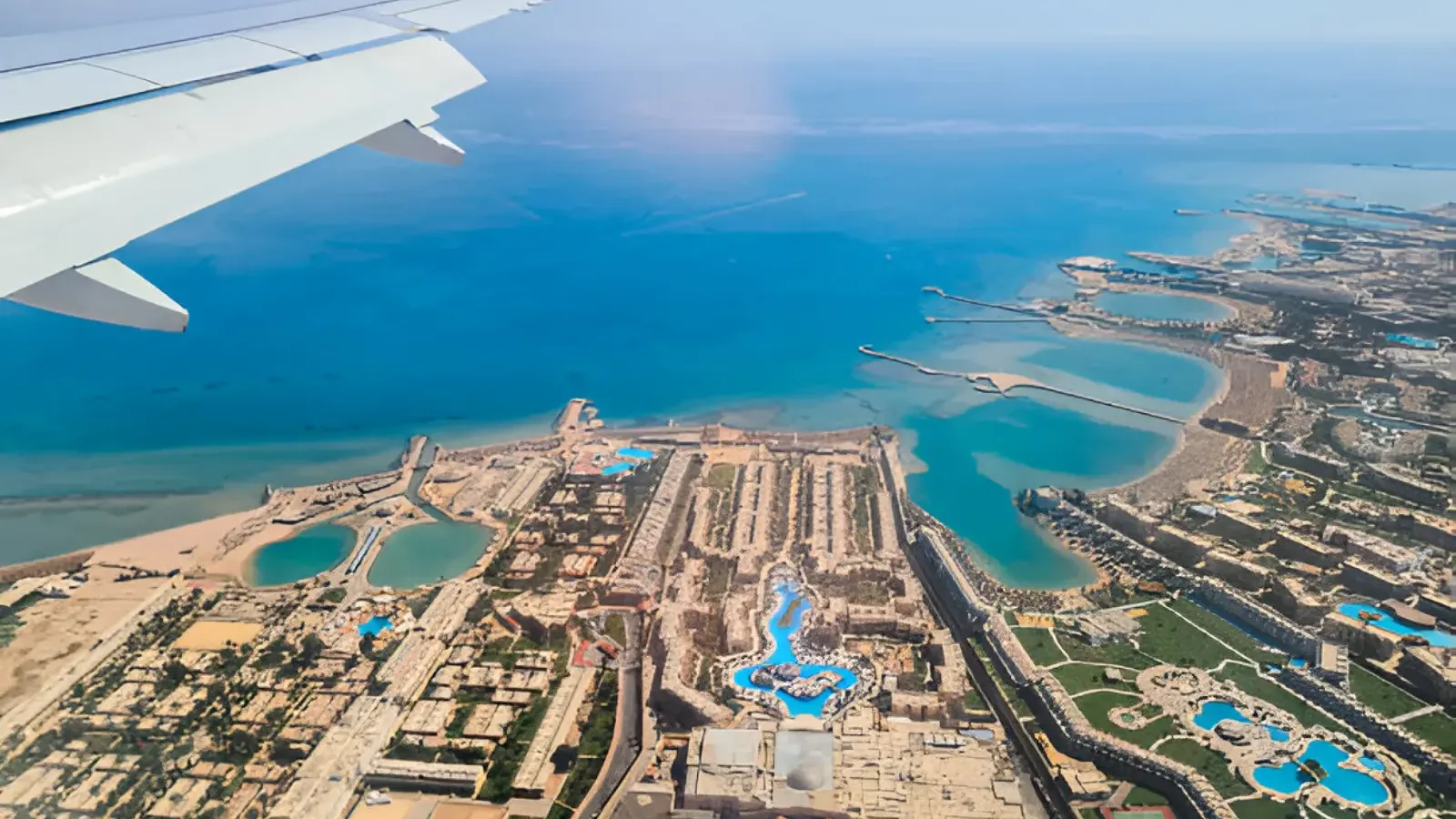
Sharm El Sheikh and Hurghada are the two main Red Sea diving hubs in Egypt — both PADI-saturated, both with daily boats, both with world-class diving. But they are not interchangeable. After three decades of running boats from both, here is the honest comparison we wish every diver had before booking their first Red Sea trip. No marketing spin. The geography, the sites, the costs, the trade-offs.
| Sharm El Sheikh | Hurghada | |
|---|---|---|
| Best for | Pelagics, famous wrecks, drift diving | Beginners, wreck density, families |
| Avg cost (food, hotel, drinks) | €€€ | €€ |
| Iconic wreck | SS Thistlegorm (3–4 h boat) | Abu Nuhas (4 wrecks, 2 h boat) |
| Wreck portfolio | Thistlegorm + Dunraven + Million Hope | Abu Nuhas + El Mina + Salem Express |
| Skill level entry point | AOWD recommended | OWD welcome from day one |
| Family / non-diver fit | Less ideal | Ideal |
| Wind / sea state | Dec–Feb tougher in Tiran | More sheltered year-round |
| Flights from Europe | SSH airport — direct from most EU capitals | HRG airport — direct from most EU capitals |
| Star species | Hammerheads (Aug–Sep) | Reef sharks year-round |
The short answer — which one, for whom
Both bases sit on the Egyptian Red Sea, both have PADI 5-Star Resorts, both run boats every day. The honest tiebreaker is your priorities. If your dive bucket list includes the Thistlegorm and summer hammerheads in the Straits of Tiran, you want Sharm. If you are a beginner, travelling with a non-diving partner, or want maximum wrecks per holiday week without the early-morning Thistlegorm haul, Hurghada wins. The pricing gap of 15–25% sways tight budgets toward Hurghada. The pelagic species sway adventurous divers toward Sharm.
The geography that drives everything
Sharm El Sheikh occupies the southern tip of the Sinai Peninsula, at the meeting point of the Gulf of Aqaba and the Gulf of Suez. Those two gulfs are deep, narrow channels — the Aqaba reaches 1,800 metres in places — and the directional currents that flow between them are the engine that drives Sharm's pelagic action. Hammerheads, eagle rays, schooling barracuda, dolphins, occasional manta — they all follow those currents past the Sinai reefs.
Hurghada sits on the mainland Egyptian coast, on the western shore of the Red Sea, about 460 km south of Suez. The geography is different: a shallower, wider continental shelf with sandy plateaus, scattered offshore reefs and protected lagoons close to shore. This produces gentler conditions, calmer water for most of the year, denser reef-fish populations and the famous Abu Nuhas reef — a single underwater obstacle that has sunk so many cargo ships over the centuries that it is now nicknamed "the ship graveyard."
This single fact — Sinai tip versus mainland coast — drives almost every difference between the two bases.
Dive sites: what each base actually reaches in a day
This is where most divers' bucket lists collide with logistics. Here is what is realistically reachable as a day boat from each base in 2026:
Sharm El Sheikh — the headline sites
- Ras Mohammed National Park — Egypt's first national park, declared in 1983. The famous Shark Reef / Yolanda Reef is the headline dive, with a sheer wall dropping to deep water. The Cypriot freighter Yolanda ran aground here on April 1, 1980 carrying a cargo of bathroom fittings; the ship's hull slipped off the reef into deep water during a 1987 storm, but the scattered cargo (toilets, bathtubs, pipes, and the captain's BMW) still litters the reef plateau today. Anemone City, Jackfish Alley, Shark Observatory and Marsa Bareika round out the park. Full details in our Best Dive Sites in Sharm guide.
- Straits of Tiran — four offshore reef pinnacles (Jackson, Woodhouse, Thomas, Gordon) rising from very deep water. Drift diving along reef walls covered in soft and hard coral, schooling fish, eagle rays, and the chance of hammerheads at Jackson Reef in late summer (August–September). The Cypriot freighter Lara, which ran aground in November 1982, sits in skeletal remains at Jackson's northern tip after a 1990s salvage operation removed most of the hull. Our Jackson Reef guide covers the dive in depth.
- SS Thistlegorm wreck — the world's most famous wreck dive. A British WWII supply ship sunk by a German Heinkel HE-111 bomber on October 6, 1941 in the Strait of Gubal, with cargo holds full of motorcycles, trucks, locomotives and rifles. Lies in 16–32 m. Day trip from Sharm: 3–4 hours each way by boat. AOWD required. Our complete Thistlegorm dive guide covers every hold.
- SS Dunraven — British steam-and-sail cargo vessel built 1873 in Newcastle. Sank April 25, 1876 after striking Sha'ab Mahmoud reef (south-east of Ras Mohammed, also known as Beacon Rock). Lies inverted at 15–29 m. Roughly an hour past Ras Mohammed by boat — weather-dependent. Famous for the dense glassfish swarm in the stern interior. AOWD recommended.
- Million Hope — 175 m bulk carrier — the largest wreck in the Red Sea by length. Ran aground June 20, 1996 on the reef at Nabq, north of Sharm in the southern Strait of Tiran. Sits upright with starboard against the reef; propeller at ~22 m, superstructure breaking the surface. Weather-sensitive — only diveable on calm days due to its exposed position. Day-boat accessible from Sharm marinas when conditions allow. AOWD recommended.
- Ras Ghamila — Aquarius's Sharm house reef — Shore-accessible reef on the Sharm coast, directly from our Coral Sea Imperial base. Sea fan forest, drift to Enterprise Passage, day and night dives. Full details in our Ras Ghamila shore diving guide.
- Dahab day trip — a uniquely Sharm advantage — 1 hour north of Sharm by road. Shore-accessible sites that are completely different to anything boat-based around Sharm. The Canyon (a coral-walled fissure dropping into the reef) and the Bells-to-Blue-Hole drift are the most-photographed shore dives on the Sinai coast. Aquarius runs this as a full-day land-and-shore-diving trip (07:30 pickup, 17:00 return, two dives, Bedouin lunch). Complete details, route, requirements and the honest truth about Blue Hole's reputation in our Dahab Blue Hole & Canyon dive guide. This option does not exist from Hurghada — it is roughly 9 hours one-way by road, making it impractical as a day trip.
Hurghada — the headline sites
- Abu Nuhas — "the ship graveyard" — four well-preserved wrecks on a single reef, ~2 h boat ride. Carnatic (British steam-and-sail; struck the reef September 12, 1869 carrying wine, copper and gold), Giannis D (100 m Greek-owned cargo ship of Japanese build, struck the reef April 19, 1983 carrying timber; the photogenic 45-degree-tilted stern at 24 m is the headline), Chrisoula K "the tile wreck" (98 m Greek freighter, August 31, 1981, Italian floor tiles, bow at 3 m, stern at 26 m), Kimon M "the lentil wreck" (120 m German cargo ship, December 12, 1978, 4,500 tons of lentils, bow at 15 m, stern at 32 m). Most divers do 2 of the 4 in a day trip. Egypt's wreck-density crown jewel.
- El Mina wreck — Egyptian Navy T-43 minesweeper (Soviet-built, ~70 m) sunk by Israeli aircraft circa 1969–1970, just east of Hurghada harbour. Lies on its port side at 25–32 m, ~30 minutes by boat. AOWD level. Penetrable in places, visibility typically 15–20 m. Often used as a bad-weather alternative when Abu Nuhas day trips can't run. Our complete El Mina dive guide has the full history and dive plan.
- Salem Express — a 115 m Egyptian passenger ferry which struck Hyndman Reef near Safaga (south of Hurghada) on December 14, 1991, sinking within minutes with the loss of at least 470 lives, mostly pilgrims returning from Mecca. Lies on her starboard side at 12–32 m. Dived respectfully as a maritime tomb — penetration mostly forbidden. Full briefing in our Salem Express dive guide.
- Giftun Island sites — Erg Somaya, Police Station, Shaab El Erg, Shaab Sabrina. Reef walls, plateaus, anemone gardens. The classic Hurghada day-boat itinerary, suitable for everyone from new divers to advanced. Full breakdown in our Best Dive Sites in Hurghada 2026 guide.
- Hurghada north reefs — Umm Gamar, Careless Reef, Sha'ab El Erg. Year-round reef shark sightings, especially whitetips and blacktips. See our Reef Sharks of the Red Sea guide.
- House-reef and shore options — Hurghada's protected geography means many resort house reefs along Sahl Hasheesh and Makadi Bay are diveable from shore or short boat hop. Ideal for first dives after training, refresher dives or night dives without boat scheduling.
Sharm-only advantage — the Dahab day trip
One thing the comparison tables can't capture: from Sharm El Sheikh you can dive Dahab as a day trip, and you cannot do this from Hurghada. Dahab sits 1 hour north of Sharm by road, ~9 hours from Hurghada. For divers who want both boat-based Red Sea diving and shore-based Sinai diving in a single trip, Sharm is the only practical base.
Dahab is one of the most famous diving destinations in Egypt and a different experience entirely from anything reachable from Hurghada. The town itself is a bohemian, low-rise Bedouin village built around a corniche of cafés and dive shops — the antithesis of resort tourism. The diving here is exclusively shore-accessible: gear is driven to the site in 4WD pickups, you walk in from a rocky entry point, and dive sites are reached via fin-kicks of 20–80 metres from the entry.
The two headline shore dives, both included in a standard Aquarius day trip:
- The Canyon — a fissure in the coral reef forming a natural underwater canyon roughly 20 metres deep. Divers descend through the narrow opening at the top, drift along the floor between coral walls, and exit either by ascending through the "Fish Bowl" cathedral chamber or continuing into the deeper canyon (technical-level only for the latter). Recreational-level dive when done at the upper canyon, 18–25 m, suitable for AOWD divers.
- The Bells & Blue Hole — an iconic drift dive entering through "the Bells" (a 28 m chimney in the reef wall, named for the sound that gear makes ringing against the walls on entry), drifting south along an outer-reef wall covered in soft coral and gorgonians, and exiting into the Blue Hole's shallow saddle at the safety-stop depth. The actual Blue Hole — a 100+ m circular sinkhole in the reef — has a tragic history (the controversial 56 m Arch tunnel has killed 130+ divers, almost all attempting it untrained on a single tank), but the recreational Bells-to-Blue-Hole drift is one of the most beautiful Red Sea shore dives, run completely safely within recreational limits.
How the Sharm-to-Dahab day actually runs
- 07:30: Pickup from your Sharm hotel by 4WD with gear loaded
- 09:00–10:30: Arrive Canyon site (small bay 25 min north of Dahab town); first dive
- 11:00–12:00: Tank change, short drive to Blue Hole site; surface interval at a Bedouin restaurant overlooking the water
- 12:00–13:00: Bedouin lunch — fresh fish, salads, bread, tea (the cafés overlooking the Blue Hole are some of the most authentic in Sinai)
- 13:00–15:00: Walk to Bells entry point; second dive (Bells-to-Blue-Hole drift)
- 15:30–17:00: Pack up, drive back to Sharm; hotel drop-off
Requirements: Advanced Open Water + 15+ logged dives. Good buoyancy is non-negotiable for the Canyon and the wall drift at Bells. Minimum 3 divers per group for the trip to run. Bring water shoes for the rocky entry, and a wetsuit one thickness warmer than your typical Sharm boat day — the Dahab sites are exposed to the open Gulf of Aqaba and water can run 2–3 °C cooler than around Sharm.
For many of our Sharm guests this becomes the highlight of the week — a change of scene, a change of dive style, and two genuinely world-class sites. Full route detail, the truth about Blue Hole fatalities, gear notes and booking guidance in our complete Dahab Blue Hole & Canyon diving guide.
Marine life by base
Both bases share the same Red Sea fishbase — over 1,200 fish species, around 300 hard coral species, and 10–15% endemism. But what you actually see on a typical week differs:
| Species / group | Sharm | Hurghada |
|---|---|---|
| Whitetip reef sharks | Yes — most sites | Yes — most sites |
| Grey reef sharks | Yes — Ras Mohammed, Tiran | Occasional — north reefs |
| Scalloped hammerheads | Yes — Jackson Reef Aug–Sep | No (south Red Sea only) |
| Oceanic whitetip | Liveaboard only (Brothers, Daedalus) | Liveaboard only |
| Spinner dolphins | Yes — boat rides to Ras Mohammed | Yes — Sha'ab Samadai south |
| Green turtles | Yes — most dives | Yes — most dives |
| Napoleon wrasse | Yes — Ras Mohammed | Yes — Giftun, Abu Nuhas |
| Moray eels | Yes — everywhere | Yes — everywhere |
| Macro (nudibranch, frogfish) | Good | Excellent — slower dives, more time |
| Whale sharks | Rare passing visitors | Rare; south better |
| Manta rays | Very rare | Very rare; south Red Sea better |
Water temperature, visibility & wind by base
Both bases sit on the Red Sea and share roughly similar conditions, but the differences are real enough to affect what wetsuit you bring and which months you choose.
| Month | Sharm water °C | Hurghada water °C | Wetsuit | Wind / sea state |
|---|---|---|---|---|
| January | 22–23 | 22 | 5 mm full + hood | Northerly winds, Tiran often choppy |
| February | 22 | 21–22 | 5 mm full + hood | Coldest, windiest month at both |
| March | 22–23 | 22 | 5 mm full | Winds easing, conditions improving |
| April | 24 | 23–24 | 5 mm full | Calm and clear |
| May | 25–26 | 25 | 3–5 mm full | Excellent conditions |
| June | 27 | 26–27 | 3 mm shorty | Calm, occasional afternoon breeze |
| July | 28 | 28 | 3 mm shorty | Calm, very warm air |
| August | 29 | 29 | Rash guard / 3 mm | Warmest, calmest |
| September | 28–29 | 28 | 3 mm shorty | Excellent — best month of year |
| October | 27 | 26–27 | 3 mm shorty / full | Conditions stabilising |
| November | 25 | 24–25 | 5 mm full | Good |
| December | 23 | 23 | 5 mm full | Winter winds returning |
Visibility at both bases is typically 20–40 m on average. Sharm sites (Ras Mohammed walls, Tiran straits) deliver the absolute best visibility days in the Red Sea — 40 m+ regularly in summer. Hurghada sites near Giftun and Sha'ab El Erg average 20–30 m year-round; sites closer to the harbour (like El Mina, 10 minutes from port) drop to 15–20 m due to sediment.
Wind is the key practical difference. Sharm sits at the Sinai mountain barrier and receives some shelter from inland winds. Hurghada is more exposed to mainland north-westerly winds from the Egyptian desert, particularly in winter. However, the Tiran straits (north of Sharm) are extremely exposed and frequently un-diveable in December–February when northerly winds whip the channel. Hurghada's day-boat sites (Giftun area, sheltered by the island) often stay diveable when Tiran cancels. For winter diving, Hurghada is the safer choice operationally.
Air temperatures diverge in summer: Sharm tends to be 1–3 °C cooler than Hurghada (Sinai breeze effect), making mid-day surface intervals more pleasant. In winter, Sharm nights are colder due to desert radiation cooling from the Sinai high country (15–18 °C overnight versus Hurghada's 18–22 °C).
Pricing reality — same trip, different bills
This is where the bases divide most sharply. Across hotel rates, restaurant meals, soft drinks, alcohol, taxis and tours, Hurghada runs about 15 to 25 percent cheaper than Sharm. Sharm built itself as a higher-tier destination from the 1990s onward — Naama Bay, the marina developments, and the Saudi-bridge tourism strategy all pushed the price ladder up. Hurghada has more competition, more budget choice, and prices to match.
Two real examples from 2026:
- All-inclusive 4-star hotel, one week, two people: Sharm typical €900–1,400; Hurghada typical €700–1,100.
- Restaurant dinner outside hotel, two people with drinks: Sharm €40–60; Hurghada €25–40.
- Local beer in a resort: Sharm €5–7; Hurghada €3–5.
- 10-dive package with rental gear: roughly equal — €330–420 either base, since the dive economy is highly competitive in both.
- PADI Open Water course: roughly equal — see our PADI Open Water in the Red Sea guide.
Getting there — flights and transfers
Both bases have international airports with direct flights from most major European capitals. Sharm El Sheikh (SSH) and Hurghada (HRG) are roughly equidistant from Cairo and roughly equivalent in airline service.
- Flight time from London: ~5 h to either
- Flight time from Frankfurt / Munich / Berlin: ~4 h 30 min
- Flight time from Rome: ~3 h 30 min
- Flight time from Paris: ~4 h 45 min
- Visa: Visa-on-arrival is $30 USD single-entry, cash, paid at the bank counter before passport control. The fee was raised from $25 to $30 effective March 1, 2026. The e-Visa applied online before travel costs $30 single-entry / $65 multiple-entry. Identical process at both airports.
- Sharm-only "Sinai-only" option: If you fly directly into Sharm El Sheikh (or Dahab / Nuweiba / Taba) and stay within South Sinai for up to 14–15 days, you can get a free Sinai-only entry stamp instead of a full visa. Most Aquarius Sharm guests qualify if they don't plan a Cairo trip.
- Transfer to hotel: ~10–30 min for both, depending on hotel zone
Differences are minor. Sharm's airport is slightly less busy on average; Hurghada's has more low-cost airline options out of central Europe. Both have direct UK charter flights peaking April–October.
Skill level fit
This is the second most important question after budget, and the one most divers underestimate.
Sharm El Sheikh suits AOWD and above. The headline sites — Ras Mohammed walls, Tiran straits, the Thistlegorm — involve depths past 18 m, current management, and drift-diving skills. A diver with only Open Water certification will be capped at the shallower portions of these sites or sent to easier sites near the marina. You can learn to dive in Sharm — Aquarius runs full PADI courses from our Sharm base — but the most-photographed dives in the area are not where you do your fourth lifetime dive.
Hurghada suits OWD and up. The standard Hurghada day-boat itinerary — Giftun, Erg Somaya, Police Station, Sha'ab El Erg — has gentle currents, depths between 12 and 25 m, sheltered conditions and forgiving topography. New divers can do every site on the menu within their certification limits. Hurghada is also where most Aquarius students complete their open-water dives — see Hurghada's new-divers training page.
Non-diving partner and family friendliness
Roughly half of dive trips include a non-diving partner, child, or friend. This is where the bases diverge sharply.
Hurghada is the family-friendly winner. The town has Senzo Mall (proper shopping), large all-inclusive resorts with kids' clubs and water parks, the El Gouna day trip (a planned tourist marina town 30 min north — lovely lunches and lagoon swimming), and Sahl Hasheesh's resort strip (calmer, more upmarket, beach-focused). Quad biking in the desert, dolphin-watching boat trips, and easy day trips to Luxor (45 min flight) for the Valley of the Kings round out the non-diving menu. The Sahl Hasheesh resort area in particular is built around families.
Sharm leans adult-leisure. Naama Bay is famous for restaurants, nightlife and shopping. SOHO Square has evening fountain shows and family options too. Day trips: St Catherine's Monastery, Mount Sinai for sunrise hikes, Coloured Canyon, Ras Mohammed by quad. Beach hotels along the coastal strip have kids' clubs. But the general feel is more couples-and-friends than families-with-kids.
If your partner is doing the try-dive or snorkel option while you do certified diving, both bases work — Aquarius offers water-activity packages tailored to mixed groups.
Liveaboards from each base
Both bases are major hubs for Red Sea liveaboards (multi-day boats where you sleep, eat and dive from the boat). The routes differ — choosing your departure port determines which itinerary makes sense.
Liveaboards from Hurghada
- Northern Wrecks & Reefs (most popular, 7 nights): Abu Nuhas (4 wrecks), SS Thistlegorm, Rosalie Moller wreck, Ras Mohammed, sometimes Tiran. The classic northern Red Sea itinerary.
- Brothers / Daedalus / Elphinstone (7 nights, summer months): Offshore central Red Sea, oceanic whitetips in autumn, thresher sharks at Elphinstone, hammerheads at Daedalus May–July. Stricter sea conditions; usually mid-March to mid-November only.
- St John's / Fury Shoal (southern, 7+ nights): Far-south reefs, dolphins, manta possibilities, fewer divers.
Hurghada is the main embarkation port for almost all Egyptian liveaboards. Our Xplorer Aquarius fleet from Hurghada covers all northern and southern itineraries.
Liveaboards from Sharm El Sheikh
- Northern Wrecks loop (7 nights): Same Thistlegorm + Abu Nuhas + Ras Mohammed circuit as from Hurghada, but with a different boat journey direction and often Tiran included as an extra day. Best for divers based in Sharm who don't want to transfer.
- Sharm-based southern trips: Less common — most southern Red Sea liveaboards depart Hurghada or Port Ghalib.
The Aquarius Sharm fleet page covers our Sharm-departure liveaboards.
For underwater photographers
Underwater photographers should pick their base by intended subject — and possibly by what lenses are in their bag.
Sharm El Sheikh — wide-angle paradise
Sharm's combination of dramatic wall topography, big pelagics, schooling fish, the Thistlegorm wreck cargo and the cargo of the Yolanda scattered across the plateau all reward wide-angle lenses (10–17 mm rectilinear or 8–15 mm fisheye on full-frame; equivalent on APS-C). Visibility on the great wall days at Ras Mohammed is among the best in the world for wreck and reef-vista photography. Drift dive pace can be challenging for macro work — too much movement.
Hurghada — macro and reef-fish portraiture
Hurghada's calmer, shallower, slower-paced day-boat sites are ideal for macro work. Nudibranchs, frogfish, anemonefish, scorpionfish, octopus on night dives, longnose hawkfish on gorgonians, ghost pipefish on sandy patches — all reliable subjects on Giftun and northern reef sites. Macro lenses (60 mm or 100 mm) and a good muck-dive pace. Most Hurghada operators allow longer bottom times at standard sites, which suits photographers who want to spend 15 minutes on one subject.
For gear maintenance between trips, our scuba gear salt-water care guide covers the rinse-and-dry routine that keeps housings sealed.
Combining diving with Cairo, Luxor & Nile cruises
Egypt's land history is one of the great reasons many divers come — pyramids and tombs combined with reef diving in a single trip. Each base handles this differently.
From Sharm El Sheikh
- Cairo: Direct 1-hour flight EgyptAir or Air Cairo, multiple daily. Pyramids of Giza + Egyptian Museum doable as a long day trip with a 06:00 departure and 22:00 return. Better as 1-2 night extension before or after diving.
- Luxor: No direct flight; via Cairo (2 flights, half-day each way). Better booked as a longer 2-3 night extension.
- St Catherine's Monastery + Mount Sinai: Unique to Sharm. 2-hour drive each way, sunrise hike. A non-diving day this base offers that Hurghada cannot.
From Hurghada
- Cairo: Direct 1-hour flight, similar to Sharm.
- Luxor: Direct 45-minute flight OR ~4-hour drive across the desert. Best done as 1-2 night extension — Valley of the Kings + Karnak + Hatshepsut.
- Nile cruise: Hurghada is the natural launch point. Fly Hurghada → Luxor, board a cruise to Aswan over 3-4 nights, fly back from Aswan. The classic Egypt-plus-diving itinerary.
Best time of year for each
Both bases run year-round, but they handle the seasons differently — full month-by-month detail in our Best Time to Dive the Red Sea guide.
- Summer (Jun–Sep): Both peak. Water 27–29°C, viz 25–40 m, hammerheads at Jackson Reef in Tiran during August–September (with extension into early October), whale shark chance in either. Highest prices and crowds. Hurghada gets very hot on land (40°C+); Sharm slightly cooler with Sinai mountain breeze.
- Autumn (Oct–Nov): Sweet spot for both. Water 25–27°C, conditions stabilising after summer heat, fewer crowds, prices easing.
- Winter (Dec–Feb): Hurghada wins. Hurghada coastal geography is more sheltered, daily diving continues normally. Sharm's Tiran straits get choppy regularly when north-westerly winds blow — some day trips cancel. Water cools to 21–22°C; bring a 5 mm wetsuit. Prices lowest.
- Spring (Mar–May): Excellent at both. Water warming, marine life active, Easter and May Day weeks busy. May is arguably the perfect month at either base.
The hybrid option — do both in one trip
For divers with two weeks (or a 10-day trip), splitting between Sharm and Hurghada is a serious option that few people consider. Three ways to do it:
- Internal flight: ~1 hour direct between SSH and HRG. ~€100–180 one-way. Fastest option.
- Road via the Suez Tunnel: ~6 hours by private transfer. Cheaper (€150–250 per car for up to 4 people) and gives you a road view of the Sinai desert. Aquarius can arrange this.
- Northern Red Sea liveaboard: 1-week boat trip that covers Abu Nuhas, the Thistlegorm, Ras Mohammed, sometimes Tiran. You sleep on the boat; no hotel needed. Combines the best wrecks and reefs of both regions into one logistically simple trip. Our Hurghada Xplorer Aquarius fleet and Sharm fleet include liveaboards covering these routes.
For a 14-night trip, 4 nights Hurghada + 4 nights Sharm + 6 nights liveaboard is an underrated structure — diversity, complete coverage, and no diving fatigue.
Where Aquarius fits in this comparison
This is an honest comparison and Aquarius is in the comparison because we operate in both. We run PADI 5-Star centres at:
- Hurghada — our main mainland hub, with the Xplorer Aquarius safari fleet running Hurghada-departure liveaboards north and south. Visit our Hurghada dive sites page and daily diving page for the full daily menu. Book directly via Hurghada reservations.
- Sharm El Sheikh — based at Coral Sea Imperial Sensatori on the Ras Ghamila house reef, with daily boats to Ras Mohammed, Tiran and the Thistlegorm. See the Sharm daily diving page and Sharm dive sites overview. Reserve via Sharm reservations.
- Makadi Bay — quieter, family-friendly southern Hurghada area with excellent local reefs. Reserve via Makadi reservations.
- Sahl Hasheesh — luxury resort cluster south of Hurghada, with our own house-reef diving. Reserve via Sahl Hasheesh reservations.
We can build single-base trips, split-base trips between Sharm and Hurghada, or liveaboard packages on the Xplorer Aquarius covering the northern wrecks loop. More about Aquarius if you'd like to know who we are.
Final verdict by diver profile
If the structured comparison hasn't pushed you one way yet, here is the by-profile shortcut.
Choose Sharm El Sheikh
Bucket-list diving- Already AOWD or higher
- Thistlegorm is non-negotiable
- Want late-summer hammerheads (Aug–Sep)
- Adult-leisure traveller
- Drift / current diving fan
Choose Hurghada
Best all-rounder- New diver or doing PADI course
- Travelling with family
- Budget-conscious
- Want wreck density (Abu Nuhas)
- Diving in winter months
For wreck divers specifically: Sharm if the Thistlegorm is your one bucket-list wreck. Hurghada if you want to dive four wrecks in one trip without the Thistlegorm dawn-start. Both base liveaboards run northern wreck circuits combining the best of both — Aquarius can advise via our full article library or directly via our FAQ page.
For photographers: Sharm for wide-angle wreck and pelagic; Hurghada for macro and reef-fish portraits. Gear care between trips is worth a read regardless of base.
For dive professionals planning a stint: both work for PADI professional courses. Aquarius runs Divemaster internships from Hurghada and Sharm equally.
Ready to choose your Red Sea base?
Talk to Aquarius and we'll plan a single-base, split-base or liveaboard trip that fits your skill level, budget and bucket list.
Contact Aquarius →Frequently asked questions
Is Sharm El Sheikh or Hurghada better for first-time divers?
Hurghada is generally better for first-time divers. The dive sites near Hurghada — Giftun Island, Sahl Hasheesh house reefs, Makadi Bay — are sheltered, shallow and have gentle conditions ideal for Open Water training. Sharm's most famous sites (Ras Mohammed, Tiran) involve depth, currents and drift diving that suit Advanced Open Water divers and above. Both destinations offer full PADI courses, but Hurghada's training environment is friendlier for nervous beginners.
Can I dive the SS Thistlegorm wreck from Hurghada?
Yes, but it is a long boat day. The Thistlegorm sits in the Strait of Gubal, roughly 40 km from Sharm El Sheikh and 65 km from Hurghada — typically 3 to 4 hours each way from Sharm vs 4 to 5 hours from Hurghada. Most Thistlegorm day trips therefore depart from Sharm. From Hurghada the Thistlegorm is more commonly visited as part of a northern wrecks liveaboard. Advanced Open Water certification is required regardless of departure point.
Which is cheaper — Sharm El Sheikh or Hurghada?
Hurghada is approximately 15 to 25 percent cheaper than Sharm El Sheikh across hotels, food, drinks and transfers. Dive package prices are broadly similar between the two bases. The biggest cost difference is in non-diving spending: a beer in a Hurghada resort restaurant costs around €4, the same in Sharm around €6. Hurghada also has more budget hotel choice; Sharm tilts more toward all-inclusive resorts. Note that since March 1, 2026 the Egypt visa-on-arrival is $30 USD (up from $25) at all major airports.
Are there sharks in Hurghada like in Sharm?
Yes — reef sharks (whitetip, blacktip and grey) are seen in both Hurghada and Sharm. Pelagic shark encounters differ: hammerheads are a Sharm specialty (Jackson Reef in Tiran, peaking August to September), while oceanic whitetips are more often seen from southern Egyptian bases or on liveaboards out of either Hurghada or Sharm. Whale sharks are possible but unpredictable from either base. For day-boat shark diving on a budget, Hurghada is excellent value.
How do I split my diving trip between Sharm and Hurghada?
Two practical options. First: fly into one airport, drive to the other (around 6 hours by road via the tunnel, or 1 hour by short connection flight). Spend three to four nights at each base. Second: take a northern Red Sea liveaboard that covers both regions and the Thistlegorm in a single week. Aquarius operates from both Hurghada and Sharm and can pre-plan a split-base itinerary including transfers.