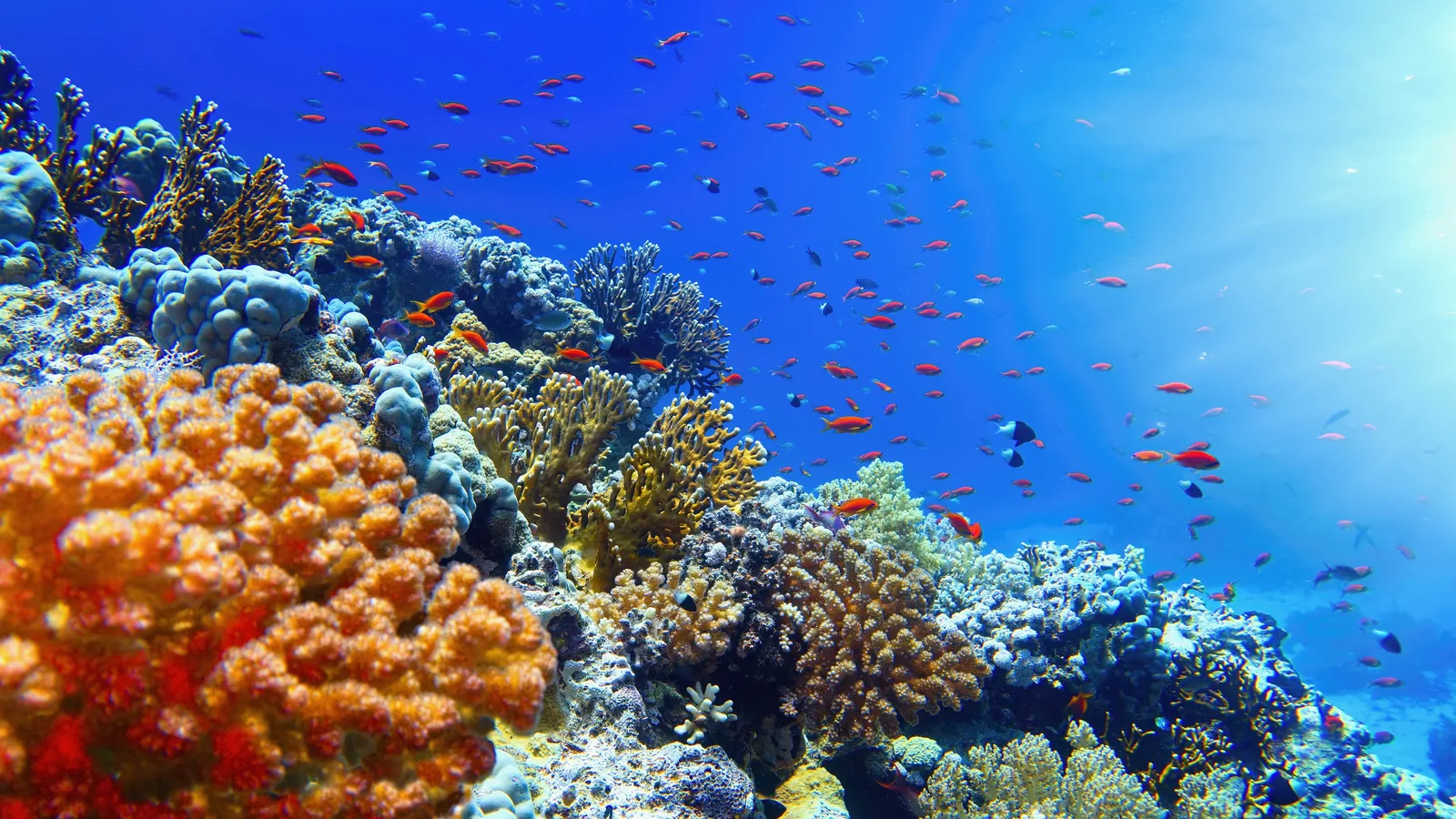
A tall white lighthouse marks the headland, and just below the surface the reef falls away into a wall hung with sea-fans the size of doorways. This is Ras Um Sid — a signature Sharm el-Sheikh dive right on the doorstep of the town, and one of the easiest of the region's great reefs to reach. Where the marquee sites of the Straits of Tiran and Ras Mohammed demand a boat trip and, often, an advanced ticket, Ras Um Sid offers a wall dressed in giant gorgonian fan corals, a lively coral plateau and a genuinely accessible dive — while still keeping enough current on the wall to keep experienced divers happy. This guide covers what the site is, what the diving is really like, who it suits, and how to plan it.
What Ras Um Sid is
Ras Um Sid — sometimes written Ras Umm Sid — is a rocky headland crowned by a tall lighthouse, sitting on the Hadaba plateau on the southern edge of Sharm el-Sheikh town. The lighthouse is a local landmark, and it gives the reef its unofficial name: divers often call this simply "the lighthouse reef." Its position matters underwater as much as it does on the map — the headland sits at the entrance to the Straits of Tiran, the channel where the deeper Gulf of Aqaba funnels past the Sinai. That flow of water past the point is a large part of why the reef here is so densely grown and so alive.
What sets Ras Um Sid apart from Sharm's more famous names is accessibility. It is one of the closest signature reefs to town, dived from the shore or on a very short boat hop, which makes it a natural first dive of the day, a check-dive site and a favourite for night diving. Yet it is no soft option: the reef is genuinely spectacular, and the wall can carry enough current to keep it interesting. It sits at the heart of the wider Sharm el-Sheikh diving area alongside the Straits of Tiran and Ras Mohammed — for the full picture see the best dive sites in Sharm el-Sheikh and why divers choose Sharm el-Sheikh.
Getting there from Sharm el-Sheikh
Ras Um Sid is one of the simplest signature reefs in Sharm to reach. Because it lies right beside the town on the Hadaba plateau, it can be dived as a shore entry or on a short boat trip from the marina — far less travel than the day boats that run out to Tiran or Ras Mohammed. That closeness is exactly why it is so often the day's first dive: divers can be in the water quickly, then move on to a second, more distant site afterwards.
Access on the day depends on conditions and how the reef is being dived — the shallow plateau is straightforward, while the wall is usually dived along the current, so the entry and exit are chosen to suit the flow. As with every Sharm site, a guide who knows the reef's current and layout reads the conditions and plans the dive so the group gets the best of the wall and the plateau together.
The dive — the gorgonian wall and the plateau
Ras Um Sid is really two dives in one: a dramatic wall and a bustling plateau. Most dives take in both, and the balance between them is what makes the site so versatile.
The gorgonian wall
The reef's signature is a steep wall dressed in giant gorgonian fan corals — sea-fans that grow into the current, some of them large enough to swim alongside like standing screens. The highlight is a forest, or column, of gorgonians that runs roughly between 14 and 28 metres down, one of the most photogenic stretches of reef in the immediate Sharm area. These fans filter-feed on the flow that pushes past the headland, and the water column above and beside them is thick with anthias and reef fish. The wall itself can carry current, so it is typically dived as a semi-drift or drift, letting the flow carry divers gently along the gorgonians rather than fighting it.
The plateau
Above and beyond the wall, the reef opens onto a large, shallow coral plateau. This is the gentler, busier half of the dive — a broad expanse of hard coral, coral heads and sandy patches, alive with reef fish and easy to explore at a relaxed pace. In calm conditions the plateau is manageable for a wide range of divers, which is a big part of why Ras Um Sid works so well as a check dive and a first dive, and why it is such a popular night dive: the shallow, sheltered plateau is a safe, rewarding place to be after dark. A typical dive drifts the gorgonian wall while there is depth and current to enjoy, then finishes shallow on the plateau, watching the reef fish and clearing the safety stop over the coral.
What you'll see
The flow past the headland and the density of the coral make Ras Um Sid one of the liveliest reefs close to town. What you might meet:
- The gorgonians: the site's defining feature — a wall of giant sea-fans, backed by dense soft corals and healthy hard-coral gardens on the plateau. It is a superb reef for wide-angle photography.
- Reef fish: a great variety of reef life — clouds of anthias streaming over the coral, butterflyfish, angelfish, groupers, parrotfish, wrasse and the usual busy reef community. Octopus are a regular sight tucked into the reef.
- After dark: Ras Um Sid is a well-known night dive. Once the light goes, Spanish dancers emerge, moray eels leave their holes to hunt in the open, and octopus prowl the plateau — a very different reef from the daytime one.
- The blue: along the wall there is always a chance of a pelagic pass — a passing school, a jack or a larger visitor drawn by the current off the point. Sightings are luck rather than a promise, but the deeper water beside the fans is where they happen.
For the wider seasonal picture of what appears when, see the marine life encyclopedia and the complete guide to scuba diving the Red Sea.
Who it's for and conditions
Ras Um Sid is one of Sharm's most versatile reefs, so the honest answer to "can I dive it?" depends on which part and which day.
The plateau is the accessible half. Shallow, broad and busy, it is manageable for a wide range of divers in calm conditions and makes a relaxed, colourful dive — which is why the site is such a common check dive and first dive. That said, Ras Um Sid is not a pure beginner site: it is best thought of as an accessible, iconic Sharm reef that still has plenty to offer more experienced divers.
The wall is the more demanding side. It can carry current and is usually dived as a semi-drift or drift along the gorgonians, over deeper water. That makes it more rewarding — and more demanding — than the plateau, and it favours divers with a good number of dives and solid buoyancy, always with a guide who reads the flow. If your buoyancy isn't quite there yet, the plateau is the place to build it, and the skills that make a wall like this effortless are exactly what the PADI Open Water course builds — with the PADI pathway from Open Water to Divemaster explaining how divers grow toward drift and current diving.
Visibility at Ras Um Sid is typically 15 to 30 metres, often clearest in the cooler months. Water temperature across the Sharm area runs from the low 20s °C in winter to around 28–29 °C at the height of summer; the best time to dive the Red Sea guide has the month-by-month detail and wetsuit advice.
When to go
Ras Um Sid dives all year, and because it is so close to town it fits into almost any diving day. The character shifts a little with the season:
- Summer (roughly June to September): the warmest water and the liveliest reef, with the fans feeding hard in the current and anthias thick over the coral. The surface can be hot, and the town's reefs are at their busiest.
- Winter (roughly October to February): cooler water, often the best visibility and a calmer, quieter reef. A thicker wetsuit is worth packing, but the wall and the gorgonians look their crispest in clear winter water.
- Time of day: Ras Um Sid works beautifully as an early first dive and, uniquely among Sharm's signature reefs, as a night dive — the shallow plateau makes it one of the best after-dark sites near the town.
- Currents: the flow on the wall varies through the day; a good guide times the drift to make the most of it.
Diving the reef responsibly
The gorgonian fans that make Ras Um Sid special are also its most fragile feature, and keeping the reef in the condition that draws divers here is on everyone in the water:
- Never touch the gorgonians. Sea-fans are living animals that grow extremely slowly — a fan the height of a diver can be decades old. A single careless brush can damage or kill a section that took years to grow, so keep well clear and photograph without contact.
- Perfect your buoyancy and stay off the reef. No touching, no standing on the plateau, no dragging gear or dangling gauges — a stray fin does the same damage as a hand.
- Watch your kit in the current. On the drifting wall it is easy to be pushed onto the fans; stay aware of the flow and give the coral a wide margin.
- Take nothing, leave nothing. No collecting, and carry out anything you bring in — a busy town reef needs every diver to look after it.
None of this takes anything away from the dive — a healthy Ras Um Sid, with its fans intact, is precisely why the reef ranks among the best close-to-town dives in Sharm.
Practical tips
- Pair it up. Because it is so close and quick to dive, Ras Um Sid is often the first dive of a two-dive day, freeing the second dive for a more distant site out toward Tiran or Ras Mohammed.
- Bring a wide-angle setup. The gorgonian forest is made for wide-angle photography; the fans against the blue and the anthias streaming off them are the shot everyone remembers.
- Ask about the night dive. If the Spanish dancers and hunting morays appeal, plan a dedicated night dive here rather than hoping to fit it in — the plateau is one of the best after-dark reefs near town.
- Mind the wall's current. Follow the guide's briefing on the drift, stay with the group, and keep off the fans as the flow carries you along them.
- Match the site to your level. Newer divers get a wonderful dive on the plateau; more experienced divers get the current-swept wall. Both are Ras Um Sid.
How to plan and book
Ras Um Sid is at its best as part of a few days' diving out of Sharm el-Sheikh, where its accessibility lets it slot into almost any schedule — the gentle plateau on an easy morning, the gorgonian wall when the current is right, and a dedicated night dive for the Spanish dancers. It pairs naturally with the other great Sharm dive sites, the reefs of the Straits of Tiran and the walls of Ras Mohammed National Park.
Aquarius runs guided dives on the lighthouse reef from its Sharm el-Sheikh base — the gorgonian wall and the plateau, by day or by night, with guides who know the currents, all equipment provided. Whether you're a newer diver easing onto the plateau or an experienced diver here for the drifting wall, plan and book your Sharm el-Sheikh diving and the day is built around your level.
Frequently asked questions
Where is Ras Um Sid?
Ras Um Sid (also spelled Ras Umm Sid) is a headland topped by a tall lighthouse on the Hadaba plateau, right beside Sharm el-Sheikh town. It sits at the entrance to the Straits of Tiran, which is one of the reasons it is such a rich reef. It is one of Sharm's most accessible signature sites and can be dived from the shore or on a short boat trip.
What is the diving like at Ras Um Sid?
The dive is best known for a steep wall dressed in giant gorgonian fan corals, with a column of sea-fans roughly between 14 and 28 metres down, opening onto a large coral plateau in the shallows. The plateau is bustling and manageable for most levels in calm conditions, while the wall can carry current and is often dived as a semi-drift or drift.
Is Ras Um Sid suitable for beginners?
It is a versatile site rather than a pure beginner one. The shallow plateau is manageable for a wide range of levels when conditions are calm, which is part of why Ras Um Sid is so popular. The wall, however, can carry current and is dived as a semi-drift, so it rewards more experienced divers and good buoyancy. The right part of the site is matched to the diver and the day's conditions.
What will I see at Ras Um Sid?
The headline is the forest of giant gorgonian sea-fans on the wall, along with dense soft and hard corals. Divers meet a great variety of reef fish, octopus, and clouds of anthias over the coral. Pelagic fish sometimes pass along the wall, and on a night dive the site is known for Spanish dancers and free-swimming moray eels.
When is the best time to dive Ras Um Sid?
Ras Um Sid is a year-round site. Summer brings the warmest water and the liveliest reef, while the cooler months from roughly October to February often bring the best visibility and a calmer, quieter reef. Because the site is so accessible, it is frequently used as a first dive of the day and as a check dive.
Can you dive Ras Um Sid at night?
Yes. Ras Um Sid is a popular night dive precisely because it is easy to reach and its shallow plateau is sheltered. After dark the reef changes character, with Spanish dancers, free-swimming moray eels, hunting octopus, crabs and lobsters among the highlights. Night diving is arranged with a guide and matched to the diver's experience.