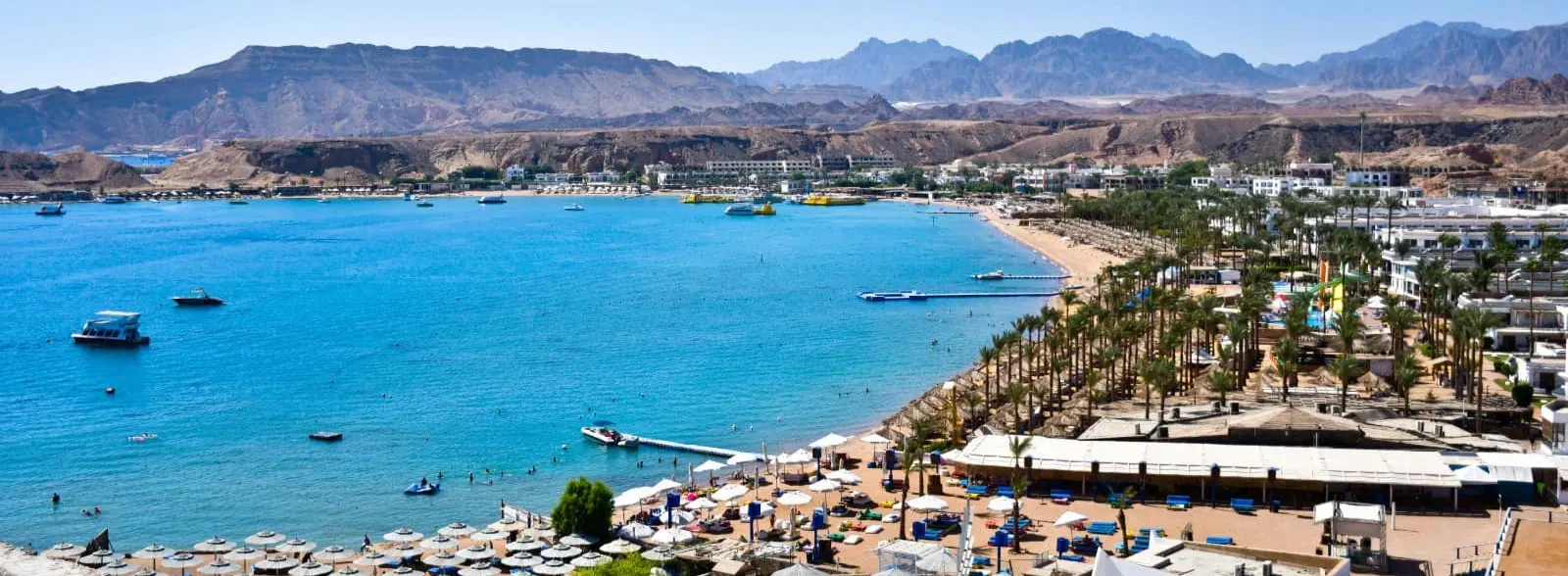
Sharm El Sheikh is one of those rare dive destinations where the geography does most of the work. The town sits at the southern tip of South Sinai, nestled between the Sinai mountains and one of the world's most famous coastlines. Coral reefs grow within metres of the shore, the water is calm year-round, and four of the Red Sea's best diving areas are reachable as day trips from a single hotel. This is why divers from every continent keep coming back.
Where is Sharm El Sheikh and why does the geography matter
Sharm El Sheikh occupies the southern tip of the Sinai Peninsula, where the narrow Gulf of Aqaba meets the wider Gulf of Suez. This meeting point creates the directional currents that bring nutrient-rich water past the reefs daily — which is the underlying reason Ras Mohammed produces world-class pelagic action that rivals any diving destination on Earth.
The coastline itself is striking. Sandy beaches lined with palm trees give way almost immediately to coral reef systems that form vertical walls, dramatic drop-offs and shallow reef plateaus teeming with marine life. Conditions are predominantly calm all year, visibility is excellent, and water temperatures stay diver-comfortable from 21°C in the depths of winter to 29°C in summer. It's a diving mecca for learner divers, experienced divers, dive professionals and underwater photographers alike.
Ras Mohammed National Marine Park
Egypt's first national park, declared in 1983, Ras Mohammed sits at the very tip of the Sinai Peninsula and offers more than ten boat-access reef dives. The headline site is Shark Reef and Yolanda Reef — voted one of the top ten reef dives in the world, with a sheer wall dropping past 700 metres on one side and the cargo of the wrecked Cypriot freighter Yolanda (sunk 1980) scattered across the reef plateau.
Other Ras Mohammed favourites include Anemone City, Jackfish Alley, Shark Observatory, Ras Ghozlani and Marsa Bareika. Schooling barracuda, jacks, batfish, snappers and napoleon wrasse are reliable encounters; turtles, eagle rays and reef sharks pass through on most dives.
For depth on each site, see our dedicated Best Dive Sites in Sharm El Sheikh guide.
Tiran Island and the Straits
The Straits of Tiran lie north of Sharm and consist of four reef pinnacles — Jackson, Woodhouse, Thomas and Gordon — that rise from very deep water. Dives here are predominantly drift dives along reef walls covered in soft and hard coral, with completely different topography to Ras Mohammed. The currents bring different marine life: schooling fish, eagle rays, the chance of hammerheads at Jackson Reef in summer, and reliable whitetip reef sharks resting on Gordon Reef's plateau.
Tiran is ideal for divers who want variation across a multi-day trip — alternate days between Ras Mohammed and Tiran and you have two completely different diving experiences without changing hotels.
The SS Thistlegorm — the world's most famous wreck
The Thistlegorm is a British WWII supply ship sunk by German bombers on 6 October 1941. She lies in the Strait of Gubal at depths of 16–32 metres, with cargo holds still loaded with motorbikes, trucks, locomotives, rifles and aircraft parts — an extraordinary underwater museum of wartime history.
The Thistlegorm is accessible as a day trip from Sharm El Sheikh (3–4 hours each way by boat) for Advanced Open Water divers. Most trips include two dives — one external tour and one through the cargo holds. We've written a complete Thistlegorm dive guide covering every hold, the safety considerations, and how to book.
Dahab — bohemian shore-diving day trip
Dahab lies an hour north of Sharm by road and is famous for shore-accessible dive sites that are completely different from anything boat-based around Sharm. The Canyon and Bells–Blue Hole route are the most-photographed dive sites on the Sinai coast. Dahab itself has a relaxed, backpacker town atmosphere — many divers spend a day here as a complete change of scene from Sharm's more developed resort strip.
Marine life you can expect to see
The Red Sea is one of the most densely populated reef ecosystems on the planet — over 1,200 fish species, more than 200 hard and soft corals, and a proportion of endemic species found nowhere else. From a Sharm base over a typical week of diving you can reasonably hope to encounter:
- Macro life: nudibranchs, seahorses, frogfish, octopus, scorpionfish, and dense small reef fish — see our Red Sea nudibranchs guide.
- Reef fish: barracuda, napoleon wrasse, triggerfish (be careful of titans in summer), moray eels.
- Rays: bluespotted stingrays year-round; eagle rays and the occasional manta passing through.
- Turtles: resident green turtles and hawksbills on most dives.
- Dolphins: bottlenose, Risso's and spinner dolphins, often bow-riding the boat on the way to Ras Mohammed.
- Sharks: whitetip reef sharks (Tiran), grey reef sharks (deeper Ras Mohammed sites), oceanic whitetips on offshore liveaboards, and seasonal hammerheads at Jackson Reef in summer.
- The big one: whale sharks in summer — never guaranteed, but May–August is peak season.
Beyond the diving — Sharm as a base
Sharm El Sheikh works as a complete holiday destination, not just a dive trip. The town offers cultural experiences, lively nightlife, a full range of accommodation from backpacker hostels to luxury resorts, and a national park to explore on land. It's also a launching point for short trips to Cairo (1-hour flight), Luxor and Aswan, making it easy to combine diving with Egyptian historical sites in a single trip.
Diving with Aquarius in Sharm
Aquarius Diving Club is a PADI 5-star operator with our main Sharm hub at Coral Sea Imperial Sensatori, which sits on the Ras Ghamila house reef — Arabic for "beautiful," and one of the best shore reefs in Sharm. Beginners and experienced divers alike are captivated by the coral formations and the marine life encounters here, with manta rays and even whale sharks recorded on the house reef in past seasons.
We offer all PADI courses from beachside dive centres with heated training pools, comfortable classrooms and quality equipment. We also help individuals, couples, groups and dive clubs plan complete diving packages — daily trips, multi-centre Red Sea itineraries, and liveaboards.
If you want to combine Sharm with mainland Red Sea diving, we operate from Hurghada and Makadi Bay as well — making Aquarius a complete Red Sea provider. For when to come, see our month-by-month diving guide; for first-timers, our PADI Open Water guide covers everything you need to know about getting certified here.
Ready to plan your Sharm dive trip?
Daily boat trips, full PADI courses, multi-day packages and liveaboards from our Sharm hub.
See Sharm Dive Trips →Related: For a direct head-to-head comparison with Egypt's other major dive hub, see our Sharm vs Hurghada honest comparison.
Frequently asked questions
What makes Sharm El Sheikh a good diving destination?
Sharm El Sheikh provides daily boat access to four world-class diving areas within a short ride: Ras Mohammed National Park, the Straits of Tiran, the SS Thistlegorm wreck, and Dahab (about an hour north by road). Conditions are calm year-round with water temperatures from 21°C in winter to 29°C in summer, and visibility commonly exceeds 25 metres.
Where exactly is Sharm El Sheikh?
Sharm El Sheikh is on the southern tip of South Sinai, Egypt, between the Sinai mountain range and the Red Sea. It sits at the meeting point of the Gulf of Aqaba and the Gulf of Suez, which creates the strong currents and biodiversity that make Ras Mohammed National Park world-class diving.
Can beginners learn to dive in Sharm El Sheikh?
Yes. Sharm has many PADI 5-Star Resort & IDC centres offering all course levels including first-time Discover Scuba Diving and the full Open Water certification. House-reef sites such as Ras Ghamila are well suited to training. The most famous offshore sites at Ras Mohammed and Tiran require Advanced Open Water due to depth and currents.
Can I dive the SS Thistlegorm from Sharm El Sheikh?
Yes. The Thistlegorm wreck is a regular day trip from Sharm El Sheikh, taking around 3 to 4 hours each way by boat. Most operators run two dives on the wreck during a single day. Advanced Open Water certification is required because the wreck sits at 16 to 32 metres.