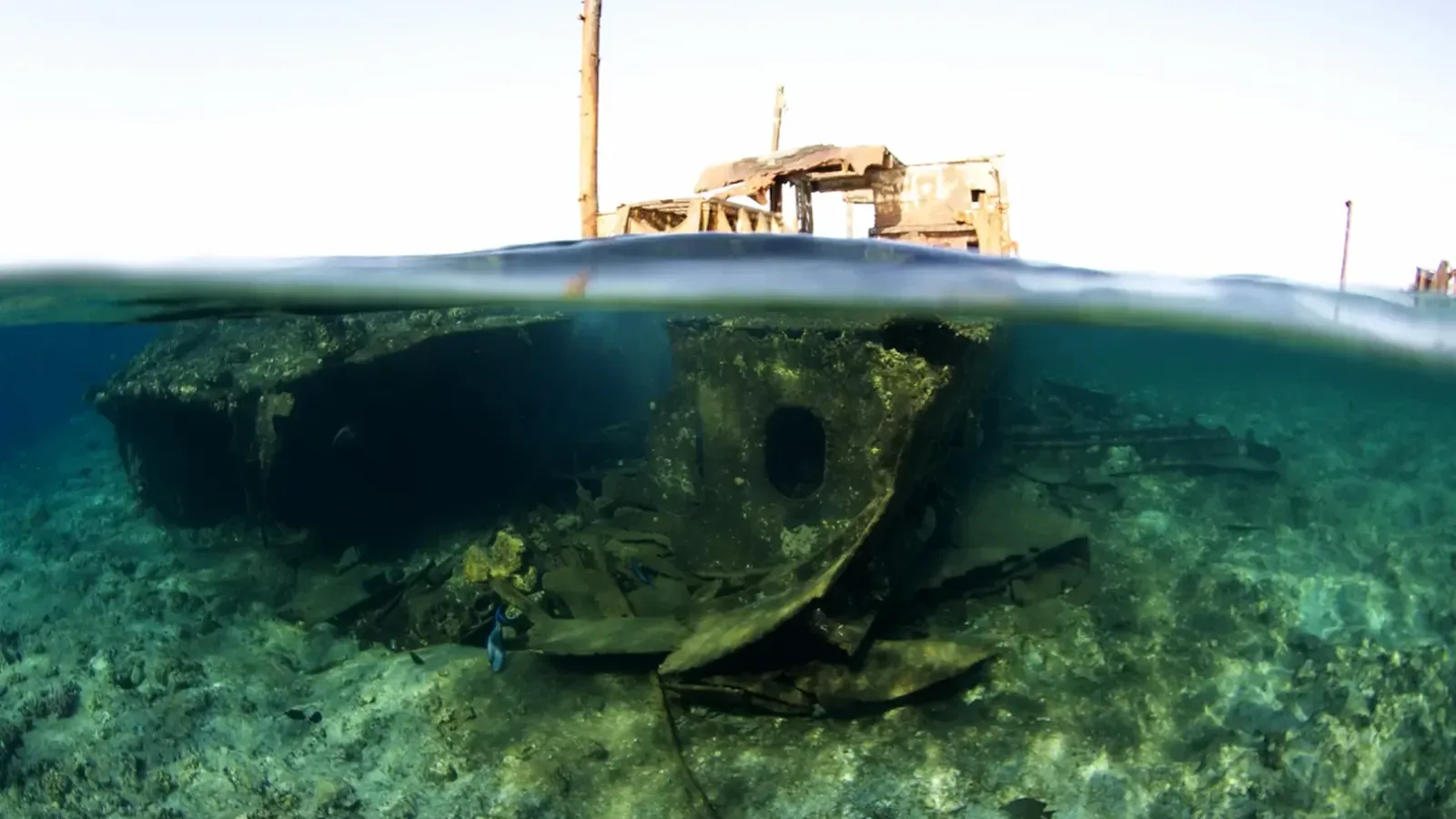
If you are weighing up Egypt versus Saudi Arabia for a Red Sea dive trip, you are not really comparing two seas — you are comparing two coasts of the same sea, at two completely different stages of tourism. Egypt has been welcoming divers for over four decades and has built one of the densest dive economies on Earth. Saudi Arabia only opened its doors to leisure tourists in 2019 and is racing to build a brand-new, high-end Red Sea destination from a near-blank slate. What follows is an honest, balanced comparison of the two — including where Saudi Arabia genuinely wins.
| Egypt (Red Sea) | Saudi Arabia (Red Sea) | |
|---|---|---|
| Best for | Value, variety, wrecks, access | Pristine, uncrowded, frontier reefs |
| Dive-tourism maturity | 40+ years, fully developed | Emerging since 2019 |
| Flight from Europe | 4–5 hours, low-cost & charter | 5–6 hours, mostly full-service |
| Avg cost level | €€ | €€€€ |
| Liveaboard price/night | ~€100–150 all-in | ~US$200–400 per day |
| Number of operators | Hundreds of centres, ~70+ liveaboards | Few dozen centres, limited liveaboards |
| Wreck diving | World-class | Some — not a wreck destination |
| Reef crowding | Busy at famous sites | Often empty |
| Reef condition | Excellent, resilient, well-dived | Pristine, lightly dived |
| Marine life | Shared Red Sea species | Shared Red Sea species |
| Visa | Visa on arrival, well-established | e-visa / visa on arrival (since 2019) |
| Best for non-divers | Yes — full resort towns | Yes — but premium & still developing |
The headline difference
Both coasts sit on a sea that divers rank among the best on the planet, and because it is one connected body of water, the underwater fundamentals are shared: roughly 300 species of hard coral, more than a thousand species of fish, water that runs from about 21 °C in winter to 29 °C in late summer, and visibility that regularly reaches 20–40 metres thanks to almost no rainfall or river runoff. A diver dropped onto a healthy reef on either side would struggle to tell which country they were in. (For the full picture of conditions, see this complete guide to scuba diving the Red Sea.)
The difference is everything above the surface. Egypt is a mature, dive-led, mass-tourism destination; Saudi Arabia is a brand-new, luxury-led frontier. Egypt's coast — Hurghada, Sharm El Sheikh, Marsa Alam, Dahab, Makadi Bay, Sahl Hasheesh — has been built around diving for decades, with the diving as the main attraction. Saudi Arabia kept its coast effectively closed to leisure tourists until September 2019, when it issued its first-ever tourist visas; the reefs sat almost untouched while Egypt's were being explored, mapped and dived a million times over. That single fact drives most of what follows.
Access & visas — getting there
For most divers, access is where Egypt's decades of head start show first.
- Egypt: 4–5 hours direct from most European capitals, into multiple dedicated tourist airports — Hurghada (HRG), Sharm El Sheikh (SSH) and Marsa Alam (RMF) — served by full-service, charter and low-cost carriers, with seasonal direct flights peaking April through October. Visa on arrival is long-established and inexpensive (around US$25–30), with a free Sinai-only stamp available for short direct stays in the Sharm area.
- Saudi Arabia: Tourist access only began in 2019, but it has expanded quickly. An online e-visa (and visa on arrival for many nationalities) is now straightforward to obtain. The main gateway is Jeddah's King Abdulaziz International Airport, with domestic links to Yanbu and Jizan; the purpose-built Red Sea International Airport (RSI) opened in 2023 and added international flights from 2024. Flights from Europe are a little longer than to Egypt and skew toward full-service carriers, so they cost more. Reaching the southern Farasan region, in particular, still involves more internal travel and planning.
Cost reality — same sea, different bills
This is where the gap is widest. Egypt is one of the cheapest world-class dive destinations anywhere; Saudi Arabia is being built around premium and luxury tourism, and the prices reflect it.
| Item | Egypt (Red Sea) | Saudi Arabia (Red Sea) |
|---|---|---|
| Liveaboard, per night/day | ~€100–150 per night, all-in | ~US$200–400 per day |
| Resort / day-boat diving | Low — fierce competition | Higher — fewer operators |
| PADI Open Water course | ~€350–450 | Higher / less standardised |
| Accommodation range | Budget to luxury | Mostly mid-to-luxury (resort-led) |
| Flights from Europe | €200–500 return | Typically higher (full-service) |
| Overall trip cost | €€ — exceptional value | €€€€ — premium positioning |
A Saudi liveaboard at roughly US$200–400 per day sits in the same bracket as the Maldives — for comparison, see this Egypt vs Maldives comparison — while an Egyptian liveaboard at €100–150 a night is a fraction of that. For divers building experience over many trips, that ratio is decisive: you can do two or three Egyptian liveaboards for the price of one Saudi trip.
Dive infrastructure & operators
Egypt's coast carries an enormous, decoupled dive economy: hundreds of dive centres, day boats out of every port, and a stay-anywhere / dive-with-anyone model that keeps competition — and standards-per-euro — high. Multilingual instruction is the norm, courses run daily year-round, and you can certify from Open Water all the way to Divemaster at any major town. PADI 5-Star centres operate from established hubs such as Hurghada, Sharm El Sheikh, Makadi Bay and Sahl Hasheesh.
Saudi Arabia's dive infrastructure is real but still young and concentrated. Jeddah is the established hub, with the largest cluster of dive centres in the country; Yanbu — sometimes called the country's diving capital for sites — has a much smaller handful of centres serving day boats and liveaboard departures; and the south around Jizan opens onto the Farasan Islands and Farasan Banks. Outside these pockets, organised diving thins out quickly, and the choice of operators on any given stretch of coast is a fraction of Egypt's.
Liveaboards compared
Egypt is a liveaboard superpower — a large fleet (well over 70 vessels) runs established itineraries to the northern wrecks, the offshore reefs of the central Red Sea (the Brothers, Daedalus, Elphinstone), and the deep south, with departures most weeks across a long season and a wide price ladder.
Saudi liveaboards exist and are growing, but the fleet is small and itineraries are fewer. Trips generally depart from Jeddah or Yanbu for the northern and central reefs, or head to the southern Farasan Banks — a remote, current-swept reef system known for healthy coral and pelagic action — usually on a seasonal basis. Because availability is limited, Saudi liveaboards need to be booked well in advance, and per-day prices are roughly double Egypt's.
Dive sites & marine life
Because it is the same sea, the marine-life menu overlaps heavily — reef sharks, turtles, Napoleon wrasse, moray eels, masses of anthias and the famous Red Sea coral gardens appear on both coasts, and seasonal pelagics including hammerheads, whale sharks and mantas are possible on each.
| Experience | Egypt (Red Sea) | Saudi Arabia (Red Sea) |
|---|---|---|
| Healthy hard-coral reefs | Yes — and resilient | Yes — exceptionally pristine |
| Famous offshore reefs | Brothers, Daedalus, Elphinstone | Farasan Banks, Seven Sisters |
| Seasonal hammerheads | Yes — Tiran/offshore (summer) | Yes — Farasan Banks |
| Whale sharks & mantas | Possible (offshore, seasonal) | Possible — reportedly reliable south |
| Wrecks | World-class concentration | Limited |
| Site documentation / guides | Decades of detailed knowledge | Still being mapped |
| Chance of an empty reef | Low at famous sites | High |
Where Saudi Arabia stands out is the Farasan Islands and Farasan Banks in the south. The Farasan Islands were declared a protected area by Royal Decree in 1996; the marine reserve protects coral reefs, seagrass beds and mangroves across thousands of square kilometres, and its reefs are described by researchers as among the best-developed in the Red Sea, with rich fish life and visitors including dolphins, turtles, dugong and manta rays. Very few divers have ever seen them. Egypt has no single equivalent of that "untouched" feeling — its marine parks (like Ras Mohammed) are spectacular but well-trodden.
Wreck diving — Egypt's overwhelming advantage
This one is not close. Egypt is one of the world's top wreck-diving destinations, with a concentration of historically significant wrecks that Saudi Arabia simply cannot match.
Egypt's headline wrecks:
- SS Thistlegorm — a British WWII supply ship sunk on 6 October 1941 in the Strait of Gubal, its holds still packed with motorcycles, trucks and locomotives. One of the most famous wreck dives on the planet — full story in the Thistlegorm guide.
- Abu Nuhas reef — four wrecks on one reef (the Carnatic, Giannis D, Chrisoula K and Kimon M), often dived together on a single liveaboard day.
- Salem Express — an Egyptian passenger ferry lost in 1991, dived respectfully as a maritime memorial; history and safety in the Salem Express guide.
- SS Dunraven, Rosalie Moller, Million Hope and the El Mina off Hurghada — a deep bench of additional wrecks across the northern Red Sea.
Saudi Arabia does have wrecks — sites around Yanbu and Jeddah include the likes of the Ann Ann and the Boiler Wreck — and they are interesting in their own right. But there is no Saudi equivalent of the Thistlegorm, and wreck-density and historical significance are nowhere near Egypt's.
Reef health & crowding — Saudi's advantage
Here is where the honest case for Saudi Arabia is strongest. Because its reefs sat almost untouched for decades, Saudi sites carry a fraction of the dive traffic of Egypt's. On many Saudi reefs you will be the only boat in the water; Egypt's marquee sites — Ras Mohammed, the Thistlegorm — can host dozens of boats on a busy summer day.
To be fair to Egypt, its reefs remain in remarkably good shape. Red Sea corals are unusually heat-tolerant — the northern Red Sea and Gulf of Aqaba are studied worldwide as a likely coral "refuge" because their corals withstand temperatures that would bleach reefs elsewhere. That resilience is real, but it is not immunity: scientists recorded a significant bleaching event in parts of the Red Sea during the 2024 heatwave, and Egyptian reefs also carry the cumulative pressure of heavy tourism, coastal development and fishing. Saudi reefs face the same warming sea, but with far less local dive and development pressure today — and, in protected zones like the Farasan Islands, active conservation management.
When each makes sense
Strip away the marketing and the choice comes down to what you value most on this trip.
Egypt makes sense if you want the best value in world-class diving, a short and cheap flight from Europe, wrecks on your bucket list, daily boats and house reefs at every budget, year-round courses, and a destination that also works for non-diving partners and families. It is the natural choice for newer divers, for divers who travel often, and for anyone who wants maximum diving for their money. New to the sport? This best time to dive the Red Sea guide will help you pick your window.
Saudi Arabia makes sense if you are an experienced, adventurous diver who has likely already dived Egypt; you prize pristine, near-empty reefs and the chance to dive remote systems like the Farasan Banks before the rest of the world arrives; you are comfortable with thinner operator choice and more planning; and the higher cost is acceptable for the exclusivity. It pairs naturally with a wider Saudi trip taking in AlUla, the Red Sea Global resorts and the country's cultural sites.
The future — NEOM, Red Sea Global & the opening of Saudi
Saudi Arabia is investing on a scale the dive world has never seen. Under its Vision 2030 plan, Red Sea Global is developing "The Red Sea" destination across roughly 28,000 square kilometres of coast and islands, with dozens of luxury resorts; the first guests arrived in late 2023, and several resorts were open by 2026. NEOM, the giga-project on the north-west coast, adds further coastal tourism (including Sindalah island), and the new Red Sea International Airport — billed as the region's first carbon-neutral airport — is steadily adding routes. AlUla, Yanbu, Jeddah and the southern Farasan region round out a fast-expanding map.
What this means for divers: access, capacity and polish will improve dramatically over the next decade, and Saudi reefs that are remote today will become far easier to reach. The important caveat is the model. Saudi tourism is being built around high-end, regenerative, resort-led travel — deliberately the opposite of Egypt's high-volume, low-cost, dive-led economy. So even as Saudi Arabia opens up, it is unlikely to undercut Egypt on price; its pitch will remain exclusivity and pristine reefs, not value. Egypt's advantages in access, affordability, operator choice, wrecks and sheer diving maturity are not going away.
Final verdict
Choose Egypt
Best all-rounder today- Best value, world-class diving
- Bucket-list wrecks (Thistlegorm)
- Short, cheap flight from Europe
- Hundreds of operators & boats
- Courses every day, year-round
- Family / non-divers welcome
Choose Saudi Arabia
Frontier & pristine- Near-empty, untouched reefs
- Remote Farasan Banks
- Already dived Egypt
- Experienced & adventurous
- Happy to pay a premium
- Pairing with AlUla / resorts
The honest recommendation for most divers in 2026: start with Egypt. It is the mature, accessible, best-value, variety-rich choice — more diving for your money, the world's best wrecks, and easy logistics whether you are on your tenth dive or your thousandth. Save Saudi Arabia for when you are an experienced diver hungry for somewhere almost no one has been, with the budget and patience the frontier currently demands. The two are not really rivals; they are different chapters of the same Red Sea — Egypt the destination you can dive again and again, Saudi Arabia the rare, pristine adventure to add once it suits you.
The two are not rivals so much as different invitations: Egypt rewards divers who want to keep coming back, while Saudi Arabia rewards those chasing somewhere almost untouched. For most travellers planning a 2026 trip, Egypt remains the more accessible, better-value and more varied starting point on the Red Sea.
Ready for your Egypt Red Sea trip?
Aquarius runs PADI 5-Star dive operations across 7 Red Sea bases plus the Xplorer Aquarius liveaboard fleet. Talk to us about your dates and goals.
Book your dives →Frequently asked questions
Is diving better in Egypt or Saudi Arabia?
They share the same Red Sea, so the marine life, water temperature and visibility are broadly similar — but the diving experience is very different. Egypt is the mature, accessible, best-value choice with decades of infrastructure, hundreds of dive centres, a huge liveaboard fleet and the world's best concentration of wrecks (Thistlegorm, Abu Nuhas, Salem Express). Saudi Arabia is the frontier option: its reefs are pristine and uncrowded because the country only opened to tourists in 2019, but operators are fewer, prices are higher and trips need more planning. For most divers in 2026, Egypt offers more dive variety and far better value; Saudi Arabia suits experienced, adventurous divers who want untouched reefs and will pay a premium for them.
Can tourists dive in Saudi Arabia?
Yes. Saudi Arabia issued its first-ever tourist visas in September 2019 and now offers an online e-visa and visa on arrival to citizens of dozens of countries. International divers can fly into Jeddah (the country's diving hub with 30+ dive centres), Yanbu (around five dive centres) or the new Red Sea International Airport, and join day boats or liveaboards. The industry is real and growing fast, but it is still emerging — there are far fewer operators and liveaboards than in Egypt, and southern routes to the Farasan Banks in particular require advance booking.
Is Saudi Arabia cheaper than Egypt for diving?
No — Egypt is significantly cheaper. Saudi liveaboards typically run about US$200-400 per person per day, similar to the Maldives, while Egyptian liveaboards run roughly €100-150 per night all-in. Resort-based diving and PADI courses are also cheaper in Egypt, where competition between hundreds of operators keeps prices low. Saudi tourism is positioned around premium and luxury resorts (Red Sea Global), so the overall trip cost is markedly higher. The trade-off is exclusivity: Saudi reefs are far less crowded.
Are Saudi Arabia's Red Sea reefs really less crowded than Egypt's?
Yes. Because Saudi Arabia only opened to leisure tourism in 2019 and its dive industry is still young, many Saudi reefs see very few divers — at popular sites you are often the only boat in the water. By contrast, Egypt's famous sites such as Ras Mohammed and the Thistlegorm can see dozens of boats on a busy day. Saudi reefs, especially the Farasan Banks and the Farasan Islands marine protected area, are widely described as among the best-developed and most pristine in the Red Sea. Egypt's reefs are still excellent and remarkably resilient, but they carry decades more dive traffic.
Does Saudi Arabia have wrecks like Egypt's Thistlegorm?
Not on the same scale. Egypt is one of the world's premier wreck-diving destinations — the SS Thistlegorm (a WWII supply ship sunk in 1941), the four wrecks of Abu Nuhas, the Salem Express and many more are concentrated in the northern Red Sea. Saudi Arabia has some wrecks (including sites around Yanbu and Jeddah, such as the Ann Ann and the Boiler Wreck), but it is not a wreck destination in the way Egypt is. If wrecks are your priority, Egypt is the clear choice.
What is NEOM and Red Sea Global, and will they change diving in Saudi Arabia?
They are vast Saudi tourism mega-projects under the Vision 2030 plan. Red Sea Global is developing 'The Red Sea' destination across roughly 28,000 square kilometres of coast and islands, with dozens of luxury resorts; its first guests arrived in late 2023 and several resorts were open by 2026. NEOM is a separate giga-project on the north-west coast that also includes coastal tourism. Together with the new Red Sea International Airport, they are rapidly expanding access and capacity — so Saudi diving will become much easier and more developed over the next decade, though it is being built around high-end tourism rather than the budget, dive-led model that defines Egypt.