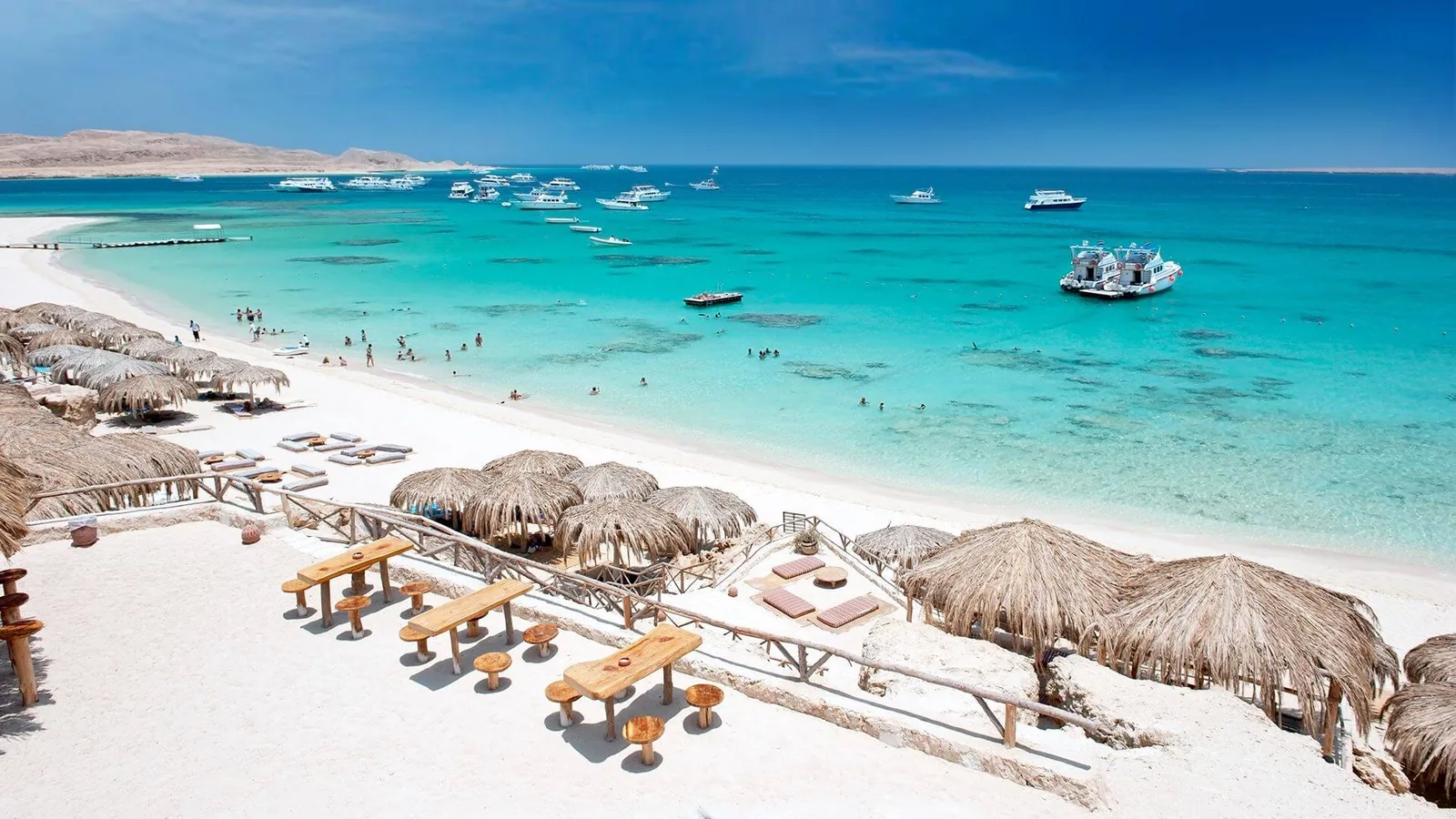
If you're choosing between Egypt's Red Sea and the Maldives for your next dive trip, you're choosing between two genuinely world-class destinations that happen to deliver very different experiences. Egypt is the diver's destination that doubles as a beach holiday; the Maldives is the beach destination that happens to have exceptional diving. After 30 years running dive operations in Egypt, with guests who've dived both, here is the honest comparison.
| Egypt (Red Sea) | Maldives | |
|---|---|---|
| Best for | Wrecks, value, accessibility | Mantas, atolls, honeymoon |
| Flight from Europe | 4–5 hours | 10–12 hours |
| Avg cost level | €€ | €€€€ |
| Liveaboard price/night | €100–150 | €200–400 |
| Resort-based diving | Excellent — multiple bases | Limited — single-island resorts |
| Wreck diving | World-class | Limited |
| Manta rays | Rare | Predictable in season |
| Whale sharks | Possible | Predictable in season |
| Hammerhead sharks | Yes (Aug–Sep, Tiran) | Very rare |
| Visibility | 20–40 m | 15–30 m |
| Water temperature | 21–29 °C (Dec–Aug) | 26–29 °C year-round |
| Best for non-divers | Yes — built-up resorts | Yes — but at premium price |
The headline difference
Both destinations sit in the top 5 dive destinations in the world by almost any metric. The question is not "which is better" — both are exceptional. The question is which is right for your trip, this year, given your priorities. The single most consequential framing: Egypt is the diving destination that is also a beach holiday; the Maldives is the beach destination that is also a diving holiday.
That sentence captures something real. The Maldives is built around resort tourism — each resort sits on its own private island, accommodations skew luxury, the diving is excellent but often secondary to the beach-and-spa proposition. Egypt's Red Sea has the diving as its primary tourism economy — every coastal town from Sharm to Marsa Alam is built around dive operators, dive boats, dive instruction, and dive infrastructure. The diving is the main attraction, not an amenity.
Geography & topography compared
Egypt's Red Sea coast is one continuous coastline along a long, narrow sea between Africa and the Sinai Peninsula. Reefs are mostly fringing reefs (attached to the shore), some offshore reef pillars (like the Brothers and Daedalus in the central Red Sea), and the famous wreck-rich Strait of Gubal at the northern end. Walls drop into deep water close to shore, currents are generally mild, and visibility is excellent thanks to low rainfall and minimal river runoff. Wreck diving is concentrated in the north (Strait of Gubal, Abu Nuhas, Ras Mohammed), while pelagic diving concentrates at the offshore reefs of the central Red Sea.
The Maldives is a chain of 1,192 islands arranged into 26 natural atolls in the Indian Ocean. Atolls are ring-shaped reef formations enclosing a central lagoon. The diving here is fundamentally different in topography: thilas (submerged pinnacles in the middle of atolls), kandus (channels between atolls where current rips through), outer reef walls dropping to thousands of metres, and the famous manta cleaning stations and feeding aggregations in specific atolls (Hanifaru Bay in Baa Atoll being the most famous). The diving has more dynamic current than Egypt's resort sites, and the topography is more dramatic in places — channel diving in particular has no parallel in the Red Sea.
Marine life — what each destination delivers
Both destinations have outstanding biodiversity. The species mix differs.
| Species | Egypt (Red Sea) | Maldives |
|---|---|---|
| Manta rays | Rare | Predictable (Baa, Ari atolls) |
| Whale sharks | Possible (offshore reefs) | Reliable (S. Ari Atoll, Hanifaru) |
| Scalloped hammerheads | Yes — Jackson Reef Aug–Sep | Very rare |
| Whitetip / blacktip / grey reef sharks | Yes — most sites | Yes — most sites |
| Thresher sharks | Yes — Elphinstone | Rare |
| Oceanic whitetip | Yes — Brothers/Daedalus Oct–Dec | Rare |
| Tiger sharks | Very rare | Fuvahmulah (south Maldives) |
| Sea turtles | Yes — most dives | Yes — most dives |
| Napoleon wrasse | Yes | Yes |
| Moray eels | Yes | Yes |
| Macro (nudibranchs, frogfish) | Excellent | Excellent |
| Hard coral cover | ~300+ species, bleaching-resistant | 200+ species; bleaching events more common |
| Endemism | 10–15% endemic to Red Sea | Lower (open Indian Ocean) |
Wreck diving — Egypt's overwhelming advantage
This is not close. Egypt is one of the world's top three wreck diving destinations. The Maldives has fewer than five named dive-worthy wrecks across its entire archipelago.
Egypt's wreck portfolio:
- SS Thistlegorm — World War II British supply ship sunk October 6, 1941 in the Strait of Gubal. 16-32 m depth. Cargo holds still full of motorcycles, trucks, locomotives. Among the most famous wreck dives on the planet.
- Abu Nuhas reef — Four wrecks on one reef: the Carnatic (1869), Giannis D (1983), Chrisoula K (1981), Kimon M (1978). Often dived as a single liveaboard day.
- SS Dunraven — British steamship sunk April 25, 1876 at Sha'ab Mahmoud near Ras Mohammed. 15-29 m, lies inverted.
- Rosalie Moller — British steamship sunk by German bombers on October 8, 1941, two days after the Thistlegorm. 30-50 m. Less crowded than the Thistlegorm and arguably better preserved.
- Million Hope — 175 m bulk carrier, the largest wreck in the Red Sea by length, ran aground June 20, 1996 at Nabq Bay.
- El Mina — Egyptian T-43 minesweeper sunk by Israeli aircraft circa 1969-1970 off Hurghada. 25-32 m. Our complete El Mina guide covers the history.
- Salem Express — Egyptian passenger ferry which struck Hyndman Reef December 14, 1991 with 470+ lives lost. Dived respectfully as a maritime tomb. Our Salem Express guide covers safety and history.
The Maldives has the Maldive Victory (a 1981 freighter near Malé) and a small handful of other minor wrecks. These are interesting in their own right, but the wreck-density and historical significance simply doesn't compare to Egypt.
Mantas, whale sharks & atoll specialties — Maldives advantage
The Maldives has two near-unique global advantages: predictable manta ray aggregations and reliable whale shark encounters.
Hanifaru Bay (Baa Atoll) during the south-west monsoon (typically June through November) is the world's most famous manta feeding site. Plankton concentrations in the bay attract feeding mantas in numbers — 100-200+ mantas in a single feeding event — that have no parallel anywhere else on the planet. It's snorkel-only (no scuba permitted to minimise disturbance), but for divers willing to add snorkel days to a dive trip, it's a genuinely once-in-a-lifetime experience.
South Ari Atoll has year-round whale shark sightings — the highest reliability in the world. Most operators offer scheduled whale shark snorkel/dive trips with high success rates.
Atoll channel diving at sites like Fotteyo Kandu (Vaavu Atoll), Kandooma Thila (South Malé Atoll), and the famous channels of Fuvahmulah deliver experiences that simply don't exist in the Red Sea — strong-current drift dives through narrow channels with grey reef sharks lined up against the current, eagle ray schools, and pelagic fish at close quarters.
Cost reality — same trip, different bills
This is where the comparison becomes very clear. The Maldives is significantly more expensive than Egypt at every category.
| Item | Egypt (Red Sea) | Maldives |
|---|---|---|
| Return flight (London) | €200–500 | €700–1,400 |
| Liveaboard 7 nights all-in | €800–1,100 | €1,500–2,800 |
| Resort-based diving (7 days) | €350–500 | €1,000–1,800 |
| 3-4 star hotel 7 nights | €400–800 | €2,000–4,000 (resort island) |
| 5-star resort 7 nights | €800–1,500 | €4,000–10,000+ |
| Daily food & drinks (off resort) | €25–40 | €80–150 (resort-only) |
| PADI Open Water course | €350–450 | €600–900 |
| Egypt visa-on-arrival | $30 USD | Free 30-day for most nationalities |
Typical 7-night dive trip total cost from Europe (one person):
- Egypt liveaboard: €1,200–1,800 all-in including flights
- Egypt resort-based: €900–1,400 including hotel + dive package + flights
- Maldives liveaboard: €2,500–4,500 all-in
- Maldives resort-based: €3,500–7,000+ including resort + dive package + flights
This is not a small difference. For the cost of one Maldives liveaboard trip, you can do 2-3 Egypt liveaboard trips. For divers building dive experience, that ratio matters.
Getting there — flights and logistics
From Europe, the access difference is enormous.
- Egypt: 4-5 hours direct from most European capitals. Multiple airports — Sharm El Sheikh (SSH), Hurghada (HRG), Marsa Alam (RMF) — served by both full-service and low-cost airlines. Direct charter flights from the UK, Germany, France, Italy and Russia peak April through October. Visa on arrival ($30 USD since March 2026; Sinai-only free 14-15 day stamp for direct Sharm arrivals).
- Maldives: 10-12 hours from Europe via Dubai, Doha or direct. Mostly long-haul carriers (Emirates, Qatar, Turkish, Etihad). Internal transfers in the Maldives via seaplane (€200-500 return) or speedboat to your resort island. Plan a full travel day each direction. Free 30-day tourist visa on arrival for most nationalities.
From the US: both are similarly distant (12-14 hours). Slight edge to Egypt for non-stop options via European hubs.
Best time of year for each
Both destinations work year-round, but the optimum seasons differ.
- Egypt (Red Sea): Year-round, with March-May and September-November as the sweet spots (warm water, light winds, peak marine life). Summer (June-August) brings hammerheads and peak water temperatures but also higher land temps. Winter (December-February) cools water to 21-23 °C but offshore liveaboards still run. Full breakdown in our Best Time to Dive Red Sea guide.
- Maldives: December-May is the dry north-east monsoon — calm seas, best visibility (20-30 m), classic dive conditions. June-November is the south-west monsoon (sometimes called "wet season") — rougher seas, slightly lower visibility (15-20 m), but the plankton-rich waters attract manta and whale shark aggregations at Hanifaru. Choose your season by what you want to see: clear-water atoll diving (Dec-May) or manta/whale shark feeding (Jun-Nov).
Skill level & safety considerations
Both destinations welcome divers of all levels, but they suit different stages of a dive career.
Egypt for new divers and AOWD: Most Egyptian resort sites have mild to moderate current, depths 5-30 m, sheltered conditions, and excellent visibility. PADI courses are everywhere, multilingual instruction is standard, and the sea is welcoming. Aquarius runs PADI Scuba Diver, Open Water, AOWD, Rescue and Divemaster courses year-round — full pathway in our PADI pathway guide.
Maldives for AOWD and experienced divers: The Maldives' iconic dives — channel current diving at sites like Fotteyo Kandu, drift dives at Kandooma Thila — involve strong currents and depths past 18 m. New divers can dive in the Maldives (most resorts offer training), but the headline experiences require AOWD-equivalent competence with strong current management. Get certified in Egypt cheaply, then visit the Maldives for the iconic dives.
Liveaboard vs resort — the structural difference
Both destinations are major liveaboard hubs, but the resort-based option works very differently.
Egypt: Hundreds of coastal hotels, dozens of dive centres, day boats out of every port. You can stay at any hotel and dive with any operator. The dive-and-stay economy is decoupled, which means competition is fierce and prices are low. Aquarius runs day boats and liveaboards from Sharm and Hurghada (Xplorer Aquarius).
Maldives: Each resort sits on its own island, and you generally dive with the on-island dive centre. Switching operators mid-trip is impractical (you'd need to relocate to another resort island via expensive seaplane). The "guesthouse" alternative on inhabited islands (Maafushi, Thoddoo) is growing and offers cheaper Maldives diving, but the dive-centre choice is still essentially fixed by where you stay. Most serious Maldives divers go liveaboard.
For underwater photographers
Both destinations are bucket-list photography sites. The subject preferences differ.
Egypt for photographers
- Wreck wide-angle: The Thistlegorm, Dunraven, Abu Nuhas wrecks reward wide-angle and fisheye lenses.
- Wall and reef wide-angle: Ras Mohammed, the Brothers, Daedalus walls drop into deep blue water — dramatic compositions.
- Macro: Strong on slower-paced day boats from Hurghada. Aquarius's Giftun area excels for macro.
- Pelagic shark portraits: Hammerheads at Jackson, oceanic whitetips at Elphinstone.
Maldives for photographers
- Manta portraits: Cleaning station ballet at sites like Manta Point in Lankan Reef. Once-in-a-career imagery in season.
- Whale shark wide-angle: South Ari Atoll year-round.
- Channel diving: Grey reef shark line-ups against current at Fotteyo Kandu and similar sites.
- Atoll topography: Above-and-below shots of atoll passes are uniquely Maldivian.
For gear care between salt-water trips at either destination, our scuba gear salt-water care guide applies equally.
For non-divers in your party
About half of dive trips include a non-diving partner or family member. The destinations diverge sharply here.
Egypt: Built-up resort towns (Hurghada, Sharm, Sahl Hasheesh, Makadi Bay) offer cultural sights, day trips to Cairo and Luxor, desert safaris, shopping malls, range of restaurants on and off resort, full mix of price tiers from budget to luxury. Family-friendly resorts with kids' clubs and water parks are common. Snorkelling is accessible on every reef. Non-divers have plenty to do every day. For combinations with Egyptian land heritage, see our Egypt vs Maldives perspective in the Sharm vs Hurghada comparison.
Maldives: Beautiful but limited. Each resort island has beaches, watersports, a spa, restaurants — and that's it. Non-divers will swim, snorkel, sunbathe, eat well, and enjoy the spa for a week or two. After that, some people get island fever. For couples and honeymooners, this is exactly the point. For active travellers who want to "do things", less ideal.
Final verdict
Choose Egypt
Best all-rounder- Budget-conscious traveller
- Bucket-list wrecks
- Multiple trips per year
- Travelling from Europe
- Want cultural extras
- Family / non-divers in party
Choose Maldives
Special occasion- Honeymoon or anniversary
- Mantas / whale sharks on list
- Want luxury resort experience
- Have time for long-haul
- Already done Egypt
- Channel current diving fan
The honest recommendation for most divers: If you're newly certified or in your first 100 dives, prioritise Egypt. The diving is excellent, the value is unmatched, and you'll build experience faster on multiple shorter trips than on one expensive Maldives trip. Then reward yourself with a Maldives trip once you're experienced enough to make the most of the channel diving and confident enough to spend the budget on the manta-season window.
For divers who've already done both: most agree they're not competing destinations. They're complementary. Egypt every year or two for ongoing diving experience, Maldives once a decade for the special trip.
Aquarius operates exclusively in Egypt's Red Sea. We don't make money if you choose the Maldives, and we don't make money if you don't choose us in Egypt — so this comparison is honest in both directions. If Egypt is the right choice for your next trip, see our Sharm, Hurghada, Makadi Bay and Sahl Hasheesh bases, our Xplorer Aquarius liveaboard fleet, or get in touch via our FAQ page.
Ready for your Egypt Red Sea trip?
Aquarius runs PADI 5-Star dive operations across 7 Red Sea bases plus the Xplorer Aquarius liveaboard fleet. Talk to us about your dates and goals.
Contact Aquarius →Frequently asked questions
Is diving cheaper in Egypt or the Maldives?
Egypt is significantly cheaper than the Maldives for diving across every category. Red Sea liveaboards typically run €100-150 per night all-in; Maldives liveaboards run €200-400 per night. Resort-based diving in Egypt averages €350-450 for a PADI Open Water course; the Maldives runs €600-900 for equivalent training. Flights from Europe to Egypt are 4-5 hours and inexpensive on charter and low-cost airlines; flights to Malé are 10-12 hours via Dubai or direct, considerably more expensive.
Which has better marine life — Egypt or the Maldives?
Both are world-class with different specialties. Egypt's Red Sea is famous for healthy hard coral reefs (corals here are notably resistant to bleaching), pelagic encounters at offshore reefs like the Brothers and Daedalus, scalloped hammerheads at Jackson Reef in summer, and an extraordinary density of accessible wrecks. The Maldives is famous for predictable manta and whale shark encounters in season (Hanifaru Bay manta aggregations are world-renowned), atoll-channel current dives with grey reef shark walls, and incredible visibility on outer atolls. For wrecks, Egypt wins. For mantas and predictable whale sharks, the Maldives wins.
Are there sharks in the Maldives like in the Red Sea?
Yes, but different species. Maldives is famous for grey reef shark schools in atoll channels (Fuvahmulah, Alimatha), occasional tiger sharks in the south, and seasonal whale sharks at South Ari Atoll and Hanifaru Bay. The Red Sea is famous for scalloped hammerheads (Jackson Reef summer), oceanic whitetips (Brothers/Daedalus October-December), thresher sharks at Elphinstone, and reef sharks year-round. Hammerheads are very rare in the Maldives; oceanic whitetips are seen in both but more commonly in the Red Sea south.
Is Egypt or the Maldives better for a first-time diver?
Egypt is generally better for first-time divers. Red Sea conditions are calm, visibility is excellent, current is mild on most resort sites, and PADI courses are cheaper and more frequent. The Maldives channel dives can involve strong currents that are challenging for new divers. Egypt's resort-based diving (Hurghada, Sharm El Sheikh, Makadi, Sahl Hasheesh) is also more accessible — multiple house reefs, day boats every day, hotels at every budget. Maldives diving is overwhelmingly liveaboard-based or via single-island resort packages that are expensive for non-divers in the family.
Which is better for an underwater photographer?
Both are exceptional but for different photography styles. Egypt offers wreck photography (Thistlegorm, Abu Nuhas, Dunraven), wide-angle reef walls and pelagic shark encounters, excellent for natural-light photography due to high visibility. The Maldives offers manta and whale shark portraits, grey reef shark schools, channel-mouth wide-angle, and the famously photogenic atoll topography. For macro, both have strong opportunities; the Red Sea's slower-paced reef dives are often easier for dedicated macro photography sessions.